
Missing an International Connecting Flight: What to Do, Your Rights and How to Avoid Getting Stranded
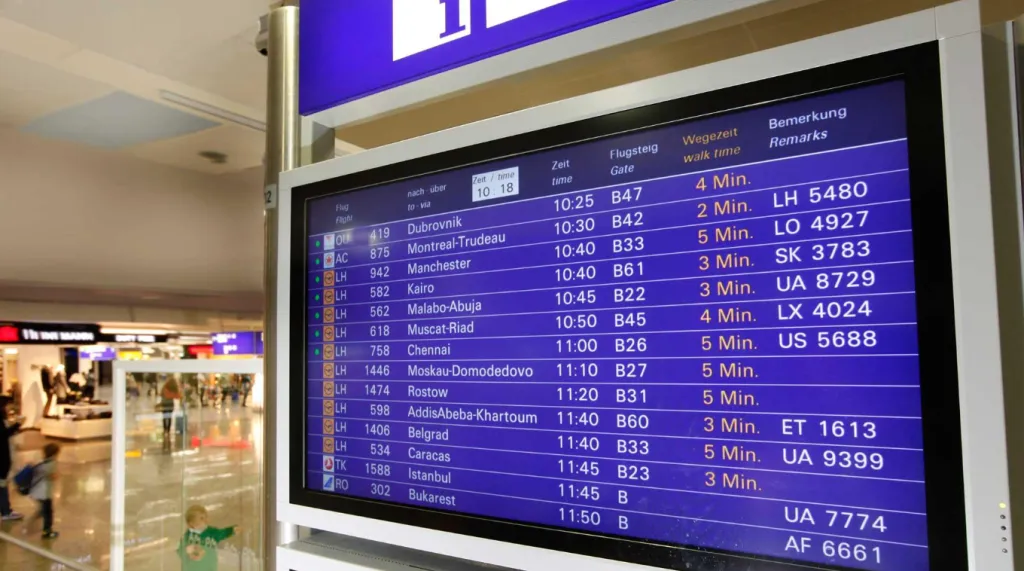
You have just landed after a 10-hour international flight. You're tired, probably hungry, and all you want is to reach your next gate. Then you notice something: your connecting flight has already departed.
Maybe your first flight was delayed. Perhaps immigration took longer than expected, you couldn't locate the transit terminal, or your previous flight landed at the opposite end of a massive airport.
Whatever the reason, missing an international connecting flight can quickly turn a well-planned holiday into a stressful experience.
But here's the good news: missing a connecting flight does not necessarily mean you have to purchase an entirely new ticket. Depending on how your flights were booked, the reason for the missed connection and the airline's policy, you may be entitled to assistance, rebooking or compensation.
In this guide, we'll explain what happens when you miss an international connection, what to do at the airport, how airline responsibilities differ and how to avoid getting stranded during your next international journey.
1. Why Do Travellers Miss International Connecting Flights?
Missing a connecting flight is more common than many travellers realise. International airports can be complicated, and even a seemingly comfortable layover can become stressful when something goes wrong.
Here are some common reasons.
1.1 Delay of the First Flight
This is one of the most common reasons for missed connections.
Imagine flying from Bengaluru to London with a connecting flight to New York. Your first flight is delayed by two hours because of weather conditions or operational issues. By the time you arrive in London, your New York flight has already departed.
Even if you did everything correctly, the delay could leave you stranded.
1.2 Insufficient Layover Time
Some travellers book flights with very short connection windows to save money or reduce waiting time.
However, international connections involve several steps:
Getting off the aircraft.
Following transfer or transit signs.
Clearing security again, where required.
Completing immigration formalities, if required.
Moving between terminals.
Reaching the boarding gate before it closes.
A 60-minute connection might be possible at one airport but extremely difficult at another.
1.3 Immigration and Security Delays
Not every international connection allows passengers to remain within the transit zone.
Depending on the airport, nationality, itinerary and visa requirements, you may have to pass through immigration or additional security checks.
Long queues, document verification and unexpected questioning can eat into your connection time.
1.4 Terminal Changes
Large international airports sometimes operate multiple terminals connected by shuttle buses, trains or long walking routes.
If you land at one terminal and your next flight departs from another, reaching the connecting gate may take longer than expected.
1.5 Last-Minute Gate Changes
Airports occasionally change departure gates because of operational requirements.
If you rely only on the gate number printed on your boarding pass, you could end up walking in the wrong direction.
Always monitor airport departure screens and airline notifications.
2. What Happens If You Miss Your Connecting Flight?
The most important factor is whether your connecting flights were booked together under one reservation or purchased as separate tickets.
These two situations can have very different consequences.
2.1 If Both Flights Are on the Same Ticket
Generally better passenger protection
Suppose you book Bengaluru-Dubai-Paris as one journey under a single booking reference. Your first flight is delayed, causing you to miss your connecting flight to Paris.
In this situation, the airline responsible for the disrupted journey will generally need to arrange an alternative connection, subject to the applicable conditions and passenger rights.
Depending on the airline and circumstances, you may receive:
Rebooking on the next available flight.
A seat on a partner airline, where arrangements permit.
Meal vouchers during an extended wait.
Hotel accommodation if an overnight stay is necessary and covered by the applicable rules.
Assistance with updated boarding passes and travel arrangements.
For example, British Airways states that it automatically rebooks passengers who miss a connecting flight booked under the same reservation, including on a partner airline where applicable.
2.2 If You Booked Separate Tickets
Higher financial risk
Now imagine booking:
Bengaluru to Dubai with Airline A.
Dubai to Paris with Airline B.
You book these flights separately because the combination is cheaper.
Your first flight gets delayed, and you arrive in Dubai after Airline B's check-in or boarding deadline.
Unfortunately, Airline B may treat you as a no-show. It is generally not required to rebook you for free simply because another airline delayed your previous flight.
You may have to:
Purchase a new ticket.
Pay a change fee.
Arrange new accommodation.
Rebook onward transportation.
Pay for additional baggage handling.
This arrangement is often called a self-transfer. Airlines explicitly distinguish separate-ticket journeys from protected connections.
Travel tip: A cheaper flight combination is not always a cheaper journey. Calculate the potential cost of a missed connection before booking separate tickets.
3. What Should You Do Immediately After Missing Your Flight?
If you realise that your connecting flight has departed, avoid panicking or rushing to purchase another ticket.
Follow these steps instead.
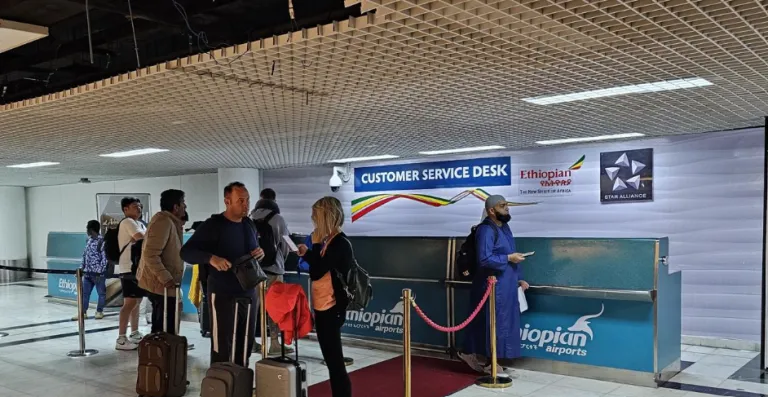
Step 1: Contact the Airline Immediately
Locate the airline's transfer desk or customer service counter.
Explain that you have missed your connecting flight and provide your booking reference.
If your first flight was delayed, ask the airline to confirm the reason for the delay and check whether you qualify for complimentary rebooking.
If you are still onboard the first aircraft when you realise the connection is at risk, notify the cabin crew.
Step 2: Ask for the Next Available Flight
Do not restrict yourself to the next flight operated by the same airline.
Ask whether the airline can arrange:
An alternative flight through another hub.
A partner airline connection.
A different route to your final destination.
An earlier departure from a nearby airport, if practical and permitted.
However, do not independently purchase an alternative ticket before understanding your existing booking rights.
Step 3: Check Your Baggage Situation
One of the biggest complications with missed connections is checked luggage.
Depending on your itinerary, baggage arrangements and airport procedures, your luggage may:
Be transferred automatically to the replacement flight.
Remain at the connecting airport.
Be unloaded and held by the airline.
Need to be collected and checked in again.
Ask the airline where your luggage is and whether it will be transferred to your new flight.
Never assume that your baggage will automatically follow you.
Step 4: Ask About Meals and Accommodation
If the next available flight is several hours away or the following day, ask whether the airline will provide meals, refreshments or hotel accommodation.
Your entitlement depends on the reason for the disruption, the airline's conditions and the passenger protection laws applicable to your journey.
For example, UK passenger-rights guidance provides for assistance, including accommodation where necessary, for eligible passengers who miss a protected connection because of an earlier flight delay.
Step 5: Keep All Receipts and Documents
If you have to pay for meals, transportation or accommodation, retain the receipts.
Also save:
Your original boarding passes.
The replacement flight confirmation.
Screenshots of flight delays.
Emails and SMS notifications from the airline.
Written confirmation of the reason for the missed connection.
These records can be useful when filing a reimbursement or compensation claim.
4. Who Pays If You Miss an International Connecting Flight?
This is where things get a little complicated. The airline's responsibility depends on how you booked the journey, why you missed the connection and which country's passenger-rights rules apply.
Here is a general comparison.
Situation | Who may be responsible? |
First flight delayed on a protected single-ticket journey | Airline responsible for the disrupted itinerary |
Separate tickets with different airlines | Usually the passenger bears the missed onward-flight cost |
Passenger reaches gate after boarding closes | Usually the passenger |
Airline changes the schedule and causes a protected missed connection | Airline, subject to applicable rules |
Severe weather disrupts flights | Airline may still have to assist or rebook, but compensation rules differ |
What Are Your Rights in Different Countries?
European Union: Under EU passenger-rights rules, passengers who miss a connecting flight booked as one reservation may qualify for compensation if they reach their final destination at least three hours late and the applicable conditions are satisfied. Extraordinary circumstances can affect compensation eligibility.
United Kingdom: Eligible passengers with a protected connecting booking may receive care and assistance if an earlier flight delay causes them to miss their connection. Compensation may also be available depending on the circumstances and final arrival delay.
India: The DGCA's passenger-rights framework addresses flight delays, cancellations and denied boarding. The Ministry of Civil Aviation explains that eligible passengers may receive alternate flights, refunds, meals or accommodation depending on the disruption and applicable conditions. For an international connecting itinerary, check the operating airline's conditions and the rules governing the relevant flight segments.
United States: Your options depend on the reason for the disruption, the airline's commitments and the applicable rules. Do not assume that every missed connection automatically qualifies for cash compensation.
The key distinction is that rebooking, assistance and financial compensation are three different things. You may qualify for one without necessarily qualifying for all three.
5. What If You Miss a Connecting Flight Due to Immigration Delays?
This is a particularly tricky situation for international travellers.
Imagine you land in Frankfurt for a connecting flight to Rome. You are required to clear immigration, but an unexpectedly long queue means you miss boarding.
Who is responsible?
The answer depends on your booking arrangement and the circumstances.
If you are travelling on a single protected ticket, approach the airline immediately and request assistance. However, missing a connection because of passenger-related delays at immigration or security does not automatically qualify you for compensation under EU rules.
If you booked separate tickets, the consequences can be more expensive because the second airline may treat you as a no-show.
To reduce the risk:
Check whether you need a transit visa.
Understand whether you must clear immigration.
Check if your baggage is checked through.
Allow sufficient time for terminal transfers.
Follow the airport's transfer signs rather than exiting unnecessarily.
Important: Never assume that every international transit is visa-free. Some airports and itineraries require passengers to enter the country even when they are only changing flights.
6. Can You Claim Compensation for a Missed Connecting Flight?
Yes, in certain circumstances.
However, compensation is not automatically provided just because you missed a flight.
For example, under EU rules, a passenger travelling on a single reservation may qualify for compensation when a delay on an earlier flight results in an arrival delay of at least three hours at the final destination, provided the relevant conditions are met.
The compensation amounts under the EU framework are generally:
Flight distance | Potential compensation |
Up to 1,500 km | €250 |
1,500-3,500 km | €400 |
More than 3,500 km | €600 |
These amounts are subject to eligibility conditions, exceptions and applicable rules.
For other destinations, compensation rules can be very different.
Before filing a claim, check the airline's disruption policy and the passenger-rights regulations applicable to your itinerary.
7. What Happens If You Miss Your Connecting Flight and Have a Transit Visa?
Missing a flight can also create immigration complications.
Suppose you have a transit visa that allows you to remain in an airport's international transit area, but your replacement flight is scheduled for the following afternoon.
Can you leave the airport and book a hotel?
Not necessarily.
Your ability to leave the airport depends on whether you are legally permitted to enter the country.
You may need:
A valid visitor visa.
A transit visa that permits entry, rather than airside transit only.
An applicable visa exemption.
Other entry permissions required by that country.
If you are not permitted to enter, you may have to remain in the designated transit area until your onward flight.
Always ask airline staff or immigration authorities about your options before attempting to leave the airport.
8. How to Avoid Missing an International Connecting Flight
A little planning before departure can save you from spending an unexpected night at an unfamiliar airport.
Here are some practical precautions.
1. Choose longer layovers: For international connections, consider allowing at least 2-3 hours, and more if you need to clear immigration, collect baggage or change terminals. This is a planning suggestion, not a universal minimum.
2. Book connecting flights under one reservation: This generally offers better protection if an earlier flight delay causes you to miss the next one.
3. Check transit visa requirements: Verify whether your nationality and itinerary require a transit visa, even if you do not intend to leave the airport.
4. Understand the airport layout: Check terminal locations, transfer procedures and shuttle services before travelling.
5. Keep your essentials in hand luggage: Carry medicines, chargers, travel documents, valuables and a change of clothes.
6. Monitor flight updates: Check airline notifications and airport departure screens regularly.
7. Avoid unnecessary airport exits: Leaving the transit area may require immigration clearance and additional security checks.
8. Consider travel insurance: Look for missed-connection coverage, particularly for self-transfer journeys. Read the exclusions and minimum connection-time requirements carefully.
9. Save airline contact details: Keep the airline's customer support number and booking reference accessible offline.
10. Inform cabin crew if your connection is tight: They may be able to advise you about transfer arrangements or alert ground staff.
9. Real-Life Scenarios: What Would You Do?
Let's look at three situations that international travellers might encounter.
Scenario 1: Your first flight is delayed
You are travelling from Mumbai to Paris via Doha. Your Mumbai-Doha flight is delayed by three hours, and you miss your Doha-Paris connection. Both flights are on one ticket.
What should you do?
Approach the airline's transfer desk. Request rebooking to Paris and ask about meals and accommodation if required. Keep proof of the delay.
Scenario 2: You booked two separate tickets

You fly from Bengaluru to Singapore and separately book a Singapore-Tokyo flight. Your first flight is delayed, and the second airline refuses to board you because check-in has closed.
What should you do?
Contact the second airline immediately and ask about same-day rebooking or discounted ticket changes. Check whether your travel insurance covers self-transfer missed connections.
Scenario 3: You miss your flight because of immigration queues
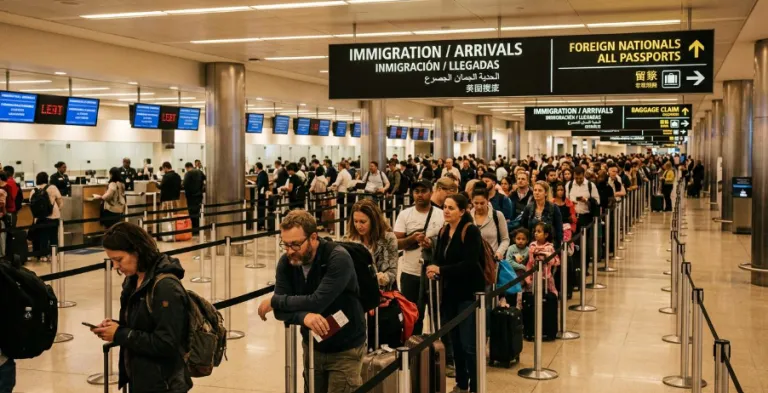
You arrive at an international airport with a two-hour layover. Immigration queues are unusually long, and you reach your boarding gate after it closes.
What should you do?
Contact the airline and explain the circumstances. Ask about the next available flight and whether your booking offers any protection. Check your transit or entry visa requirements before leaving the airport.
Frequently Asked Questions (FAQs)
1. Will the airline provide a free replacement ticket if I miss my connecting flight?
If both flights are part of a protected single-ticket journey and you miss the connection because of an earlier flight disruption, the airline will generally arrange an alternative journey under the applicable conditions. With separate tickets, you may have to purchase another ticket.
2. What happens to my checked baggage if I miss my connecting flight?
Your baggage may be held at the connecting airport, transferred to your replacement flight or require collection and recheck-in. Contact the airline's baggage desk for confirmation.
3. Can I leave the airport if I miss my international connection?
Only if you meet the country's immigration and entry requirements. An airport transit visa does not necessarily allow you to leave the international transit area.
4. Will the airline pay for my hotel if I miss my connecting flight?
You may be entitled to hotel accommodation if the missed connection results from an airline disruption covered by applicable passenger-rights rules. With separate tickets or passenger-caused delays, hotel expenses may be your responsibility.
5. What happens if my connecting flight is the last flight of the day?
The airline may arrange an alternative flight the following day or through another route. Depending on the applicable rules and circumstances, it may also provide meals and accommodation.
6. Can I claim travel insurance for a missed international connection?
Yes, if your policy specifically covers the situation. Some policies cover missed connections caused by delays to an earlier scheduled flight, subject to minimum connection times and other conditions. Self-transfer coverage may be treated differently.
7. Is a two-hour layover enough for an international connection?
It can be sufficient at some airports, particularly for protected airside connections. However, immigration, security checks, terminal changes and baggage collection can make two hours inadequate. Always check the airport's minimum connection time and your specific itinerary.
8. What is the difference between a connecting flight and a self-transfer?
A connecting flight is generally part of a single journey booked under one reservation, with the airline responsible for arranging the connection under the applicable conditions. A self-transfer involves separate flight bookings, where passengers are responsible for making their own connections.
Conclusion
Missing an international connecting flight can be frustrating, expensive and exhausting, especially when you are travelling to a country for the first time.
But the situation doesn't always mean your trip is over. Your options depend largely on whether your flights were booked together, why you missed the connection and the passenger-rights rules that apply.
The smartest approach is to plan longer layovers, understand transit requirements, book protected connections wherever possible and know whom to contact when something goes wrong.
After all, international travel is unpredictable enough. Your connecting flight shouldn't become another adventure you didn't sign up for!
Published at
About Author

Atihsin
Subscribe our Newsletter
Get our weekly tips and travel news!
Related Posts
Travel Essentials You Must Buy To Save Money
Many of us love preparing for a trip by going to a mall and buying travel essentials we think we’ll certainly be needing. But, think about it: How much have you actually spent on all your pre-trave...
Travel Guide to Dubai from India 2023
Welcome to the enchanting realm of Dubai, where ancient traditions seamlessly blend with futuristic marvels. In this comprehensive travel guide, we embark on a captivating journey from India to the dazzling desert metropolis of Dubai. From informatio...
Here’s why Travelling Cheap Can Completely Ruin a Trip
Let’s face it: No matter how budgeted your trips are, they will inevitably cause a noticeable dent in your pocket. We believe it pays to travel thriftily — this makes it possible for all kinds of t...
What to Expect When Travelling to London: Expectations vs Reality
Given the increasing migration inflow to London every year, the defining features of London as a place of endless job opportunities, stunning architecture, and history, as well as the alluring Brit...
What to Expect When Travelling to Nepal: Expectations vs. Reality
What comes to your mind when you first think about Nepal? Majestic views of the sunrise against the snow capped peaks of the Himalayan mountains, rows of colorful prayer flags fluttering in the cri...
Latest Posts
Top 5 Best Train Travel Holidays in the World: Journeys That Are Worth the Ride
From luxurious royal trains to breathtaking mountain railways, explore five of the world's best train travel holidays and discover journeys where the experience is just as extraordinary as the destination.
Hotel Booking Scams: 10 Common Tricks Travellers Should Watch Out For
Fake hotel websites, fraudulent payment links and misleading accommodation listings can ruin a holiday before it begins. Learn how hotel booking scams work, how to spot warning signs and what to do if you become a victim.
Denied Entry at Immigration: Reasons, What Happens & What to Do
A valid visa doesn't guarantee entry into a country. Discover why immigration officers refuse travellers, what happens after an entry denial and how to avoid common mistakes at international airports.
Vietnam Airlines has launched four weekly direct flights between Ahmedabad and Hanoi from November 3, 2026. Check flight timings, operating days and route details.
Losing Your Passport Abroad: What to Do, How to Get an Emergency Travel Document and Return Home
Lost or stolen passport while travelling internationally? Here's a step-by-step guide for Indian travellers to report the loss, obtain emergency documents and get home.