
Hotel Booking Scams: 10 Common Tricks Travellers Should Watch Out For
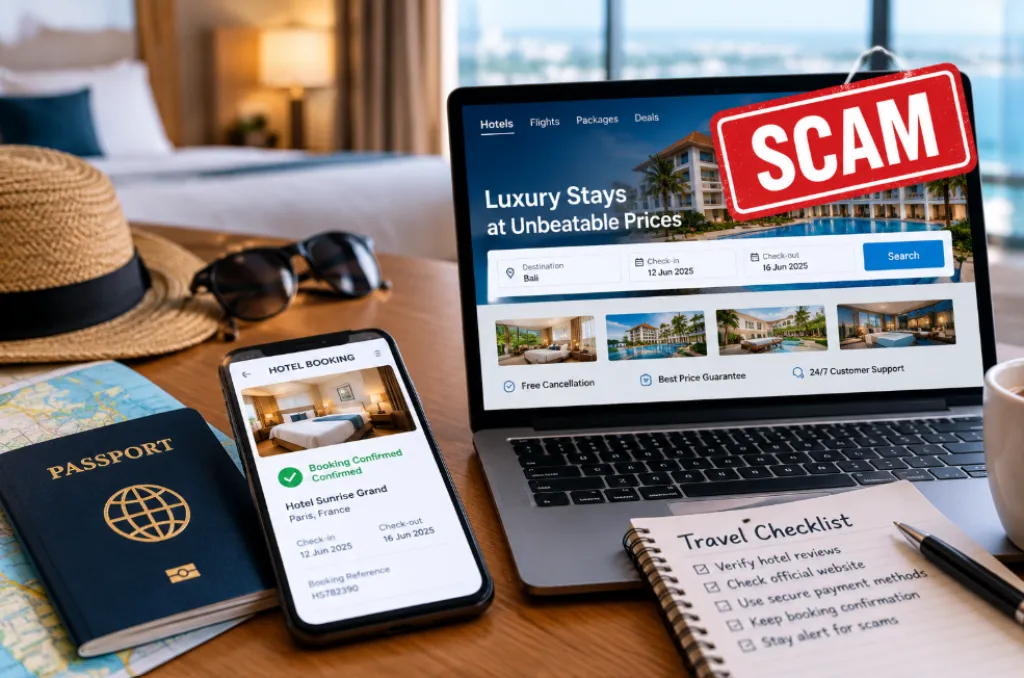
Imagine arriving in a new city after a long journey, only to discover that the hotel you booked doesn't exist. Your booking confirmation looks genuine, the payment has already been deducted, and the phone number listed on the reservation is switched off.
Unfortunately, hotel booking scams are becoming an increasingly frustrating problem for travellers. From fake hotel websites and fraudulent payment links to misleading property photographs and impersonation scams, criminals are finding new ways to exploit people looking for accommodation.
And it isn't just inexperienced travellers who fall victim. Even frequent international travellers can be caught off guard by convincing websites, fake customer support representatives and seemingly legitimate booking confirmations.
Whether you're booking a luxury resort, a budget hostel or a small homestay, knowing how these scams work can help you protect your money and avoid ruining your holiday.
In this guide, we explore 10 common hotel booking scams, how to recognise warning signs, what to do if you've been cheated and how to book accommodation more safely.
1. Fake Hotel Websites
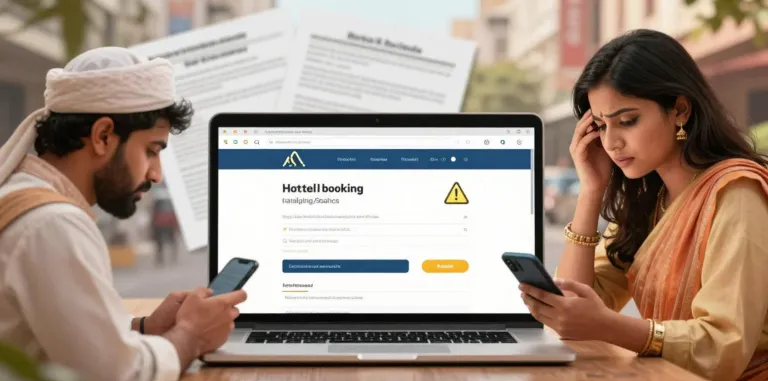 One of the most common accommodation scams involves websites pretending to be legitimate hotels.
Scammers create websites that closely resemble the official websites of established hotels. They copy property photographs, logos, room descriptions and contact details to make the website appear authentic.
Travellers searching for a hotel online may land on one of these websites, particularly when clicking unfamiliar advertisements or sponsored search results.
Once visitors make a reservation and transfer money, they receive a fake confirmation or sometimes no confirmation at all.
Warning signs:
A website with a suspicious or slightly altered domain name.
Prices significantly lower than those on established booking platforms.
No verifiable physical address or contact information.
Requests for direct bank transfers or payments to personal accounts.
Poorly written descriptions and inconsistent hotel information.
How to avoid it: Search for the hotel's official website independently rather than relying entirely on advertisements or links received through messages. Verify its contact information and call the property using a number obtained from an independent, trusted source before making a direct payment.
2. Fake Booking Confirmations
Imagine booking a hotel through a legitimate travel platform and receiving an email or message shortly afterwards asking you to confirm your reservation.
The message may contain the hotel's logo, your booking reference, check-in date and other details.
It might also say that your reservation will be cancelled unless you verify your payment immediately.
This is a common phishing technique. Fraudsters impersonate hotels or booking platforms to trick travellers into sharing payment information.
The links may lead to fake payment pages designed to collect card details, passwords or banking credentials.
Warning signs:
Messages demanding immediate payment to prevent cancellation.
Links directing you to unfamiliar websites.
Requests for card details or one-time passwords through messages.
Email addresses that do not match the hotel's or booking platform's official domain.
How to avoid it: Never make payments through links received in unexpected messages. Open the official booking application or website independently and check your reservation status there.
3. Fake Customer Support Representatives
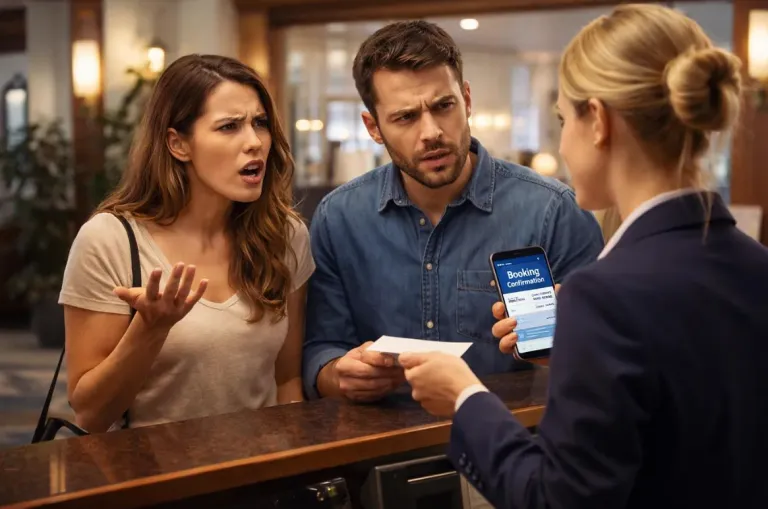
This scam can be particularly convincing because it often begins after a genuine hotel reservation.
Fraudsters impersonate customer support representatives from popular hotel booking platforms or hotel chains.
They may contact travellers through phone calls, WhatsApp or email, claiming that there is an issue with the reservation.
For example, they might say that:
Your payment has failed.
Your booking needs reconfirmation.
Your reservation is at risk of cancellation.
A refund cannot be processed without additional verification.
They may then ask you to share card information, banking details or an OTP.
In some cases, scammers use information obtained from compromised accounts or leaked booking details to make their messages appear genuine.
How to avoid it: Contact customer support only through the official application or website. Never share your OTP, banking password or complete card security details with someone claiming to be a hotel representative.
4. Non-Existent Hotels and Fake Accommodation Listings
This is particularly common on online accommodation marketplaces and classified platforms.
Scammers advertise properties that either do not exist or are not available for rent.
They may use photographs taken from other hotels, real estate listings or social media accounts.
The property could look beautiful online, complete with swimming pools, balconies and attractive interiors. However, when travellers arrive, they discover that the address is incorrect or the actual property belongs to someone else.
In other cases, the property exists but the person advertising it has no authority to rent it out.
Warning signs:
No independent reviews or verifiable property history.
Photographs that appear across multiple unrelated listings.
Owners who refuse video calls or property verification.
Requests to pay outside the booking platform.
Unusually attractive prices for premium locations.
How to avoid it: Check reviews across multiple platforms, verify the address using mapping services and contact the property directly through independently verified details.
5. Bait-and-Switch Accommodation Scams
Not every hotel scam involves a completely fake property.
Sometimes, the hotel exists, but the room you receive is very different from the one advertised.
You might book a spacious sea-facing room with a balcony, only to arrive and discover a much smaller room overlooking a parking lot.
In some cases, the hotel claims that the original room category is unavailable and offers a lower-quality alternative.
This practice is commonly called a bait-and-switch scam.
Warning signs:
Hotel photographs that look unusually polished compared with guest-uploaded pictures.
Repeated complaints about room quality.
Unclear room descriptions.
No written confirmation of the room category or included amenities.
How to avoid it: Read recent guest reviews, check traveller-uploaded photographs and save screenshots of the room description and booking confirmation.
If the room differs significantly from what you booked, document the discrepancy and report it to the booking platform immediately.
6. Hidden Charges and Fake Resort Fees
You find a hotel at an attractive price, complete the reservation and assume that your accommodation expenses are sorted.
However, when you arrive, the hotel demands additional payments for services that were not clearly disclosed during booking.
These may include:
Mandatory resort fees.
Cleaning charges.
Service charges.
Local taxes.
Extra charges for facilities advertised as complimentary.
Not every additional fee is fraudulent. Some destinations and properties legitimately charge taxes or mandatory fees. The problem arises when these charges are concealed, misrepresented or introduced unexpectedly.
How to avoid it: Read the complete price breakdown before paying. Check whether taxes, cleaning fees, resort charges and other mandatory expenses are included in the displayed price.
7. Fake Hotel Reviews
Online reviews play a major role in deciding where to stay. Unfortunately, not all reviews are genuine.
Some fraudulent properties create fake positive reviews to appear more trustworthy. Others pay individuals to post favourable feedback or manipulate ratings.
A hotel with hundreds of glowing reviews may therefore not always be as reliable as it appears.
Watch out for:
Multiple reviews using almost identical language.
A sudden increase in five-star ratings.
Reviews that contain very little information about the actual stay.
Repeated complaints about cleanliness, location or customer service hidden among positive ratings.
Suspiciously similar photographs across different listings.
How to avoid it: Read both positive and negative reviews. Give particular attention to recent reviews that discuss specific experiences, such as check-in, cleanliness, staff behaviour and room conditions.
8. Fake Refund and Cancellation Scams
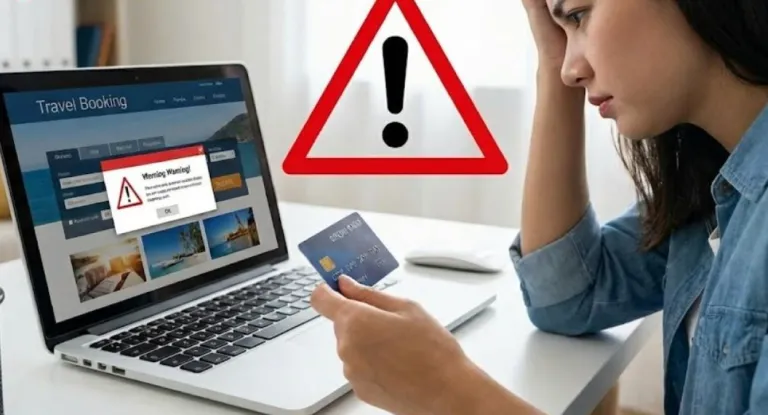
Imagine cancelling a hotel reservation and waiting for your refund.
A few days later, someone claiming to represent the booking platform contacts you and says your refund is ready.
They send a link or ask you to complete a verification process to receive the money.
Instead of receiving a refund, you may end up losing money or exposing your banking details.
Fraudsters can also impersonate hotel staff and claim that your refund has been delayed because of a technical issue.
How to avoid it: Track refunds through the original booking platform or your bank. Never pay a processing fee to receive a routine refund unless the charge is clearly documented and independently verified.
9. QR Code Payment Scams at Hotels
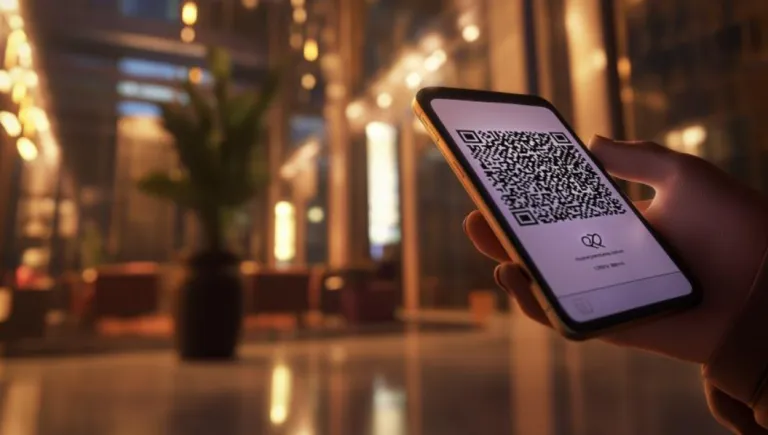
QR codes have made hotel payments and check-ins more convenient, but scammers can exploit this technology.
A fraudster may place a fake QR code over a genuine payment code at a hotel reception or send a fraudulent QR code through a message.
Scanning it may redirect you to a fake payment page or a malicious website.
In some cases, the QR code may direct payment to an account controlled by a scammer.
Warning signs:
QR codes placed over other stickers.
Payment pages with unfamiliar domain names.
Requests to enter sensitive banking information.
Payment details that do not match the hotel's verified account.
How to avoid it: Confirm the payment recipient with the hotel receptionist before completing the transaction. Check the website address after scanning a QR code and always request an official payment receipt.
10. Accommodation Scams Through Social Media
Social media platforms have become popular places to discover boutique hotels, villas, homestays and holiday rentals.
However, not every attractive accommodation advertisement is genuine.
Scammers create social media pages using stolen property photographs and advertise heavily discounted stays.
They often encourage travellers to contact them directly through WhatsApp and offer additional discounts if they pay immediately.
Once the payment is transferred, the account may disappear or block the traveller.
How to avoid it:
Verify whether the property has an independently established online presence.
Check whether the social media account has a genuine history.
Reverse-search suspicious property photographs.
Avoid paying personal accounts without verification.
Use a recognised booking platform with clear payment and dispute procedures.
How to Identify a Fake Hotel Booking Website
Before entering your payment information, spend a few minutes checking whether the website is genuine.
Here is a quick checklist:
What to check | What to look for |
|---|---|
Website address | Correct domain name and secure connection |
Contact details | Verifiable phone number and physical address |
Payment method | Recognised and traceable payment options |
Reviews | Genuine and recent guest experiences |
Property photographs | Consistent images across trusted sources |
Pricing | No unrealistic discounts |
Booking confirmation | Verifiable reservation reference |
Remember that an HTTPS padlock alone does not prove a website is legitimate. Fraudulent websites can also use secure connections.
What to Do If You Fall Victim to a Hotel Booking Scam?
If you discover that your hotel booking is fraudulent, act quickly. The sooner you report the incident, the better your chances of limiting further losses.
1. Contact Your Bank Immediately
If you paid using a credit or debit card, contact your bank or card issuer and report the fraudulent transaction.
Ask whether the payment can be blocked, reversed or disputed.
If you shared banking credentials or an OTP, request that your bank secure the affected account immediately.
2. Report the Scam to the Booking Platform
If the reservation was made through an accommodation platform, report the incident through its official customer support channel.
Provide your booking reference, payment receipt, screenshots and communication history.
3. Preserve All Evidence
Keep copies of:
Payment confirmations.
Emails and messages.
Website screenshots.
Booking references.
Property photographs.
Phone numbers and account details used by the scammer.
This information may be useful when reporting the incident or filing a dispute.
4. Report the Incident to the Authorities
For Indian travellers who experience online financial fraud, the National Cyber Crime Reporting Portal provides a way to report cybercrime.
You can also contact the national cybercrime helpline at 1930 for financial cyber fraud.
Website: https://cybercrime.gov.in
If you are abroad, report the incident to local police or the relevant consumer protection authorities, depending on the circumstances.
5. Inform Your Travel Insurance Provider
Check whether your travel insurance policy covers accommodation fraud, financial losses or related travel disruption.
Coverage is not automatic, and many policies exclude certain types of fraudulent transactions. Submit the relevant documents and ask the insurer to confirm whether your claim is eligible.
How to Book Hotels Safely While Travelling Abroad
Avoiding accommodation scams does not mean you have to stop booking independent hotels or exploring lesser-known properties.
You simply need to be more careful about where and how you book.
Here are some practical precautions:
Book through established platforms or independently verified hotel websites.
Compare prices across multiple booking platforms.
Read recent reviews rather than relying entirely on overall ratings.
Check the property's location and address before paying.
Avoid direct payments to personal bank accounts.
Verify unexpected payment requests through official customer support.
Read cancellation and refund policies carefully.
Keep booking confirmations and payment receipts.
Use a credit card or another payment method with suitable dispute protection where available.
Never share OTPs, passwords or banking credentials with hotel representatives.
A particularly useful habit is to contact the property a day or two before departure and confirm that your reservation is active. Use independently verified contact details rather than numbers provided in suspicious messages.
Frequently Asked Questions (FAQs)
1. How can I check whether a hotel booking is genuine?
Verify your reservation directly through the official booking platform or the hotel's independently verified website. Confirm the booking reference, property address and payment status.
2. Can a hotel cancel my booking after I have paid?
A hotel may cancel a reservation under certain circumstances and according to its booking conditions. However, unexplained cancellations, especially when accompanied by additional payment demands, should be investigated through the booking platform.
3. What should I do if a hotel says it cannot find my reservation?
Show your booking confirmation and payment receipt. Contact the booking platform immediately and ask the hotel to verify the reservation through its official reservation system. Avoid paying again until the issue is clarified.
4. Are hotel bookings through WhatsApp safe?
Not automatically. Some genuine properties accept reservations through WhatsApp, but scammers also use the platform to impersonate hotels. Independently verify the property, payment recipient and booking confirmation before transferring money.
5. Can I get my money back after a fake hotel booking?
Possibly. Contact your bank or payment provider immediately and request a transaction dispute or chargeback where applicable. Recovery depends on the payment method, transaction circumstances and the provider's rules.
6. Are booking platforms responsible for hotel scams?
Responsibility depends on the platform's role, terms, verification processes and the circumstances of the fraud. Report the incident through its official channels and check its applicable customer protection policies.
7. Is it safer to book directly with a hotel or through a booking platform?
Both options can be safe when properly verified. Established booking platforms may offer centralised customer support and dispute procedures, while direct bookings can provide easier communication with the property. Always verify the website and payment details.
Conclusion
A hotel booking scam can cost you much more than the price of a room. It can disrupt your itinerary, leave you stranded in an unfamiliar destination and turn an exciting holiday into a stressful experience.
The biggest mistake travellers make is assuming that a professional-looking website, attractive photographs or a convincing confirmation message automatically means a booking is genuine.
Take time to verify the property, read recent reviews, check payment conditions and avoid rushing into transactions because of limited-time discounts.
A great holiday begins with a good place to stay, but a safe booking is what gets you there without unnecessary surprises.
Published at
About Author

Atihsin
Subscribe our Newsletter
Get our weekly tips and travel news!
Related Posts
12 Insider Tips for Exploring Kochi Like a Local
Discover the spice-scented streets, tranquil backwaters, and vibrant art scene that define this enchanting coastal city in Kerala, India.
10 Best travel hacks for solo travelers in India
Ready for a solo adventure in India? Discover the best travel hacks for solo travelers!
10 Ultimate Hacks to Book the Best Hotels for Cheap
From timing your bookings strategically to leveraging rewards programs and alternative accommodations, learn how to unlock savings and enjoy unforgettable travel experiences on a budget.
10 Common Mistakes Every Traveler Makes
Indian travelers often overpack, skip travel insurance, and neglect local customs. Embrace light packing, smart planning, and cultural respect for a smooth and unforgettable trip.
Top 11 beginner Mistakes to Avoid in Kerala
Planning a trip to Kerala? This blog unpacks 13 mistakes to avoid in God's own Country!
Latest Posts
Top 5 Best Train Travel Holidays in the World: Journeys That Are Worth the Ride
From luxurious royal trains to breathtaking mountain railways, explore five of the world's best train travel holidays and discover journeys where the experience is just as extraordinary as the destination.
Missed your international connecting flight due to delays, immigration queues or terminal changes? Here's what happens next, who pays for a replacement ticket and how to avoid getting stranded.
Denied Entry at Immigration: Reasons, What Happens & What to Do
A valid visa doesn't guarantee entry into a country. Discover why immigration officers refuse travellers, what happens after an entry denial and how to avoid common mistakes at international airports.
Vietnam Airlines has launched four weekly direct flights between Ahmedabad and Hanoi from November 3, 2026. Check flight timings, operating days and route details.
Losing Your Passport Abroad: What to Do, How to Get an Emergency Travel Document and Return Home
Lost or stolen passport while travelling internationally? Here's a step-by-step guide for Indian travellers to report the loss, obtain emergency documents and get home.