
Losing Your Passport Abroad: What to Do, How to Get an Emergency Travel Document and Return Home
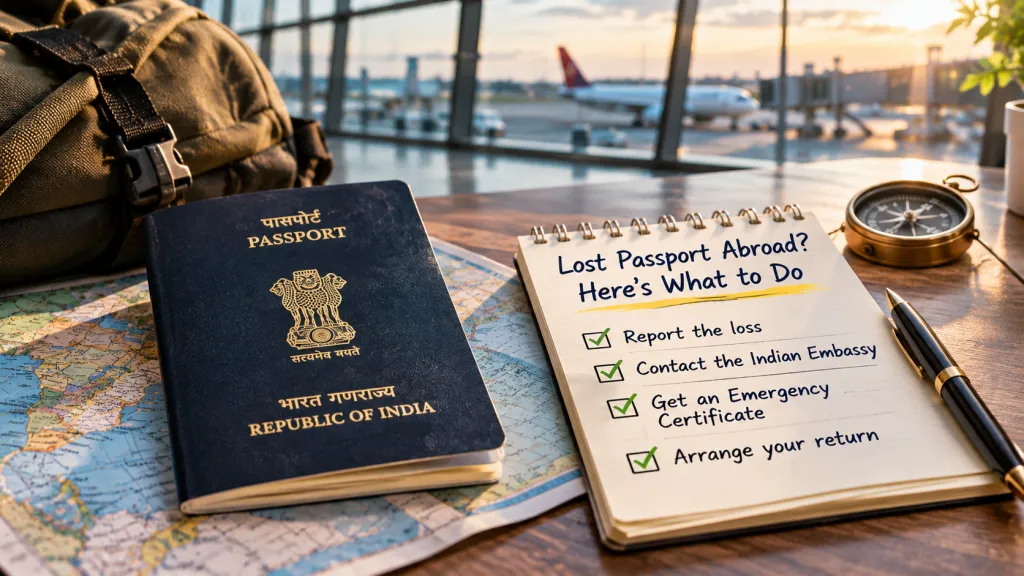
Losing your passport in a foreign country is every traveller's nightmare. One moment you're exploring a new city, enjoying a beach holiday or rushing to catch a connecting flight, and the next you're searching through your bags wondering where your passport disappeared.
Whether it was stolen, misplaced in a hotel, left in a taxi or lost somewhere at an airport, a missing passport can turn an exciting holiday into a stressful experience.
For international travellers, a passport is more than just an identity document. It is proof of nationality, a requirement for international travel and an essential document for dealing with immigration authorities.
But here's the good news: losing your passport abroad does not mean you're stranded indefinitely. There are official procedures to report the loss, obtain replacement travel documents and arrange your return home.
If you're an Indian passport holder travelling overseas, here's a step-by-step guide to what you should do if you lose your passport abroad.
1. Don't Panic - Check Whether Your Passport Is Actually Lost
Before assuming your passport has been stolen, retrace your steps.
Check:
Your hotel room, reception desk and luggage.
Airport security trays and immigration counters.
Restaurants, taxis and public transport.
Your backpack, jacket pockets and document folders.
Lost-and-found departments at airports, hotels and tourist attractions.
If you recently travelled by taxi or public transport, contact the operator immediately.
If you suspect theft, don't waste too much time searching. Move on to reporting the incident and securing replacement documentation.
2. Report the Missing Passport to the Local Police
If your passport has been stolen or genuinely lost, report it to the local police as soon as possible.
Visit the nearest police station or use the local police reporting system, depending on the country.
Request an official police report or incident reference number. This document may be required by your embassy, passport authorities or travel insurance provider.
Make sure the report includes:
Your full name and nationality.
Your passport number, if available.
The approximate date and location of the loss.
Whether the passport was lost or stolen.
Any relevant circumstances surrounding the incident.
Important: Keep a copy of the police report. If it is issued in the local language, ask whether an English translation is available.
3. Contact the Nearest Indian Embassy or Consulate

This is one of the most important steps for Indian travellers.
Once you've reported the loss, contact the nearest Indian Embassy, High Commission or Consulate.
Indian diplomatic missions provide consular assistance to Indian citizens who lose their passports overseas.
Depending on your circumstances, the embassy may guide you through the process of obtaining:
Emergency Certificate (EC): A one-way travel document that can allow an eligible Indian citizen to return to India.
Replacement passport: A new passport issued through the applicable procedure, subject to verification and approval.
Which document you receive depends on your travel plans, circumstances and the applicable consular procedure.
You can locate the nearest Indian diplomatic mission through the Ministry of External Affairs website.
Don't wait until your departure date to contact the embassy. Replacement documents can take time to process.
4. Emergency Certificate vs Replacement Passport: What's the Difference?
Many travellers assume that an embassy will simply issue another passport immediately. However, there are two different options, depending on your situation.
Document | What it means |
Emergency Certificate (EC) | A temporary one-way travel document generally issued to facilitate return to India. |
Replacement passport | A newly issued passport with a different passport number and applicable validity. |
An Emergency Certificate is particularly useful if you need to return to India urgently and a regular passport cannot be issued immediately.
If you intend to continue travelling internationally, ask the embassy about applying for a replacement passport instead.
An important detail: An Emergency Certificate is generally valid only for travel back to India. It is not a substitute for a regular passport that allows you to continue your holiday across multiple countries. Issuing an EC also results in cancellation of the existing passport.
Passport Seva+2
5. Documents You May Need to Apply for an Emergency Certificate
The embassy will need to establish your identity and verify your Indian nationality before issuing an Emergency Certificate.
Although requirements differ between Indian diplomatic missions, you may generally be asked to provide:
Copy of your lost passport, if available.
Police report confirming the loss or theft.
Completed Emergency Certificate application form.
Recent passport-sized photographs.
Copy of your visa or residence permit.
Proof of your travel itinerary or return flight.
Declaration explaining how and where the passport was lost.
Any additional identity or nationality documents requested by the consular officer.
If you don't have a photocopy of your passport, don't panic. Share whatever details you remember, such as your passport number, date of issue and place of issue. The embassy can guide you through the verification process.
You can generally begin the application through the Passport Seva Mission portal, but check the exact instructions of your local Indian Embassy or Consulate before submitting it.
High Commission of India Pretoria+2
6. What Happens to the Visa in Your Lost Passport?
This is something many travellers overlook.
Your passport and visa are two separate documents. Losing your passport does not necessarily mean your immigration permission automatically disappears, but you will need to establish your lawful status with the relevant authorities.
For example, if you have a valid Schengen visa, US visa or UK visa stamped in your lost passport, you may need to contact the relevant country's immigration authorities or embassy to understand the replacement procedure.
Here's what you should do:
Inform the immigration authorities or relevant visa-issuing authority about the lost passport.
Keep a copy of your old visa, if available.
Ask whether the visa needs to be transferred, reissued or otherwise verified.
Follow the destination country's instructions before attempting further international travel.
If your visa was electronic, save a copy of the eVisa approval or confirmation email.
Remember: Getting a new Indian passport or Emergency Certificate does not automatically restore the visa that was in your old passport.
7. Can You Still Board Your Flight Without a Passport?
Generally, no. You cannot simply show your Aadhaar card, driving licence or a photograph of your lost passport and expect an airline to let you board an international flight.
You need a valid travel document accepted by the destination and transit countries.
If you've obtained an Emergency Certificate, check the following before travelling:
Whether your airline accepts the document.
Whether your destination permits entry using an Emergency Certificate.
Whether transit through another country is allowed.
Whether you require additional exit permission or immigration clearance.
An Emergency Certificate is generally intended for a one-way return to India, so avoid booking a complicated connecting itinerary without checking the requirements with the embassy and airline.
8. What If Your Passport Is Lost at an Airport?
Airports are among the most common places where travellers misplace important belongings.
If you realise your passport is missing at an airport:
Immediately contact the airport's lost-and-found department.
Inform airport security or the relevant airport police.
Check with the airline's baggage and customer-service counters.
If you have already cleared immigration, inform the relevant authorities.
Contact the nearest Indian Embassy or Consulate if the passport cannot be recovered.
If you're still at the airport, don't leave the country or attempt to board another flight without resolving your documentation issue.
If your passport is recovered, inform the authorities and follow their instructions about any loss report you may already have filed.
9. Will Travel Insurance Cover a Lost Passport?
Yes, some travel insurance policies provide coverage for passport loss, but the extent of coverage varies.
Depending on the policy, benefits may include:
Reimbursement of certain passport replacement expenses.
Assistance with obtaining emergency travel documents.
Coverage for specified administrative expenses.
Limited financial assistance for expenses arising from passport loss.
However, travel insurance does not necessarily cover every expense associated with a lost passport.
For instance, additional hotel stays, missed flights, visa replacement charges and changes to travel plans may have separate conditions or exclusions.
Contact your insurance provider immediately and retain your police report, receipts and embassy documentation.
Don't assume that every comprehensive travel insurance policy includes passport-loss coverage.
10. What If Your Passport Is Lost While Travelling Solo?
Losing your passport while travelling alone can be particularly stressful because you don't have a companion to help manage the paperwork or contact authorities.
If you're a solo traveller, take these additional precautions:
Keep a trusted family member informed about the situation.
Share your police report and embassy appointment details with someone back home.
Keep digital copies of your passport and visa in a secure location.
Inform your hotel about your situation if you need assistance.
Avoid handing over original documents to unofficial agents.
Keep your phone charged and maintain access to your email.
If you're travelling in a remote location, contact your embassy by phone or email before making a long journey to the nearest consulate.
11. How to Prevent Losing Your Passport Abroad
Prevention is always easier than dealing with embassy appointments and immigration paperwork during a holiday.
Here are a few simple habits that can save you considerable trouble:
Keep your passport in a secure location: Use a hotel safe when appropriate or a concealed travel document pouch.
Carry a photocopy separately: Keep a physical photocopy of your passport's identification page and relevant visa pages in a different bag.
Store digital copies: Save secure digital copies of your passport, visa, travel insurance and flight tickets.
Avoid handing over your passport unnecessarily: If a hotel or service provider requests it, understand the local requirements and whether a secure alternative is accepted.
Use a travel organiser: Keep important documents together rather than moving them between different bags and pockets.
Double-check before leaving: Make it a habit to check your passport whenever you leave a hotel, taxi, airport counter or accommodation.
Final Thoughts
Losing your passport abroad can be frightening, especially when you're travelling alone or have an upcoming international flight. But it doesn't mean your trip is over or that you're permanently stranded in a foreign country.
The key is to act quickly: report the loss to the local police, contact the nearest Indian Embassy or Consulate, arrange the necessary travel documents and check your immigration requirements before travelling.
And before your next international adventure, remember one simple rule: never keep your passport, visa copies and all your emergency documents in the same place.
A little preparation can save you days of unnecessary stress.
Published at
About Author

Atihsin
Subscribe our Newsletter
Get our weekly tips and travel news!
Related Posts
12 Insider Tips for Exploring Kochi Like a Local
Discover the spice-scented streets, tranquil backwaters, and vibrant art scene that define this enchanting coastal city in Kerala, India.
10 Best travel hacks for solo travelers in India
Ready for a solo adventure in India? Discover the best travel hacks for solo travelers!
10 Ultimate Hacks to Book the Best Hotels for Cheap
From timing your bookings strategically to leveraging rewards programs and alternative accommodations, learn how to unlock savings and enjoy unforgettable travel experiences on a budget.
10 Common Mistakes Every Traveler Makes
Indian travelers often overpack, skip travel insurance, and neglect local customs. Embrace light packing, smart planning, and cultural respect for a smooth and unforgettable trip.
Top 11 beginner Mistakes to Avoid in Kerala
Planning a trip to Kerala? This blog unpacks 13 mistakes to avoid in God's own Country!
Latest Posts
Medical Emergencies Abroad: What to Do, Where to Get Help and How to Stay Prepared
From unexpected hospital visits to medical evacuations, here's how to handle medical emergencies abroad, understand insurance and get help when you need it most.
Best Places to Celebrate Christmas in India in 2026
Discover the 6 best places to celebrate Christmas in India in 2026, from Goa's festive beaches and Fort Kochi's traditional celebrations to Kolkata's Christmas lights and Manali's snowy winter escapes.
Lost Luggage at an International Airport? How to Get It Back
Your suitcase hasn't arrived at the baggage carousel. Now what? From filing a missing baggage report to claiming compensation, here's what travellers should do when luggage goes missing abroad, including how rules differ across countries.
10 Tourist Scams Around the World and How to Avoid Them
Planning an international holiday? Beware of fake taxi drivers, free bracelet tricks, fake police officers and fraudulent travel bookings. Here are 10 common tourist scams around the world and simple ways to protect yourself.
Planning a Thailand trip this November? Chiang Mai Airport has cancelled 108 flights and rescheduled 80 ahead of the Yi Peng Lantern Festival. Here's everything travellers need to know about flight restrictions, festival dates and airport travel precautio