
Supreme Court on 700% Airfare Hike: New Rules Explained
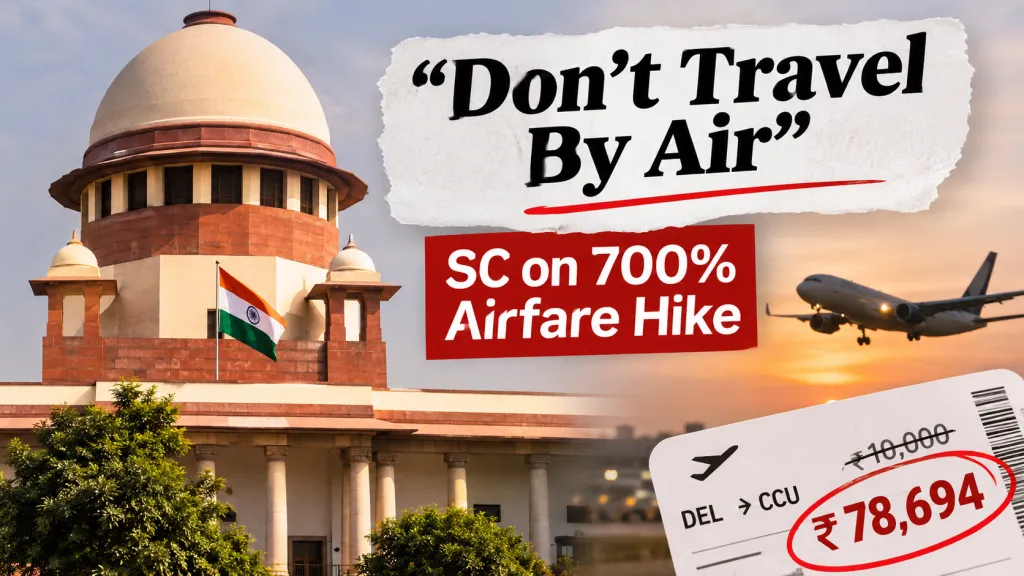
Air travel in India has become a growing concern for passengers as allegations of extraordinary airfare increases reach the Supreme Court. A plea claiming that airfares have surged by as much as 700% has brought renewed attention to airline pricing, passenger rights and the need for greater transparency in the aviation sector.
The matter took an interesting turn when the Supreme Court reportedly declined an urgent hearing, with a judge remarking, “Don't travel by air. Next case.”
But behind the headline lies a larger question: how affordable is flying in India, and who is responsible when ticket prices shoot up dramatically?
What happened in the Supreme Court?
On November 2, 2026, an advocate sought an urgent hearing before a bench comprising Justices Vikram Nath, Sandeep Mehta and Aparesh Kumar Singh.
The advocate informed the court that domestic aviation fares had increased by nearly 700% ahead of the Diwali festive season. He argued that air travel had become an essential service for many passengers and that such steep increases raised concerns under Article 14 of the Constitution, which guarantees equality before the law.
The bench declined the request for urgent listing.
Importantly, the court did not examine the allegations or pass a ruling on whether airlines had violated any regulations. The underlying public interest litigation remains pending.
How expensive have flight tickets become?
The petitioner's application cited examples of unusually high fares on popular domestic routes, particularly for travel around November 6.
Some of the figures highlighted in the application include:
Domestic route | Reported fare |
Delhi-Kolkata | ₹78,694 |
Bengaluru-Delhi (5 AM) | ₹15,901 |
Bengaluru-Delhi (3:45 PM) | ₹40,506 |
Mumbai-Delhi | ₹60,577 |
Delhi-Mumbai | ₹26,793 |
For context, the application stated that a Delhi-Kolkata ticket that ordinarily cost around ₹10,000-₹11,000 had climbed to nearly ₹78,694.
It also pointed to significant differences between flights operating on the same route on the same day.
These are figures cited by the petitioner, not independently established findings by the Supreme Court.
ALSO READ: Kochi to Bangkok Direct Flight 2026 – Air India Express Timings and Schedule
Why are airfares rising so sharply during festivals?
India's festive travel season creates a predictable surge in passenger demand. Diwali, Chhath Puja, Christmas and New Year see thousands of people travelling to their hometowns and popular holiday destinations.
Several factors influence ticket prices:
1. Dynamic pricing
Airlines use demand-based pricing systems in which ticket prices change depending on seat availability, booking patterns and the time remaining before departure. As cheaper fare categories sell out, passengers may encounter considerably higher prices.
2. Limited flight availability
Not every route has sufficient flight frequency to accommodate sudden increases in demand. When trains are fully booked and flights have limited seats, passengers have fewer alternatives.
3. Last-minute bookings
Passengers travelling for emergencies, family commitments or festivals often cannot plan months in advance. This makes them more exposed to expensive last-minute tickets.
4. Reduced competition on certain routes
Where fewer airlines operate or flight options are limited, passengers may have fewer affordable alternatives.
The petition specifically questions whether algorithm-driven dynamic pricing and unpredictable fare changes require stronger regulatory oversight.
What does the petition demand?
The plea filed by social activist S. Laxminarayanan seeks stronger regulation of airline pricing and greater protection for passengers.
Its key demands include:
A cap on festival airfares: Temporary limits on ticket prices during Diwali and other high-demand travel periods.
Regulation of dynamic pricing: Greater oversight of algorithm-based fare fluctuations and sudden price increases.
Restoration of baggage allowance: Increasing complimentary checked-in baggage in economy class from 15 kg to 25 kg.
Stronger passenger protection: An independent regulatory mechanism to ensure transparency in airline pricing and additional charges.
The petitioner argues that passengers travelling for emergencies, employment or family obligations should not be left without affordable options simply because demand is high.
New aviation rules notified: What changes from 2027?
Interestingly, the Supreme Court development comes just as the Centre has notified a new set of aviation regulations.
The Bharatiya Vayuyan Niyam, 2026, published in the Gazette of India on October 31, will come into effect on January 1, 2027.
Rule 192 introduces several requirements concerning airline tariffs:
Airlines must establish fares based on factors including operating costs.
Tariff details must be submitted to the Directorate General of Civil Aviation (DGCA).
Airlines must publish their tariffs on websites and digital platforms.
Passengers must be shown a complete fare breakdown, including taxes, fees, cancellation charges and refund conditions.
The DGCA will monitor airline tariffs.
Most importantly, the Central Government can issue directions to airlines if an extraordinary situation requires intervention in the public interest. Such directions must be proportionate and remain in force for a specified period.
However, the rules do not introduce a fixed ceiling on domestic airfares or guarantee that ticket prices cannot rise sharply during festivals.
When will the Supreme Court hear the matter again?
The larger public interest litigation is scheduled to come up before the Supreme Court on November 16, 2026.
The upcoming hearing is significant because the court will have an opportunity to examine the broader questions surrounding airline pricing, passenger protection and the regulatory framework under the newly notified aviation rules.
Whether this translates into stronger restrictions on dynamic pricing or temporary fare controls remains to be seen.
What does this mean for air passengers in India?
For passengers, the immediate concern remains the affordability of domestic flights during peak travel periods.
The latest development highlights a gap between how airlines price tickets according to market demand and how passengers experience those prices when travelling becomes unavoidable.
A person booking a holiday months in advance may have the flexibility to compare fares, change dates or choose another destination. Someone travelling home for Diwali, attending a family emergency or reporting for work may not have the same luxury.
The new aviation rules promise greater fare transparency and provide the government with intervention powers in extraordinary circumstances. However, their actual impact will depend on how effectively these provisions are implemented.
For now, passengers planning festive travel should consider booking early, comparing different departure dates, checking nearby airports and exploring alternative transport options wherever possible.
The bigger question: Is flying becoming a luxury during India's festive season?
India's aviation sector has expanded considerably, making air travel accessible to millions of people. But accessibility is not simply about the number of airports or flights available. It is also about whether passengers can afford to use them when they need to.
The Supreme Court's latest exchange has brought this issue back into the spotlight. While the refusal to urgently list the plea does not settle the legal questions, the November 16 hearing and the implementation of the new aviation rules could prove important for the future of airfare regulation in India.
After all, flying home for Diwali shouldn't feel like booking a ticket to the moon.
Published at
About Author

Atihsin
Subscribe our Newsletter
Get our weekly tips and travel news!
Related Posts
West Bengal: Tagore's Residence Santiniketan Achieves UNESCO World Heritage Status
Santiniketan, a town in West Bengal's Birbhum region where Nobel laureate Rabindranath Tagore spent much of his life, has been added to the UNESCO World Heritage List.
UK Visitor Visa Fee Hiked: What's the New fee?
Planning to visit the United Kingdoms? Watchout for this Hike in Visa Charges. A UK tourist visa for less than six months will cost an additional £1,543 (£ 15), while UK student visas will cost an additional £13,070 (£127) for visitors from all over the w
India Issues Caution for Travel to Canada - Visa suspended
The advisory, issued by the Ministry of External Affairs (MEA), comes amid a diplomatic row between the two countries over allegations that the Indian government may be linked to the extra-judicial killing of a Sikh separatist in Canada.
First snowfall of the season in Gulmarg
As the chilly winds of winter start to sweep across the northern regions of India, Gulmarg, the crown jewel of Jammu and Kashmir, has once again transformed into a breathtaking winter wonderland. Nature's magic was on full display as Gulmarg recently...
Biswanath Ghat: Best tourism village of India 2023
In an exciting announcement, Biswanath Ghat in Assam has been crowned as India's "Best Tourism Village of 2023" by the Ministry of Tourism. This well-deserved recognition is a testament to the village's unique blend of cultural heritage, natural beau...
Latest Posts
Dark Sky Tourism in India: 7 Best Places for Stargazing
What if your next holiday was all about looking up? Discover dark sky tourism in India, with seven incredible destinations for stargazing, Milky Way photography and unforgettable nights beneath the stars.
10 Best Shopping Places in Dubai for Tourists in 2026
Planning a shopping trip to Dubai? Explore 10 popular shopping destinations, from luxury malls and designer outlets to traditional souks, gold markets and affordable shopping areas.
5 Offbeat Places to Spend Your New Year in India: Escape the Crowds and Welcome 2027 Differently
Tired of crowded New Year destinations? Explore five offbeat Indian getaways featuring riverside bonfires, desert adventures, cultural escapes and peaceful mountain retreats.
4 Best Beach Treks in India for Adventure Lovers
Who said trekking was only about mountains? Discover four incredible beach treks in India featuring hidden coves, dramatic cliffs, beautiful coastlines and unforgettable seaside adventures.
Best International Christmas Destinations from India in 2026
Planning a Christmas holiday abroad in 2026? Explore the best international destinations from India, from snowy European cities and festive Christmas markets to tropical beaches and budget-friendly getaways.