
South Indian Culture and Traditions: Food, Festivals & Lifestyle
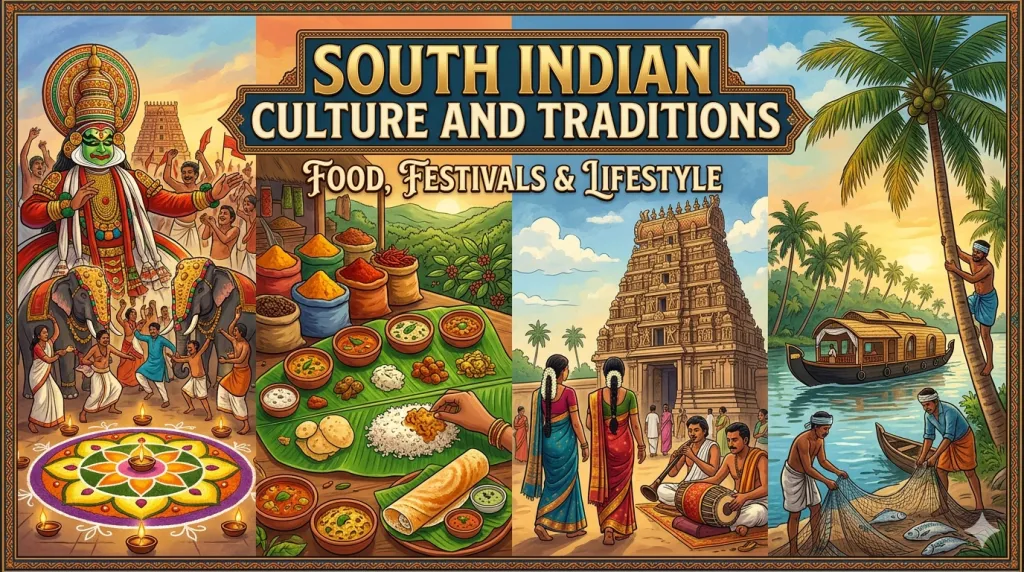
South India greets you like a warm, familiar smile, the kind that instantly puts you at ease.
It doesn’t take long before you feel it: in the golden morning light touching temple towers, in the comforting aroma of spices dancing in hot oil, and in the gentle rhythm of life that feels both calm and full of character.
From the very first moment, there’s a sense of ease and welcome. Everything feels alive yet unhurried, vibrant yet soothing.
It’s the kind of place where mornings feel fresh, days feel meaningful, and even the simplest moments, like sipping coffee or sharing a meal, feel special.
The more you experience it, the more it draws you in. This isn’t just culture you see around you, it’s something you become part of.
It’s in the laughter over meals, the colors outside every doorstep, the sounds that slowly become familiar.
And somewhere along the way, without even realising it, you start enjoying the little things more.
You notice details, you slow down, you smile a bit more often.
South India doesn’t overwhelm you, it uplifts you. It fills your days with warmth, flavor, and a quiet kind of joy that stays with you long after you’ve left.
South India Diaries: Food, Festivals & Places You’ll Love
Best Time to Visit South India
South India is one of those rare places you can visit almost all year round, it just depends on what kind of experience you’re looking for.
Whether you’re chasing cool weather, lush greenery, or vibrant festivals, there’s always a “right time” waiting for you.
November to February: The Sweet Spot
If you’re looking for the most comfortable and all-round perfect time, this is it. The weather is pleasant, the humidity drops, and exploring feels easy rather than exhausting.
It’s the best time for:
City exploration in places like Chennai and Hyderabad
Beach trips to Varkala and Gokarna
Temple visits in Madurai and Rameswaram
This is also when many festivals and cultural events take place, so the vibe feels extra lively.
March to May: Head to the Hills
Summers in South India can get quite warm, especially in cities and coastal areas. But this is actually the perfect excuse to escape to the hills.
It’s the best time for:
Tea gardens in Munnar
Coffee estates in Coorg
Scenic views and cool weather in Ooty
These places feel like a completely different world, cool, green, and incredibly refreshing.
June to September: Monsoon Magic
Monsoon transforms South India into something almost cinematic. Everything turns greener, waterfalls come alive, and the air feels fresh and earthy.
It’s the best time for:
Backwater experiences in Alleppey
Nature escapes in Wayanad
Quiet, less crowded travel experiences
That said, rains can be heavy in some regions, so it’s more about slow travel than packed itineraries.
So, When Should You Go?
Want the best overall experience? November to February
Prefer cool weather and scenic views? March to May (hill stations)
Love greenery, rain, and peaceful vibes? June to September
Places to Visit in South India
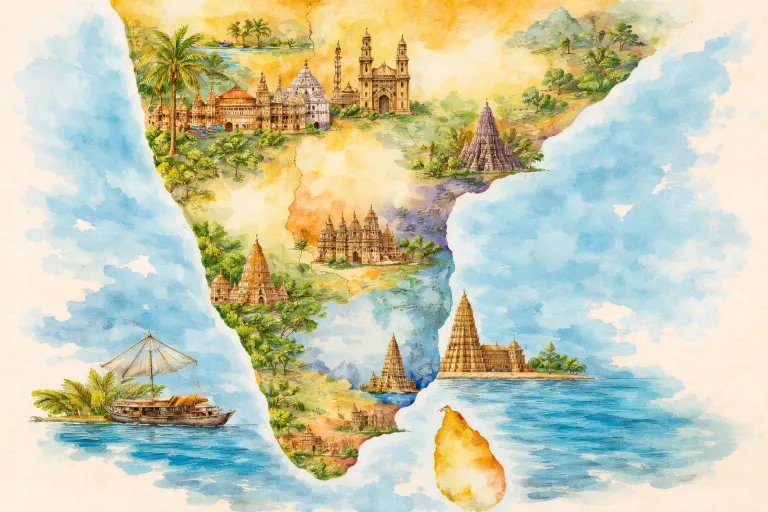
Traveling through South India feels a bit like switching playlists, every stop has a completely different vibe, and somehow, they all work perfectly together.
One day you’re in the middle of misty hills, the next you’re cruising through calm backwaters, and by evening, you’re standing in front of a centuries-old temple wondering how it’s even real.
And the best part? No two places feel the same.
Temple Towns That Feel Like Time Travel
Some places don’t just show you history, they pull you right into it.
Madurai – This city feels alive 24/7. The Meenakshi Temple isn’t just beautiful, it’s buzzing with energy, colors, and stories at every corner.
Tirupati – The journey here is just as powerful as the destination. It’s crowded, yes, but there’s something deeply moving about the experience.
Rameswaram – Calm, coastal, and spiritual. It feels like a pause button for your mind.
Kanchipuram – Temples, silk sarees, and a quiet old-world charm that feels almost cinematic.
You don’t just visit these places, you slow down in them.
Hill Stations That Make You Forget Real Life
If you’ve ever wanted to romanticize your life a little, this is where it happens.
Munnar – Endless tea plantations that look like they’ve been copy-pasted from a dream. Cool हवा, soft mist, and zero stress.
Coorg – Coffee, rain, greenery, repeat. It’s the kind of place where doing nothing feels productive.
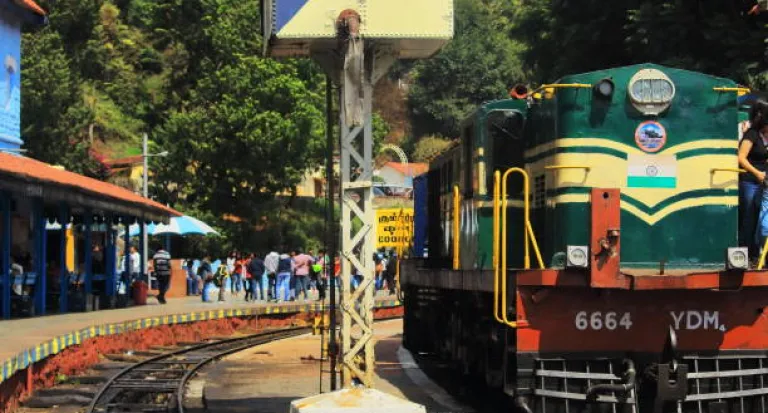
Ooty – Think toy trains, lakes, and that cozy “old movie” vibe.
Wayanad – A little more raw, a little more adventurous. Waterfalls, caves, forests, basically nature showing off.
These are the places where your phone usage magically drops and your mood instantly improves.
Beaches & Backwaters That Feel Like a Different World
South India’s coastline isn’t just pretty, it has personality.
Alleppey – Houseboats, slow water, and that peaceful “do I even have responsibilities?” feeling.
Varkala – Cliffs + ocean views + chill cafés. Perfect for sunsets and random deep thoughts.
Gokarna – Laid-back, less crowded, and effortlessly cool. It’s like Goa’s quieter cousin.
Mahabalipuram – Beaches with ancient stone carvings casually existing nearby. Normal, right?
Here, time doesn’t just slow down, it kind of forgets to move.
Cities That Somehow Do Everything
And then there are the cities, the ones that prove you can have tradition, chaos, calm, and great food all in one place.
Bengaluru – Young, energetic, and always buzzing. Great weather, better food, and a vibe that just works.
Chennai – Strong cultural roots, beautiful temples, and a coastline that adds to its charm.
Hyderabad – History meets modern life, with iconic landmarks and food that deserves its own fanbase.
Kochi – Artsy, coastal, and slightly quirky in the best way.
These cities don’t make you choose between old and new, you get both, and somehow it all makes sense.
Food & Dishes: A Journey Through Flavors
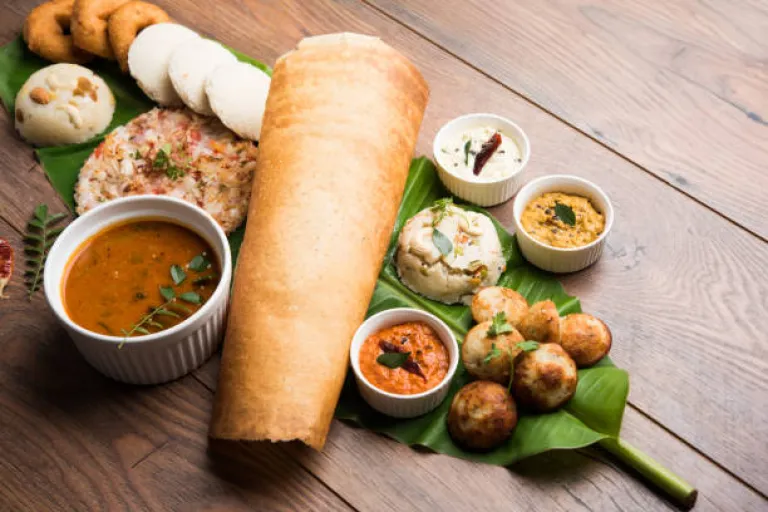
If traveling through South India feels like switching moods, then eating your way through it feels like switching flavors and every stop adds something completely new to your plate.
What makes it exciting is how every place has its own signature dish. You’re not just eating food, you’re tasting geography, climate, and culture, all at once.
Start with Tamil Nadu, where meals are comforting yet full of character. A classic plate of idli with sambar and chutney feels like the perfect beginning, while crispy dosa is something you’ll keep coming back to.
Head towards Chettinad, and suddenly the flavors turn bold and spicy, especially in their famous chicken dishes.
And if you’re in Madurai, don’t miss jigarthanda, it’s sweet, chilled, and honestly, a little addictive.
Move towards Kerala, and everything starts to feel richer and more coastal. Coconut is everywhere, but in the best way possible.
Soft appam paired with vegetable stew, spicy fish curry from Alleppey, and the grand sadya served on banana leaves, it’s not just a meal, it’s an experience where every bite feels thoughtfully placed.
In Karnataka, the food feels both homely and indulgent. From the comforting bisi bele bath to crispy dosas in Bengaluru, there’s a balance that just works.
And of course, Mysore gives us the iconic Mysore pak, rich, soft, and dangerously easy to overeat.
Then comes Andhra Pradesh and Telangana, where the flavors get bolder and spicier. Think fiery curries, tangy pickles, and dishes that don’t hold back.
Hyderabad, of course, steals the spotlight with the legendary Hyderabadi biryani, fragrant, layered, and absolutely worth the hype.
And just when you think you’ve had enough, there’s always room for one more thing, filter coffee.
Strong, frothy, and somehow the perfect ending (or beginning) to any meal.
Festivals: Where Tradition Meets Joy
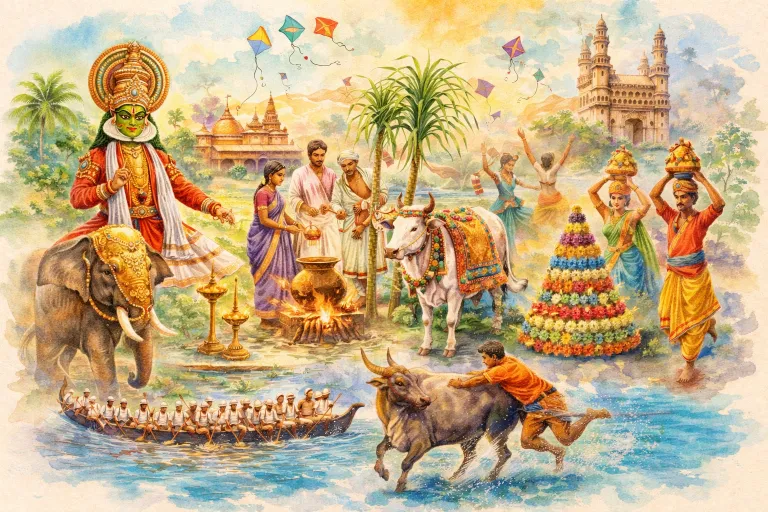
If everyday life in South India feels calm and grounded, festivals are when everything lights up, with color, energy, and a whole lot of heart.
It’s like the entire region collectively decides, “Okay, today we celebrate properly.”
What makes these festivals truly special is how real they feel. They’re not just about decoration or rituals, they’re deeply connected to nature, seasons, and stories that people have grown up with.
Take Pongal. It’s not just a festival, it’s gratitude you can actually see. Homes are cleaned, decorated with kolams, and the highlight?
A pot of rice bubbling over intentionally, symbolizing abundance. It’s simple, joyful, and surprisingly wholesome.
Then comes Onam, which honestly feels like a full-on cultural experience. You’ve got beautiful flower carpets (pookalam), traditional dances, and of course, the legendary Onam Sadya, a massive feast served on banana leaves with more dishes than you can count.
It’s festive, yes, but also warm and deeply inclusive. Everyone feels like they belong.
Ugadi brings a slightly different vibe. It’s thoughtful, almost reflective. The special dish prepared on this day combines sweet, sour, and bitter flavors, a subtle reminder that life isn’t just one thing, and that’s okay.
Even Diwali feels a little different here. In many parts of South India, it starts early in the morning with oil baths, prayers, and a fresh, new-beginning kind of energy. It’s less about the noise and more about the feeling.
And that’s really what stands out. These festivals aren’t something you just watch from the sidelines.
You get pulled in, into the food, the laughter, the rituals, the chaos, and the joy. Before you know it, you’re part of it.
Also read: 7 Unmissable Festivals & Events in South India – 2026
A Lifestyle Rooted in Balance
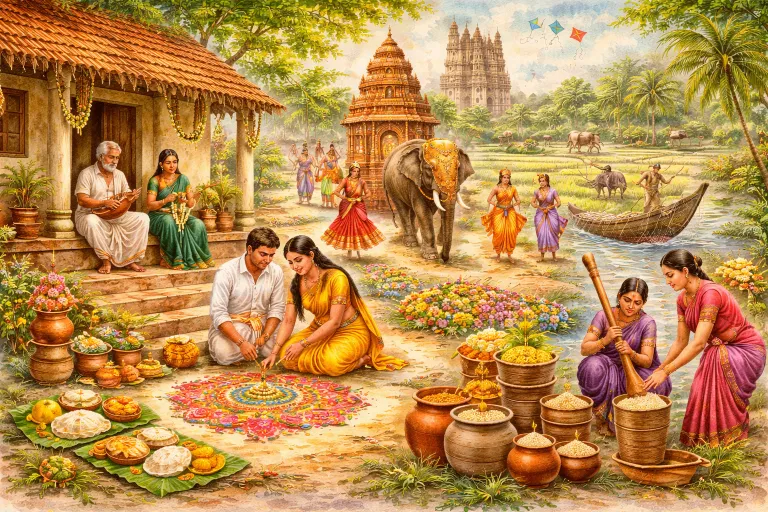
Beyond all the celebrations and incredible food, what really stays with you is the lifestyle. It’s not flashy or complicated, it’s just… well-balanced.
Life here feels intentional in the best way possible.
Mornings start early, but not in a stressful way. There’s a calmness to it. You might see someone carefully drawing a kolam outside their home, hear temple bells in the distance, or simply sit with a cup of coffee while the day slowly begins. Nothing feels rushed.
Practices like Yoga aren’t treated like a trend or a task. They’re just a natural part of life, something people grow up with.
The same goes for classical music and dance, they’re not just hobbies, they’re respected, practiced, and deeply valued.
Even clothing carries a quiet elegance. The Kanjeevaram saree isn’t just beautiful, it’s meaningful. Worn during special occasions, passed down through generations, and always appreciated.
Men in veshtis or mundus add to that same sense of effortless tradition.
And then there’s family. It’s at the center of everything. Meals are shared, festivals are celebrated together, and traditions are carried forward in the most natural way. Nothing feels forced, it just happens.
The Quiet Beauty of It All
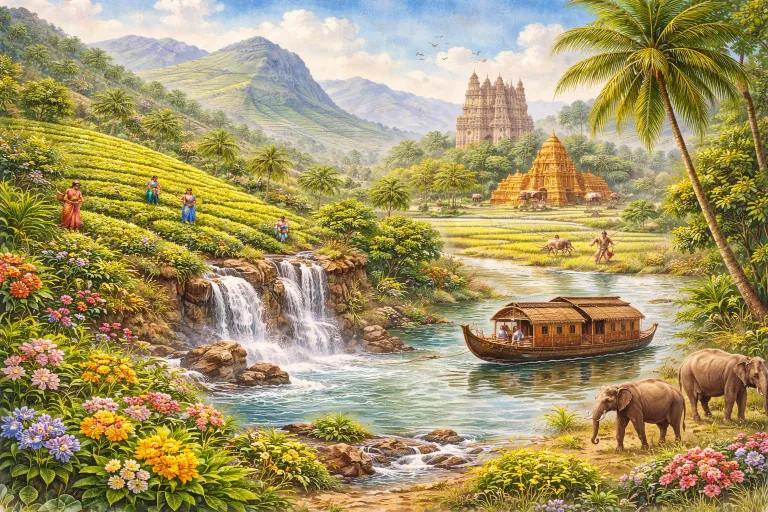
What makes South India truly special isn’t just its food, festivals, or lifestyle. It’s how naturally everything fits together.
Nothing feels like it’s being put on display. Traditions aren’t performed for attention, they’re simply lived, every single day.
And that’s what makes it so refreshing.
In a world that’s always rushing, always trying to keep up, South India gently reminds you to slow down a little.
To enjoy your food. To celebrate fully. To sit with your people. To notice the small things.
Because here, culture isn’t something you check off a list.
It’s something you experience, little by little, until one day, you realize it’s become a part of you too.
Also read: 5 Butterfly Hotspots in South India for Nature Lovers This Spring
FAQ Section
1. What is South Indian culture known for?
South Indian culture is known for its rich traditions, classical art forms, temple architecture, flavorful cuisine, and vibrant festivals deeply connected to nature and spirituality.
2. What are the most famous South Indian dishes?
Popular dishes include idli, dosa, sambar, Hyderabadi biryani, appam with stew, bisi bele bath, and filter coffee.
3. Which are the best places to visit in South India?
Top destinations include Munnar, Coorg, Ooty, Alleppey, Varkala, Madurai, Hyderabad, and Kochi.
4. Which festivals are celebrated in South India?
Major festivals include Pongal, Onam, Ugadi, and Diwali, each celebrated with unique regional traditions.
5. What makes South Indian lifestyle unique?
The lifestyle focuses on simplicity, balance, family values, early routines, traditional practices like yoga, and a strong connection to culture and community.
Published at
About Author

Prerna Dixit
Subscribe our Newsletter
Get our weekly tips and travel news!
Related Posts
8 Impressive World Heritage Sites in India to Visit
Truth is, India is more than just authentic mouth-watering curries, intricate traditional saris, colourful Bollywood films and nail-biting cricket matches. In fact, India is also the birthplace of...
10 Must-See Sights in Jaipur, India’s Pink City (2023)
India, with its mysterious and exotic charms, is just the sort of country that even a whole lifetime spent exploring wouldn’t be able to suffice. From the majestic Himalayan mountain peaks to charm...
Top 10 Enchanting Honeymoon Destinations for Romantic Getaways!
India is a land of diversity, culture, and romance. It offers a variety of honeymoon destinations that suit every taste, budget, and preference. Whether you want to enjoy the snow-capped mountains,...
5 Koreatowns in Southeast Asia You Need to Visit in Your Lifetime!
Picture this: You’re watching a Korean drama where the main characters are walking along Seoul’s vibrant streets. It’s a cold winter night. They enter a pocha (a local bar with food) where...
13 Historic Sites in the Philippines to Visit (2023)
The Philippines has long been considered a top tourist destination by people all over the world. Not only does it have plenty of
Latest Posts
Uttar Pradesh plans to integrate its Buddhist and religious tourism circuit across eastern UP, improving connectivity, infrastructure, and spiritual travel experiences for domestic and international visitors.
IndiGo Reaches Record 66.3% Domestic Market Share as Competition Shifts in Indian Aviation
IndiGo has achieved a record 66.3% domestic market share, reinforcing its dominance in India's aviation industry, according to the latest DGCA data.
**Excerpt (under 160–200 characters):** Saudi Arabia has introduced a new Package Visa that integrates visa applications with flights, hotels, and travel services, making trip planning faster and more convenient for international travellers.
Thailand has retained visa-free entry for Indian travellers, but the maximum stay is now 30 days instead of 60. Here's what you need to know before your trip.
DGCA Warns IndiGo Over Safety Lapses in Dangerous Goods Handling: What Travellers Should Know
India's DGCA has issued a warning to IndiGo after identifying lapses in dangerous goods handling during a regulatory audit. Here's what travellers need to know.