
Hyderabad’s Traffic Crisis: Can More Buses and Fewer Private Vehicles Give the City Its Roads Back
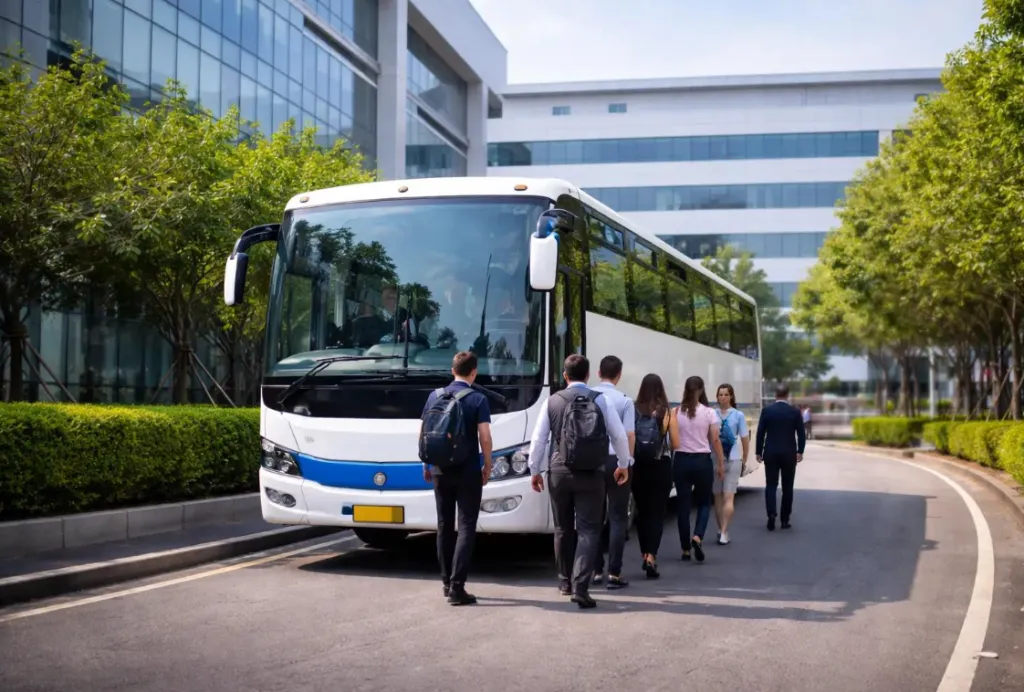
Hyderabad is growing rapidly, but its roads are struggling to keep up. What was once a manageable daily commute is increasingly turning into a frustrating experience, particularly for people travelling through the city's IT corridor. With traffic congestion worsening, travel times rising and private vehicles dominating the roads, Hyderabad is now facing an important question: Should the city continue making more space for vehicles, or start making more space for people?
Two recent developments have brought this debate into focus. More than 15 corporate organisations have pledged to reduce employee commute vehicles by 10% by 2027, while former Bogotá mayor Enrique Peñalosa has urged Hyderabad to prioritise buses, pedestrians and cyclists over private vehicles.
Together, these developments point towards a bigger conversation about the future of urban mobility in one of India's fastest-growing cities.
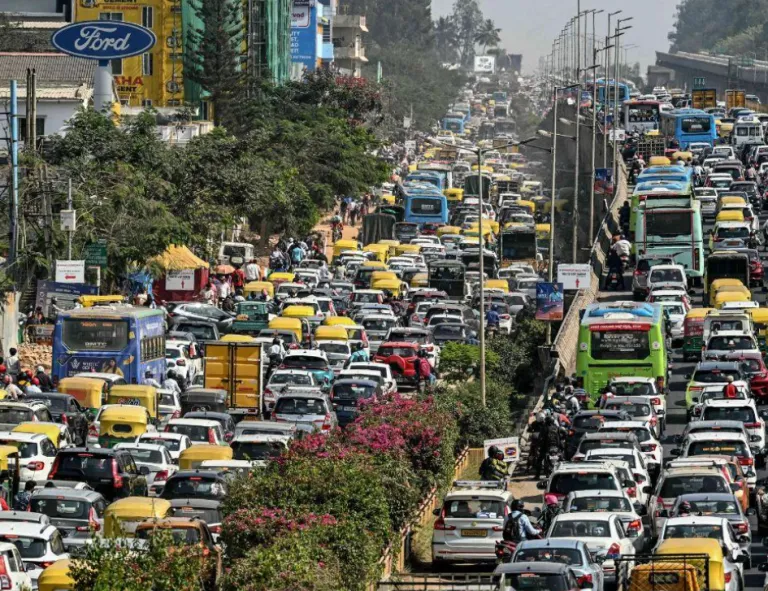
Hyderabad's Daily Commute Is Getting Longer
Anyone travelling through areas such as Hitech City, Madhapur, Gachibowli, Raidurg and the Financial District is familiar with the daily traffic struggle.
According to a recent report by The New Indian Express, commute times in Hyderabad's IT corridor have nearly doubled in five years, increasing from around 20–25 minutes to 40–45 minutes. If congestion continues at the current pace, journeys could take close to an hour in the next two to three years.
The numbers reveal another interesting problem. On the seven-kilometre JNTU–Raidurg stretch, private vehicles account for more than 80% of traffic. Cars represent approximately 43% of vehicles, while two-wheelers account for another 40%. Buses, meanwhile, make up just 2%.
In other words, thousands of people are travelling through the same roads, often in individual cars or two-wheelers, while public transport carries a relatively small share of commuters.
This raises an important question: Can a city keep expanding its roads to accommodate an ever-increasing number of private vehicles?
Corporates Join Hands to Reduce Traffic
In a significant move, more than 15 corporate organisations have signed the Corporate Mobility and Sustainability Pledge during the three-day Cyberabad Moves 2026 initiative at T-Hub.
Their target is to reduce employee commute vehicles by 10% by 2027.
The proposed measures include:
Encouraging employees to use public transport.
Promoting carpooling and shared mobility.
Replacing individual office cabs with larger shuttle buses.
Improving connections between Metro stations and workplaces.
Introducing flexible and hybrid working arrangements.
Staggering office timings to reduce peak-hour congestion.
This is an important development because large companies have considerable influence over how thousands of employees travel every day.
Instead of every employee travelling in a separate car or cab, companies can organise shared transportation, create convenient shuttle routes and encourage employees to leave their personal vehicles at home.
Some organisations are already experimenting with pooled mini-buses, designated Metro pick-up points and dedicated parking spaces for employees who share rides.
The idea is simple: fewer vehicles should be needed to transport the same number of people.
The Bogotá Lesson: Make Room for Buses, Not Just Cars
The Bogotá Lesson: Make Room for Buses, Not Just Cars
One of the most interesting perspectives at Cyberabad Moves 2026 came from Enrique Peñalosa, the former mayor of Bogotá, Colombia.
His message to Hyderabad was straightforward: improving public transport is not enough if cities continue giving priority to private vehicles.
Drawing from Bogotá's experience, Peñalosa argued that Hyderabad must make more room for buses and restrict excessive private vehicle use.
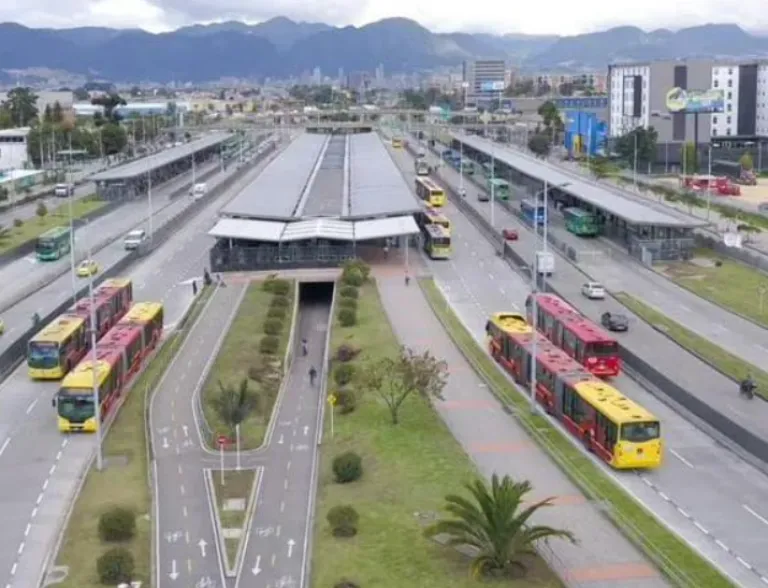
Bogotá is particularly relevant because it developed the TransMilenio Bus Rapid Transit (BRT) system, which uses dedicated bus corridors to move large numbers of people efficiently.
Peñalosa emphasised that dedicated bus lanes must be created on the roads where passenger demand is highest, rather than being pushed to less congested streets simply to avoid inconveniencing car users.
He also highlighted the importance of protecting bus lanes, creating proper stations and allowing buses to move without being obstructed by other traffic.
His argument challenges a common assumption: building more Metro lines, flyovers and wider roads will automatically solve traffic congestion.
A city may improve mobility through better public transport, but congestion will remain a problem if private vehicle use continues to grow unchecked.
Why Hyderabad Needs Better Buses
For many commuters, taking a bus is not necessarily the first choice. The reasons are familiar: irregular timings, overcrowding, uncomfortable journeys, limited routes and poor connections between bus stops and final destinations.
A person working in Gachibowli but living in an area without a convenient bus connection may find a personal vehicle or office cab much easier.
This is why simply asking people to stop using their cars is unlikely to work. Public transport must become a genuinely attractive alternative.
The Telangana State Road Transport Corporation (TGSRTC) has plans to introduce 3,500 electric buses over the next two years, including 1,000 air-conditioned buses. The first batch of AC buses is expected to serve Cyberabad.
There is also an opportunity for companies and transport operators to work together to design bus routes around employee travel patterns.
A comfortable, air-conditioned bus with predictable timings, convenient pick-up points and reliable last-mile connectivity could persuade many office-goers to reconsider their daily commute.
The goal should not simply be to have more buses on the road, but to make bus travel convenient, dependable and comfortable.
The Other Side of the Solution: Pedestrians and Cyclists
An important part of Peñalosa's message was that roads should not be designed exclusively for motor vehicles.
Footpaths, cycling tracks and pedestrian-friendly streets are essential parts of a successful transport system.
In Hyderabad, walking to a bus stop or Metro station can sometimes be an uncomfortable experience. Broken footpaths, encroachments, parked vehicles and poorly planned crossings discourage people from walking even short distances.
If the city wants commuters to use public transport, it must make the entire journey convenient, including the walk from home to the bus stop and from the station to the office.
Better footpaths, safe pedestrian crossings, dedicated cycling lanes and shaded walking routes could make a significant difference.
A city should not measure its success only by how quickly cars move. It should also consider how easily people can walk, cycle and access public transport.
Can Hyderabad Learn from Other Cities?
There are several international examples worth considering.
Bogotá, Colombia: Its TransMilenio BRT network demonstrates how dedicated bus corridors can move large numbers of commuters.
London, UK: An integrated transport network connects buses, the Underground, trains and other transport services, making it easier to travel without a private car.
Amsterdam, Netherlands: Extensive cycling infrastructure makes bicycles a practical everyday transport option rather than merely a recreational activity.
Singapore: Congestion management measures, including electronic road pricing and vehicle ownership controls, help manage demand for road space.
These cities have different geographical, economic and social conditions, so Hyderabad cannot simply copy their models. However, their experiences offer valuable lessons about prioritising public transport and using road space more efficiently.
What Needs to Change in Hyderabad?
Reducing traffic congestion will require more than a single policy or infrastructure project. It needs coordinated action from the government, transport authorities, companies and citizens.
Some important steps could include:
More frequent buses: Services should operate at predictable intervals, particularly during office hours.
Dedicated bus lanes: Buses should not get stuck in the same traffic as private cars.
Better Metro connectivity: Feeder buses and shuttles should connect residential areas and office campuses with Metro stations.
Corporate transport initiatives: Companies should actively promote carpooling, shared cabs and office buses.
Safer walking infrastructure: Footpaths and pedestrian crossings must be treated as essential infrastructure.
Smarter parking policies: Parking should not be allowed to occupy valuable public space indiscriminately.
Flexible working arrangements: Hybrid schedules and staggered office timings can reduce the number of people travelling at the same time.
The proposed corporate pledge is a promising beginning, but its success will depend on measurable results rather than announcements alone.
The Bigger Question: What Kind of City Does Hyderabad Want to Become?
Hyderabad is at an important crossroads. Its technology industry, expanding commercial districts and growing population are signs of economic success. But this growth also brings pressure on roads, public spaces and everyday life.
Longer commutes mean less time with family, greater fuel expenses, increased stress and more pollution. Traffic congestion is not just a transportation problem; it affects the overall quality of life.
The 10% vehicle reduction target by 2027 is a welcome step, but the city needs a broader vision. Better buses, dedicated public transport corridors, reliable Metro connections and pedestrian-friendly neighbourhoods must become priorities.
Ultimately, the objective should not be to build a city where everyone can own and drive a vehicle. It should be to build a city where people do not need one for every journey.
Perhaps the real measure of a developed city is not how many cars its roads can accommodate, but how easily its people can move around without needing a car.
Published at
About Author

Atihsin
Subscribe our Newsletter
Get our weekly tips and travel news!
Related Posts
IMD Issues Heavy Rain Alerts Across India: Plan Your Trips Carefully
IMD issues heavy rain alerts across India for July 22-28. Metro cities & travel spots like Mumbai, Himachal, Amarnath face disruptions. Plan trips carefully: check alerts, pack smart, prioritize safety.
Watch: Massive Flash Flood Washes Away Uttarkashi’s Dharali Village After Cloudburst
Several people feared trapped
Forget Everything Else: Indian Travellers Swear by These Packing Essentials
Indian travellers may forget their chargers, clothes, and even pets, but there's one quirky item they always carry. Find out what tops the list!
Why Your Commute Takes Forever: 2025’s Worst Indian Cities for Traffic
India’s top 10 cities are slowing down, literally. Here’s a deep dive into traffic-clogged metros and what every traveler should expect in 2025.
Gulmarg's Nedous Hotel Sealed: End of a 137-Year Legacy
A 137-year-old legacy ends. Gulmarg's Nedous Hotel sealed after a Supreme Court verdict, signaling a new era of governance in Kashmir.
Latest Posts
Vietnam Digital Nomad Visa 2027 – Eligibility, Stay Duration and Application Details for Indians
Vietnam is considering a dedicated visa framework for foreign remote workers in 2027. Here's what Indian freelancers and professionals need to know.
What Is Coolcationing: The New Travel Trend Among Holidaymakers
Forget crowded beaches and scorching temperatures. Coolcationing is the new travel trend encouraging holidaymakers to explore cooler destinations, mountains, lakes and peaceful nature escapes.
Missed the Last Train or Metro in a Foreign City. Here's What to Do
Missed the last metro or train in a foreign city? Don't panic. Here's how to find alternative transport, stay safe, get back to your hotel and avoid the situation next time.
Why Do Airports Have So Many Duty-Free Shops
Airports are packed with duty-free stores for more than just passenger convenience. Discover how tax savings, passenger behaviour, luxury brands and airport revenue strategies make duty-free shopping a major part of the travel experience.
Etihad Airways is highlighting eight international destinations for Indian travellers, including Calgary, Gothenburg, Chicago, Boston, Charlotte, Washington DC, Munich and Milan.