
Countries With No Traffic Lights: Places Where Traffic Moves Without Red Lights
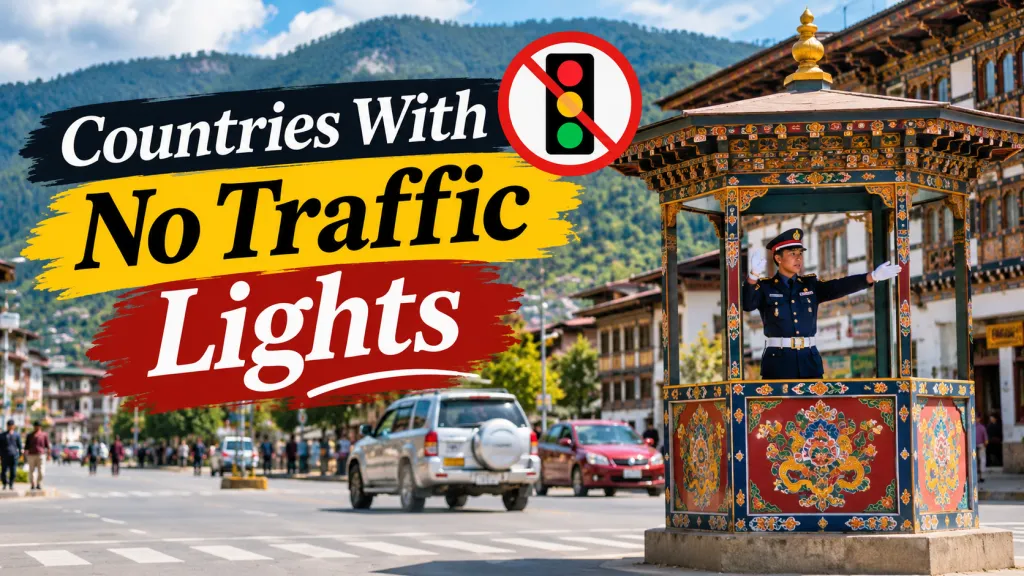
Red means stop, green means go and yellow means get ready. Traffic lights are such a normal part of everyday life that imagining a city without them seems almost impossible. But what if you travelled somewhere where intersections were controlled without a single electronic traffic signal?
Around the world, a few unusual destinations have found ways to manage road traffic using police officers, roundabouts, road signs and even traditional transport systems.
One of the most fascinating examples is Bhutan, whose capital city has become famous for operating without traffic lights. There are also tiny territories where traffic signals are practically unnecessary because of their unique road systems.
So, if you are curious about places where you won't find the familiar red, yellow and green lights, here are some interesting destinations to know about.
1. Bhutan - The Country Famous for Having No Traffic Lights
Bhutan is perhaps the first destination that comes to mind when discussing places without traffic lights. Located in the Eastern Himalayas, this small kingdom is known for its mountain landscapes, monasteries and distinctive approach to development.
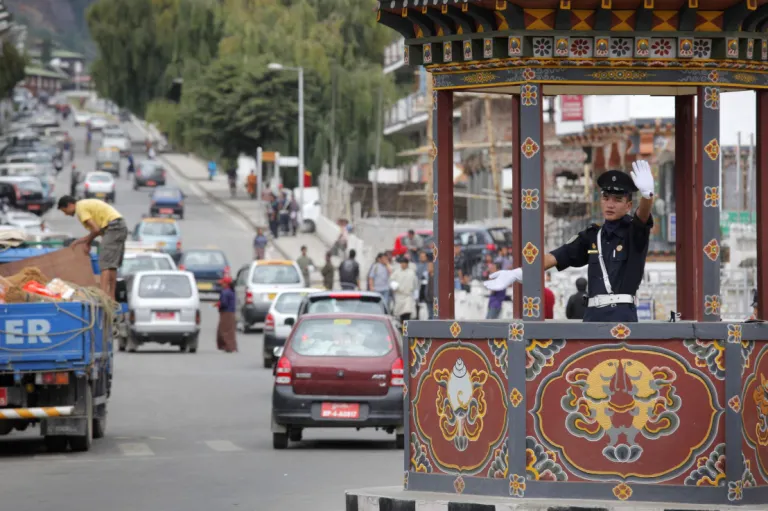
Its capital, Thimphu, has a particularly unusual feature: it has no functioning electronic traffic lights at its intersections. Instead, traffic is controlled by uniformed police officers who direct vehicles using carefully coordinated hand gestures.
One of the most recognisable sights in Thimphu is a traffic police officer standing inside a beautifully decorated wooden booth at a busy junction. Rather than watching a countdown timer, drivers follow the officer's movements.
Interestingly, Bhutan did experiment with installing traffic lights in Thimphu during the 1990s. However, the system was short-lived, and the signals were removed in favour of manual traffic control.
What makes it interesting:
Traffic officers manually manage busy intersections.
The traditional traffic booth has become a recognisable city landmark.
The system gives Thimphu a distinctive character.
Visitors often stop to watch the officers direct vehicles.
Travel experience: Visit Norzin Lam in Thimphu to see the famous traffic police booth in action.
An important distinction: Thimphu is the well-established example of a capital without traffic lights. Claims that absolutely no traffic signals exist anywhere in Bhutan should be treated cautiously.
2. Vatican City - A Tiny Country With Very Little Need for Traffic Lights
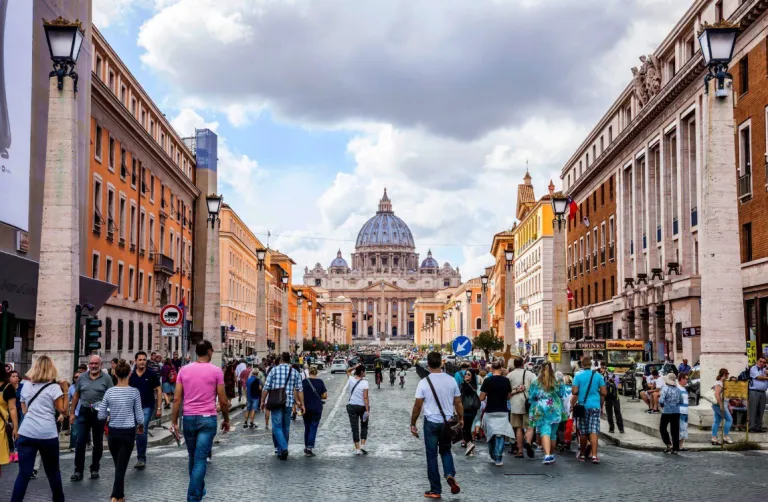
Vatican City is the world's smallest independent country, covering approximately 0.49 square kilometres. Located within Rome, Italy, it is the headquarters of the Roman Catholic Church and home to some of the world's most famous religious landmarks.
With such a small geographical area, its road network is very different from that of an ordinary country. Much of the city is restricted, and pedestrian movement is a major part of the visitor experience.
Vatican City is also frequently mentioned among places without traffic lights. Its limited road network and restricted vehicle access mean it does not require the extensive signal systems found in larger cities.
What makes it interesting:
It is the world's smallest sovereign state.
Much of its visitor movement happens on foot.
Vehicle access is highly restricted.
St Peter's Square and the surrounding attractions are largely explored by walking.
Travel experience: Explore St Peter's Basilica, the Vatican Museums and the Sistine Chapel on foot.
3. Sark, Channel Islands - An Island Where Cars Are Not Allowed
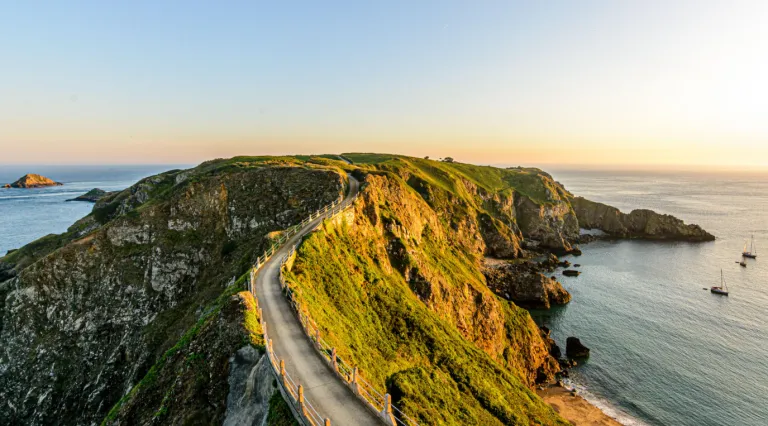
Sark is one of the most unusual places in Europe when it comes to transportation. Located in the Channel Islands, between England and France, this small island has a road system that operates very differently from a conventional destination.
Private cars are prohibited on Sark. Instead, residents and visitors generally travel using bicycles, walking, horse-drawn vehicles and tractors.
With no conventional car traffic, there is little reason for electronic traffic lights. The island's quiet lanes and traditional transport give it an atmosphere that feels far removed from a busy modern city.
What makes it interesting:
Private cars are not permitted.
Horse-drawn carriages remain part of local transport.
Bicycles are a popular way to explore.
The island offers peaceful countryside and coastal scenery.
Travel experience: Explore Sark's scenic lanes, visit La Coupée and enjoy its dramatic coastal views.
Note: Sark is a self-governing British Crown Dependency, not an independent country.
Why Do Some Places Function Without Traffic Lights?
Traffic lights are useful, but they are not the only way to manage vehicles. The need for electronic signals depends on several factors.
Low traffic volume: Smaller towns and islands may not have enough vehicles to justify installing signals.
Roundabouts: These allow vehicles to move through intersections without waiting for electronic signals.
Manual traffic control: Trained police officers can manage traffic flow at busy junctions.
Restricted vehicle access: Places with limited road networks or restrictions on private cars may not need traffic lights.
Road design: Smaller intersections and carefully planned road layouts can reduce the need for automated signals.
Published at
About Author

Atihsin
Subscribe our Newsletter
Get our weekly tips and travel news!
Related Posts
10 Must-See Sights in Jaipur, India’s Pink City (2023)
India, with its mysterious and exotic charms, is just the sort of country that even a whole lifetime spent exploring wouldn’t be able to suffice. From the majestic Himalayan mountain peaks to charm...
5 Koreatowns in Southeast Asia You Need to Visit in Your Lifetime!
Picture this: You’re watching a Korean drama where the main characters are walking along Seoul’s vibrant streets. It’s a cold winter night. They enter a pocha (a local bar with food) where...
13 Historic Sites in the Philippines to Visit (2023)
The Philippines has long been considered a top tourist destination by people all over the world. Not only does it have plenty of
Top 10 Cultural Destinations in Thailand for a Journey Through Tradition!
Destinations in Thailand are always worth the time and interest because they are filled with incredible stories or distinct traditions. With its innate natural beauty, such a country must have an impressive history behind it. Get to know wh...
West Bengal: Tagore's Residence Santiniketan Achieves UNESCO World Heritage Status
Santiniketan, a town in West Bengal's Birbhum region where Nobel laureate Rabindranath Tagore spent much of his life, has been added to the UNESCO World Heritage List.
Latest Posts
The World's Most Haunted Hotels: 7 Hotels Where History Meets the Paranormal
Would you spend a night in a hotel believed to be haunted? Discover seven historic hotels around the world famous for ghost sightings, mysterious incidents and chilling legends.
Places Where It Never Gets Dark: 7 Destinations Where the Sun Never Sets
Imagine exploring a destination at midnight under a glowing summer sky. Discover seven places around the world where daylight lasts almost 24 hours, creating the magical Midnight Sun experience.
Countries With No Airports: How Do They Welcome International Travellers
Discover 5 countries with no conventional airports, why they don't have one, and how travellers can reach these unique destinations through neighbouring countries.
New International Flights from India in 2027 – Routes, Airlines and Destinations
India’s international flight network is set for new developments in 2027, with Air India launching Delhi–Osaka flights and airlines expanding services from Navi Mumbai.
Why Do Hotels Keep White Bedsheets. The Surprising Reasons Behind This Hospitality Trend
Ever wondered why almost every hotel uses white bedsheets? Discover the surprising reasons behind this hospitality trend, including cleanliness, luxury and laundry efficiency.