
Countries With No Airports: How Do They Welcome International Travellers
Imagine travelling to a country where you cannot book a flight directly because it has no airport. No airport terminals, no international runways and no direct commercial flights. Sounds unusual, doesn't it?
While airports are essential gateways for most countries, a few small nations around the world operate without one. Despite having no airports of their own, these countries welcome thousands of international visitors every year through neighbouring nations, road networks, railway connections and, in some cases, helicopter services.
Interestingly, some of these countries are among Europe's most beautiful and wealthiest destinations.
Let's explore the countries with no airports, why they don't have them and how travellers can reach these unusual destinations.
Why Do Some Countries Have No Airports?
The absence of an airport is not necessarily a sign of poor infrastructure. In many cases, geography, population size and limited land availability are the main reasons.
Some countries are so small that constructing an airport with a commercial runway is practically impossible. Others are surrounded by mountains, making airport construction difficult and expensive.
For these nations, using airports in neighbouring countries is often a more practical solution.
1. Andorra - The Mountain Nation Without an Airport
 Nestled between France and Spain in the Pyrenees Mountains, Andorra is one of Europe's smallest countries. Despite being a popular destination for skiing, shopping and mountain tourism, it does not have an airport within its borders.
The country's mountainous landscape makes building a conventional commercial airport challenging. Instead, international visitors generally fly into neighbouring Spain or France before continuing their journey by road.
How to reach Andorra:
Fly into Barcelona-El Prat Airport in Spain.
Alternatively, land at Toulouse-Blagnac Airport in France.
Take a direct bus, taxi or rental car to Andorra.
The journey from Barcelona generally takes around three hours, depending on traffic and conditions.
Interestingly, Andorra also has a nearby airport called Andorra-La Seu d'Urgell Airport, but it is located across the border in Spain, not inside Andorra.
2. Liechtenstein - A Country Between Switzerland and Austria

Located between Switzerland and Austria, Liechtenstein is a small Alpine nation known for its picturesque villages, medieval castles and stunning mountain scenery.
Despite its high standard of living and excellent infrastructure, Liechtenstein does not have an airport. Its small size and proximity to major airports in neighbouring countries make a dedicated commercial airport unnecessary.
How to reach Liechtenstein:
Zurich Airport in Switzerland is a major international gateway.
St. Gallen-Altenrhein Airport in Switzerland is another nearby option.
Friedrichshafen Airport in Germany is also accessible.
From these airports, travellers can continue by train, bus or car.
One interesting detail is that Liechtenstein has a small heliport in Balzers, primarily used for helicopter operations rather than regular commercial passenger flights.
3. Monaco - Luxury Without an Airport
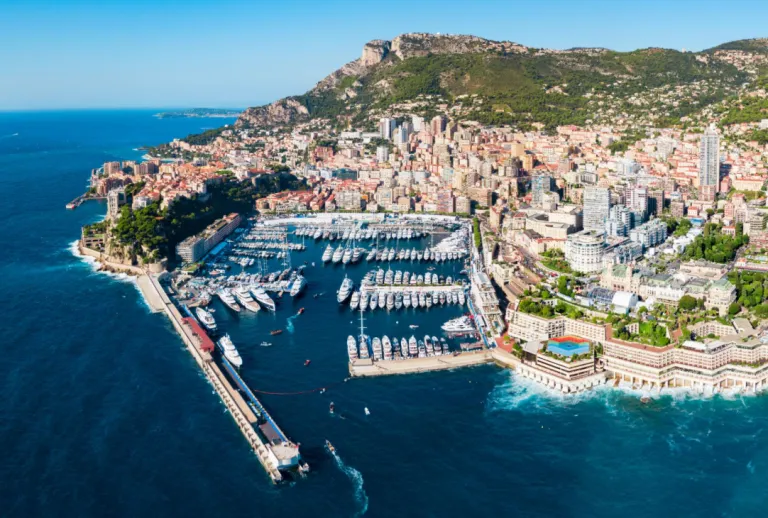
When people think of Monaco, luxury yachts, expensive cars, glamorous casinos and the famous Formula 1 Grand Prix often come to mind.
But here's something surprising: this wealthy Mediterranean country does not have a conventional airport.
With an area of approximately two square kilometres, Monaco has very limited land available for large aviation infrastructure. Instead, it operates a heliport in the Fontvieille district.
How to reach Monaco:
Fly into Nice Côte d'Azur Airport in France.
Take a bus or taxi to Monaco.
Travel by train from Nice to Monaco–Monte-Carlo.
For a more luxurious arrival, take a helicopter transfer from Nice Airport, which takes approximately seven minutes.
Monaco is a particularly interesting example because, although it has no conventional airport, it offers helicopter connections that make air travel possible for visitors.
4. San Marino - A Historic Republic Without a Commercial Airport

Surrounded entirely by Italy, San Marino is one of the world's oldest surviving republics. Its historic architecture, medieval towers and beautiful views of the Italian countryside make it an interesting destination for travellers.
San Marino does have a small airfield at Torraccia, featuring a short grass runway. However, it does not have a conventional international commercial airport serving regular passenger flights.
How to reach San Marino:
Fly into Federico Fellini International Airport in Rimini, Italy.
Alternatively, arrive at Bologna Guglielmo Marconi Airport.
Take a train to Rimini and continue by bus.
Travellers can also hire a car and drive directly into San Marino.
The journey from Rimini is particularly convenient, with regular bus connections to the historic city.
5. Vatican City - The World's Smallest Country Without an Airport

The Vatican City is the smallest independent country in the world, covering approximately 0.49 square kilometres.
Located entirely within Rome, Italy, Vatican City attracts millions of visitors who come to see St. Peter's Basilica, the Vatican Museums and the Sistine Chapel.
Given its extremely small size, constructing a conventional airport is not practical. The country does have a heliport, which is primarily reserved for official use and visiting dignitaries rather than ordinary tourists.
How to reach Vatican City:
Fly into Rome Fiumicino Airport.
Alternatively, arrive at Rome Ciampino Airport.
Take a train, bus, taxi or private transfer into Rome.
From central Rome, Vatican City can be reached by public transport or on foot.
For most travellers, visiting Vatican City is simply an extension of exploring Rome.
Quick Comparison: Countries Without Conventional Commercial Airports
Country | Nearest major airport | How travellers reach it |
|---|---|---|
Andorra | Barcelona, Spain | Bus or car |
Liechtenstein | Zurich, Switzerland | Train, bus or car |
Monaco | Nice, France | Train, bus, car or helicopter |
San Marino | Rimini, Italy | Bus or car |
Vatican City | Rome Fiumicino, Italy | Train, bus or taxi |
Note: San Marino has a small airfield, while Monaco, Liechtenstein and Vatican City have helicopter facilities. The list refers to the absence of conventional commercial passenger airports.
What Does This Mean for International Travellers?
Travelling to a country without an airport is not necessarily difficult. In fact, these destinations often have excellent transport connections with neighbouring countries.
However, travellers should keep a few things in mind:
Check visa requirements: You may need to enter through another country first. Check the transit and entry requirements for that country.
Plan your onward journey: Research bus, train and road connections before booking your flight.
Allow extra travel time: Reaching your destination may involve an additional two to four hours of road travel.
Consider luggage restrictions: Some connecting buses and smaller transport services may have different baggage allowances.
Check border requirements: Understand the entry rules applicable to your nationality, especially when crossing between countries.
Frequently Asked Questions
1. How many countries in the world have no conventional commercial airport?
Five European microstates are commonly listed: Andorra, Liechtenstein, Monaco, San Marino and Vatican City. Some broader classifications differ depending on whether they count small airfields or airports that are no longer operational.
2. Which is the smallest country in the world without an airport?
Vatican City is the smallest independent country in the world and does not have a conventional airport.
3. Can you fly directly to Monaco?
You cannot fly a conventional commercial aeroplane directly into Monaco. However, helicopter services connect Monaco with Nice Côte d'Azur Airport in France.
4. Which country without an airport is easiest to visit?
Monaco is particularly convenient because of its excellent rail and road connections with France. Vatican City is also easy to visit through Rome.
5. Does Andorra have an airport nearby?
Yes. Andorra–La Seu d'Urgell Airport is located in Spain, close to the Andorran border. Barcelona and Toulouse are also popular gateways.
Final Thoughts
Airports may be the backbone of international tourism, but these five countries prove that they are not always necessary to welcome visitors from around the world.
From Monaco's helicopter connections to Vatican City's proximity to Rome, each destination has developed its own way of staying connected.
Sometimes, the journey beyond the airport is just as interesting as the destination itself. And for travellers who enjoy exploring unusual places, these countries deserve a spot on the bucket list.
Published at
About Author

Atihsin
Subscribe our Newsletter
Get our weekly tips and travel news!
Related Posts
Tokyo Airport in Turmoil as JAL Flight Catches Fire: 5 Dead
In an alarming incident at Tokyo's Haneda Airport, a Japan Airlines aircraft caught fire following a collision on the ground. Flight 516, which had arrived from New Chitose Airport in Hokkaido.
Passengers Land in Bangladesh without Passports as Mumbai-Guwahati flight gets diverted!
An IndiGo flight to Guwahati took a bumpy detour to Dhaka due to bad weather, leaving 178 passengers, including a politician, stranded for 11 hours without passports. Frustration flared online, but the airline eventually got them to their destination.
Temporary Suspension of Flight Operations at Delhi Airport Ahead of Republic Day Celebrations
In a significant move affecting air travel, Delhi Airport has announced a temporary suspension of flight operations for over two hours daily. This measure, starting from January 19 and lasting until January 26.
India's Aviation Sector Shows Remarkable Resilience: Only 0.7% Flight Cancellations Reported
Addressing the IndiGo incident, Minister Scindia emphasized that the airline should have proactively communicated with the airport to minimize passenger inconvenience. He highlighted that severe fog conditions led to the issue.
10 Must Know Tips and Tricks while dealing with Indian Airport Customs
Tips and tricks for navigating the Airport customs like a pro!
Latest Posts
Countries With No Traffic Lights: Places Where Traffic Moves Without Red Lights
Imagine a place where roads have no red lights, green lights or countdown timers. Discover unusual destinations where traffic is managed through human direction, restricted vehicles and alternative road systems.
The World's Most Haunted Hotels: 7 Hotels Where History Meets the Paranormal
Would you spend a night in a hotel believed to be haunted? Discover seven historic hotels around the world famous for ghost sightings, mysterious incidents and chilling legends.
Places Where It Never Gets Dark: 7 Destinations Where the Sun Never Sets
Imagine exploring a destination at midnight under a glowing summer sky. Discover seven places around the world where daylight lasts almost 24 hours, creating the magical Midnight Sun experience.
New International Flights from India in 2027 – Routes, Airlines and Destinations
India’s international flight network is set for new developments in 2027, with Air India launching Delhi–Osaka flights and airlines expanding services from Navi Mumbai.
Why Do Hotels Keep White Bedsheets. The Surprising Reasons Behind This Hospitality Trend
Ever wondered why almost every hotel uses white bedsheets? Discover the surprising reasons behind this hospitality trend, including cleanliness, luxury and laundry efficiency.