
Karnataka Bus Fare Hike 2026: New BMTC and KSRTC Ticket Prices From November 5
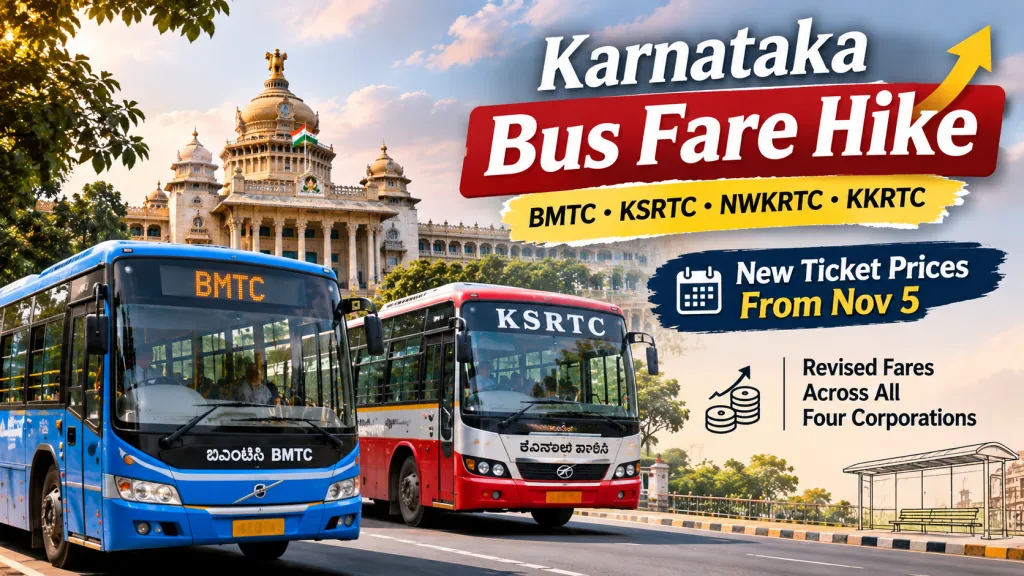
Travelling by bus in Karnataka is about to become more expensive. The state government has announced a revision of fares across all four state-run transport corporations - BMTC, KSRTC, NWKRTC and KKRTC. The revised prices will come into effect from midnight on November 4, 2026, meaning passengers will pay the new fares from November 5.
For Bengaluru residents who depend on BMTC buses for their daily commute, the increase could be particularly noticeable. The minimum BMTC ticket fare has increased from ₹6 to ₹10, while the maximum fare has gone up from ₹35 to ₹45. Intercity passengers travelling through KSRTC services will also have to adjust their travel budgets.
The decision comes amid rising diesel prices, higher employee-related expenses and mounting financial losses faced by Karnataka's state-run transport corporations.
Karnataka Bus Fare Hike 2026: What's Changing?
The fare revision covers the following four transport corporations:
BMTC (Bengaluru Metropolitan Transport Corporation): City buses and airport services across Bengaluru.
KSRTC (Karnataka State Road Transport Corporation): Intercity and long-distance bus services.
NWKRTC (North Western Karnataka Road Transport Corporation): Bus services across north-western Karnataka.
KKRTC (Kalyana Karnataka Road Transport Corporation): Public transport services across the Kalyana Karnataka region.
According to Transport Minister Byrathi Suresh, the average fare increase is approximately 23% for KSRTC, while BMTC fares have increased by around 32-35%. However, the actual increase varies depending on the service and distance travelled.
BMTC Bus Fare Hike: New Ticket Prices in Bengaluru
For Bengaluru commuters, the revised BMTC fares are among the most noticeable changes.
The minimum fare for ordinary BMTC city buses has increased from ₹6 to ₹10, while the maximum ticket fare has increased from ₹35 to ₹45.
Passengers using premium and airport services will also face revised ticket prices.
BMTC bus service | Earlier fare | Revised fare |
|---|---|---|
Minimum city bus fare | ₹6 | ₹10 |
Maximum city bus fare | ₹35 | ₹45 |
Maximum Vajra AC fare | ₹75 | ₹90 |
Minimum Vayu Vajra airport fare | ₹175 | ₹200 |
Maximum Vayu Vajra airport fare | ₹405 | ₹425 |
For people travelling to work, college or other parts of the city every day, even a small increase in individual tickets can add up over an entire month.
Airport commuters will also need to account for the revised Vayu Vajra fares when planning their journeys to Kempegowda International Airport.
KSRTC Bus Fare Hike: Revised Prices for Popular Routes
The fare revision also affects passengers travelling between Bengaluru and other cities and towns in Karnataka.
Here are some reported examples of revised fares on selected routes:
Ordinary bus services
Route from Bengaluru | Old fare | New fare |
|---|---|---|
Nelamangala | ₹35 | ₹44 |
Hoskote | ₹35 | ₹44 |
Doddaballapura | ₹38 | ₹47 |
Anekal | ₹38 | ₹47 |
Magadi | ₹46 | ₹57 |
Malur | ₹46 | ₹57 |
Express and Vegadoota services
Route from Bengaluru | Old fare | New fare |
|---|---|---|
Kolar | ₹81 | ₹100 |
Tumakuru | ₹81 | ₹100 |
Mandya | ₹110 | ₹136 |
Mysuru | ₹160 | ₹197 |
Hassan | ₹219 | ₹270 |
Chikkamagaluru | ₹295 | ₹363 |
These are selected reported fares, not an exhaustive route-wise fare chart. Ticket prices differ according to bus category, distance and applicable fare stages.
Passengers travelling on premium services such as Rajahamsa and air-conditioned buses will also see revised fares. The government has stated that pricing for these services has been determined with reference to prevailing market rates.
Why Has Karnataka Increased Bus Fares?
The government has attributed the revision to increasing operational expenses and the financial condition of the four transport corporations.
Some of the major factors behind the decision include:
1. Rising diesel prices
Fuel is one of the biggest expenses for state-run bus services. Transport Minister Byrathi Suresh cited an increase of ₹10.47 per litre in diesel prices, adding an estimated ₹500 crore to the corporations' financial burden.
The corporations reportedly spend approximately ₹5,694 crore annually on diesel.
2. Increasing employee expenses
Salary revisions and other employee-related payments have added to the financial pressure on the transport corporations.
The government has also highlighted substantial outstanding employee-related liabilities.
3. Mounting financial losses
The four transport corporations are facing accumulated losses and outstanding liabilities running into thousands of crores.
Earlier reports cited losses of approximately ₹9,000 crore. The November 4 announcement put the outstanding liabilities and dues at approximately ₹9,912 crore as of September 30, 2026, according to Moneycontrol.
The government has argued that revising fares is necessary to maintain the financial sustainability of these corporations and ensure the continuation of public transport services.
Will the Shakti Scheme Be Affected?
One question that may come up among passengers is whether the fare revision will affect the state's Shakti scheme.
The Shakti scheme allows eligible women domiciled in Karnataka to travel free on eligible non-air-conditioned state-run buses within Karnataka.
According to the Transport Minister, the scheme will continue, and eligible women passengers can continue using their free travel benefit.
The minister has also maintained that the government reimburses the transport corporations for journeys undertaken under the scheme. He cited pending reimbursements of approximately ₹5,000 crore, which the government has assured will be released in phases.
What Does the Fare Hike Mean for Daily Commuters?
For regular passengers, the increase means that transportation will take up a slightly larger share of monthly household expenses.
Bengaluru commuters using BMTC buses for short-distance journeys may particularly notice the change, with the minimum fare moving from ₹6 to ₹10.
Intercity travellers will also need to factor in higher ticket prices when planning weekend trips, family visits and daily journeys between neighbouring towns.
For people who frequently travel between Bengaluru and destinations such as Mysuru, Tumakuru, Kolar and Hassan, the revised KSRTC fares could make a noticeable difference to travel budgets.
Passengers are advised to check the latest fare displayed at ticket counters or through official booking channels before starting their journeys, particularly when travelling on premium and long-distance services.
Karnataka Bus Fare Hike 2026: Important Details at a Glance
Particulars | Details |
|---|---|
State | Karnataka |
Announcement date | November 4, 2026 |
Effective date | November 5, 2026 |
Transport corporations affected | BMTC, KSRTC, NWKRTC, KKRTC |
Average KSRTC fare increase | Around 23% |
Average BMTC fare increase | Around 32–35% |
Maximum BMTC ordinary city fare | ₹45 |
Shakti scheme | Continues for eligible passengers |
Final Thoughts
Karnataka's latest bus fare revision brings a change to everyday travel costs across the state. While the government has cited rising fuel prices, employee expenses and financial pressure on transport corporations as reasons for the decision, passengers will now have to accommodate higher fares in their daily and intercity travel budgets.
For Bengaluru residents, the increase in BMTC fares is likely to be the most immediately noticeable. For those travelling beyond the city, revised KSRTC fares will make it important to check ticket prices before planning their next journey.
One thing is certain: if public buses are your everyday travel companion in Karnataka, your usual bus ride is going to cost a little more.
Published at
About Author

Atihsin
Subscribe our Newsletter
Get our weekly tips and travel news!
Related Posts
Delhi Metro to Increase Train Services Under GRAP-I: 20 Additional Trips
Delhi Metro will operate 20 additional weekday train trips from October 22, 2026, as Delhi-NCR implements GRAP-I to combat rising air pollution. Discover how the move, along with DMRC’s anti-dust measures, aims to promote public transport and improve air
Madame Tussauds Singapore Launches Icons of India Diwali Campaign
Madame Tussauds Singapore and MakeMyTrip celebrate Diwali with the Icons of India campaign, featuring Bollywood wax figures and a special Buy One Get One ticket offer.
Vande Bharat Train : Delhi-Patna and Mumbai-Bengaluru Lines Update
Indian Railways expands travel options with a Delhi-Patna Vande Bharat festival special and a proposed Mumbai-Bengaluru sleeper service. Explore routes, timings and expected features.
Cyclone Arnab: Indian Railways Issues Travel Advisory for Passengers
Cyclone Arnab is approaching India's east coast, prompting railway safety measures and train service changes. Here's what passengers should know about weather warnings, travel disruptions and official updates.
Indian Railways Charging Rule: Why Your Phone May Stop Charging at Night
Indian Railways has renewed enforcement of its overnight charging restrictions, directing train charging points to remain switched off between 11 PM and 5 AM following a power-bank explosion. Here's what passengers need to know.
Latest Posts
Countries With No Traffic Lights: Places Where Traffic Moves Without Red Lights
Imagine a place where roads have no red lights, green lights or countdown timers. Discover unusual destinations where traffic is managed through human direction, restricted vehicles and alternative road systems.
The World's Most Haunted Hotels: 7 Hotels Where History Meets the Paranormal
Would you spend a night in a hotel believed to be haunted? Discover seven historic hotels around the world famous for ghost sightings, mysterious incidents and chilling legends.
Places Where It Never Gets Dark: 7 Destinations Where the Sun Never Sets
Imagine exploring a destination at midnight under a glowing summer sky. Discover seven places around the world where daylight lasts almost 24 hours, creating the magical Midnight Sun experience.
Countries With No Airports: How Do They Welcome International Travellers
Discover 5 countries with no conventional airports, why they don't have one, and how travellers can reach these unique destinations through neighbouring countries.
New International Flights from India in 2027 – Routes, Airlines and Destinations
India’s international flight network is set for new developments in 2027, with Air India launching Delhi–Osaka flights and airlines expanding services from Navi Mumbai.