
Top 5 Temples in Kyoto: A Complete Guide for First-Time Visitors
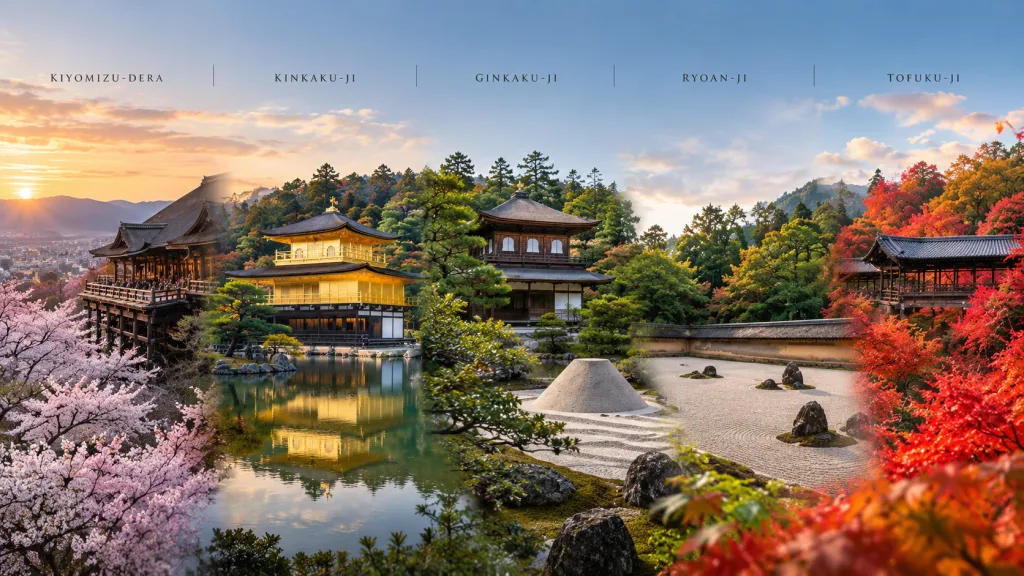
Kyoto is often described as the cultural and spiritual heart of Japan, and few places capture that character better than its temples. From the gleaming Golden Pavilion reflected in a tranquil pond to centuries-old Zen gardens designed for quiet contemplation, Kyoto's temples offer far more than beautiful architecture, they provide a glimpse into Japan's history, Buddhism, art, and traditions.
With hundreds of temples scattered across the city, deciding which ones to visit can be difficult. If you are visiting Kyoto for the first time, these five temples offer an excellent introduction to the city's religious heritage and distinctive aesthetics.
The five temples covered in this guide: Kiyomizu-dera, Kinkaku-ji, Ginkaku-ji, Ryoan-ji, and Tofuku-ji.
1. Kiyomizu-dera Temple : Kyoto's Most Iconic Temple
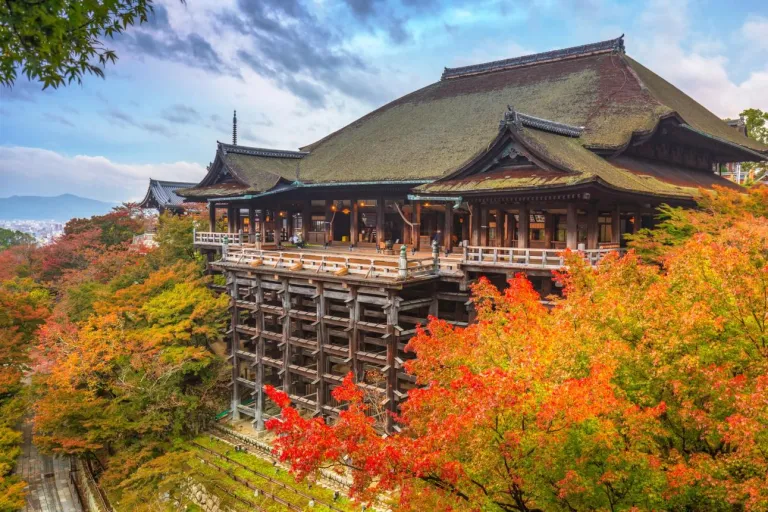 Image credit: Andrea Schaffer / Wikimedia Commons / CC BY 2.0
Best known for: The wooden stage, panoramic views of Kyoto, Otowa Waterfall and prayers to Kannon
Location: Higashiyama, eastern Kyoto
Religion: Buddhist temple
Typical visit: 1.5 - 2 hours
If you have time for only one temple in Kyoto, Kiyomizu-dera is one of the strongest choices.
Founded more than 1,200 years ago, the temple is dedicated to Kannon, the Bodhisattva of compassion. Its name literally means "Pure Water Temple," a reference to the sacred Otowa Waterfall flowing beneath the main hall.
The temple's most famous feature is its enormous wooden stage, traditionally built without the use of nails. Standing on the stage gives visitors spectacular views across Kyoto, particularly during the cherry-blossom and autumn-leaf seasons.
The temple complex itself is extensive. Apart from the Main Hall, visitors can explore the Otowa Waterfall, various gates and smaller halls, viewpoints and surrounding temple grounds.
What makes Kiyomizu-dera special?
The temple is particularly associated with Kannon worship and wishes for blessings and well-being. The Otowa Waterfall is divided into streams, and visitors traditionally drink from the water using long cups attached to poles.
Kiyomizu-dera also hosts special events throughout the year. One particularly distinctive tradition is the Thousand-day Prayer, during which one day's worship is traditionally believed to bring the merit of a thousand days of prayer.
Opening hours
Kiyomizu-dera generally opens very early compared with many Kyoto attractions.
For 2026, the standard schedule includes:
6:00 AM - 6:00 PM: Most of the year
July 1 - August 13: Until 6:30 PM
Special evening openings: Certain periods in spring, summer and autumn extend the closing time to 9:30 PM, with last entry at 9:00 PM.
Because special-opening dates change, check the official schedule before travelling.
Entrance fee
The main temple area generally requires an admission fee. The exact fee can vary for special viewings; for example, the 2026 Thousand-day Prayer special viewing lists ¥500 for adults and ¥200 for elementary/junior-high students.
Can you make an offering?
Yes. Kiyomizu-dera provides a particularly accessible way for visitors to participate in Buddhist worship.
Visitors can:
Purify their hands at the water basin.
Offer incense.
Pray before Kannon in the Main Hall.
Make a monetary offering.
The temple specifically states that a stick of incense can be received for a ¥10 offering.
Dress code
There is no formal dress code for ordinary visitors, but remember that Kiyomizu-dera is an active religious site rather than simply a tourist attraction.
Wear modest, comfortable clothing and avoid extremely revealing outfits. Comfortable shoes are particularly important because the complex involves walking uphill and over uneven surfaces.
Important visitor etiquette
The temple asks visitors to maintain a quiet atmosphere. Smoking is prohibited, eating and drinking outside designated cafés/tea houses is discouraged, and pets are not permitted except service dogs. Commercial photography and certain types of photography equipment are restricted.
Best time to visit: Early morning, especially if you want a quieter experience.
Official temple website: Kiyomizu-dera Official Website
2. Kinkaku-ji : The Golden Pavilion
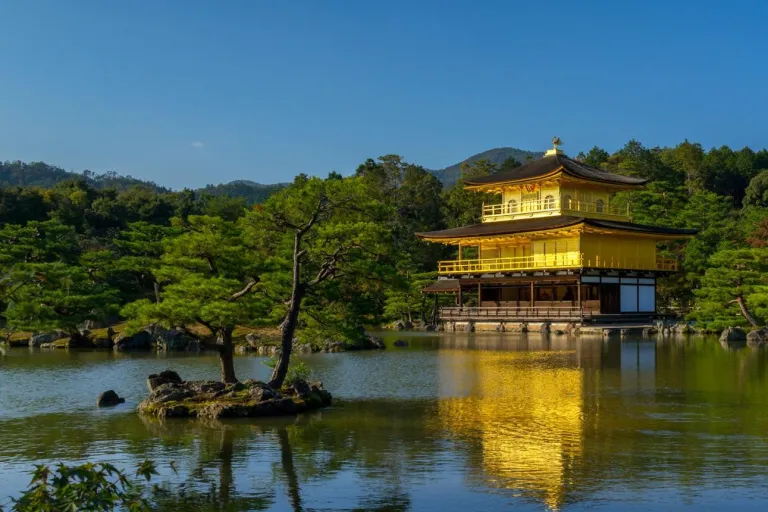 Image credit: Sasurai-bito / Wikimedia Commons / CC BY-SA 3.0
Best known for: Its gold-covered pavilion and mirror-like pond
Official name: Rokuon-ji
Location: Northern Kyoto
Religion: Rinzai Zen Buddhism
Typical visit: 45 - 90 minutes
Few sights in Kyoto are as instantly recognizable as Kinkaku-ji, popularly known as the Golden Pavilion.
The temple's official name is Rokuon-ji, and it belongs to the Rinzai Zen tradition. The famous Golden Pavilion was originally associated with the private villa of Ashikaga Yoshimitsu, the third shogun of the Ashikaga shogunate. After his death, the villa was converted into a temple.
Today, the pavilion stands beside a reflective pond surrounded by carefully designed gardens.
Why is Kinkaku-ji golden?
The upper levels of the pavilion are covered in gold leaf, creating the dramatic appearance that gives the temple its popular name.
The building also has a religious purpose: the Golden Pavilion, or Kinkaku, functions as a reliquary hall associated with sacred Buddhist relics.
The combination of architecture, water and surrounding greenery creates a scene that changes dramatically with the seasons.
Opening hours
9:00 AM - 5:00 PM
Kinkaku-ji is open throughout the year, although opening times may change during special exhibitions.
Entrance fee
Adults: ¥500
Primary and middle school students: ¥300
Special exhibitions may have different admission charges.
Can you enter the Golden Pavilion?
This is one of the most important things to understand before visiting: the Golden Pavilion itself is generally viewed from outside rather than entered by ordinary visitors.
The attraction is the pavilion, its reflection on the pond and the surrounding garden.
Can you make an offering?
Kinkaku-ji is primarily experienced as a cultural and architectural attraction by ordinary visitors. Visitors should follow the temple's instructions regarding worship areas and offerings rather than assuming that every building is open for prayer.
You can also look for goshuin, traditional temple stamps, when the relevant reception is operating.
Dress code
There is no strict tourist dress code, but modest clothing is recommended because this remains a Buddhist temple complex.
Avoid loud or disruptive behaviour and follow instructions regarding photography and restricted areas.
What makes Kinkaku-ji worth visiting?
Kinkaku-ji is especially appealing if you want the classic "Kyoto postcard" experience.
It is also a UNESCO World Heritage Site as part of the "Historic Monuments of Ancient Kyoto."
Best time to visit: Right after opening or later in the afternoon, when you may avoid some of the busiest crowds.
Official temple website: Kinkaku-ji Official Website
3. Ginkaku-ji : The Silver Pavilion and the Beauty of Simplicity
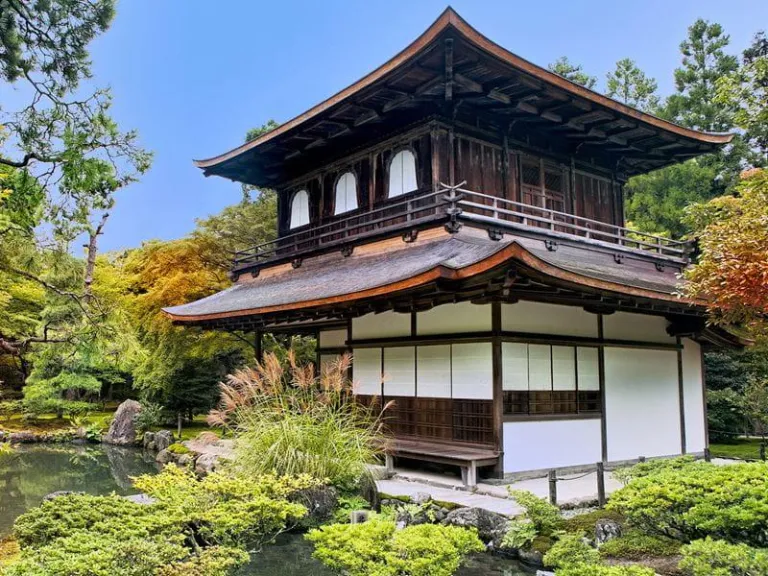 Image credit: Jakub Hałun / Wikimedia Commons / CC BY 4.0
Best known for: Zen gardens, moss, minimalist aesthetics and the Philosopher's Path
Official name: Jisho-ji
Location: Eastern Kyoto
Religion: Rinzai Zen Buddhism
Typical visit: 45 - 90 minutes
If Kinkaku-ji represents visual extravagance, Ginkaku-ji represents restraint and simplicity.
Despite its nickname, the Silver Pavilion was never actually covered in silver. Its official name is Jisho-ji, and the temple began as the Higashiyama villa of Ashikaga Yoshimasa, the eighth shogun of the Muromachi shogunate. After Yoshimasa's death, the villa was converted into a Zen temple.
The temple became closely associated with the refined aesthetics of Higashiyama culture, which influenced Japanese arts including tea ceremony, architecture and garden design.
Why is it called the Silver Pavilion?
The name Ginkaku-ji:"Silver Pavilion Temple", was adopted later in contrast to Kinkaku-ji, the Golden Pavilion.
The building itself was not actually silver-plated. Instead, its understated appearance became associated with the quieter aesthetic of Japanese beauty.
What should you see?
Don't visit Ginkaku-ji just for the pavilion.
The gardens are arguably the bigger attraction.
Look for:
The carefully raked Sea of Silver Sand
The distinctive Moon Viewing Platform
Moss-covered garden paths
Ponds and streams
Elevated viewpoints overlooking the temple grounds
The gardens embody the idea that beauty does not always have to be elaborate or extravagant.
Opening hours
March 1 - November 30: 8:30 AM - 5:00 PM
December 1 - February 28: 9:00 AM - 4:30 PM
Entrance fee
From April 1, 2026:
Adults/high-school students: ¥1,000
Primary and middle school students: ¥500
Children below primary-school age: Free
The temple announced this admission-fee revision in 2026.
Can you enter the buildings?
Normally, visitors mainly explore the gardens. Some buildings, including the Togudo and Hojo, become accessible during special spring and autumn openings.
Can you make an offering?
As with many Zen temples, ordinary sightseeing visits focus primarily on appreciating the temple and gardens. If worship facilities or a goshuin counter are operating, visitors can follow the instructions provided there.
Do not enter restricted areas simply because a building appears accessible.
Dress code
No strict dress code applies to ordinary visitors. However, modest clothing and comfortable walking shoes are recommended.
Ginkaku-ji is also a natural stop when exploring the Philosopher's Path, making it ideal for a slower, walking-focused Kyoto itinerary.
Best time to visit: Morning, particularly if you want to experience the gardens without heavy crowds.
Official temple information: Ginkaku-ji — Shokoku-ji
Also Read: Japan Visa Fee for Indians Remains Just ₹500 Despite Global Hike: Here's What Travelers Need to Know
4. Ryoan-ji : The Zen Garden That Has No Single Answer
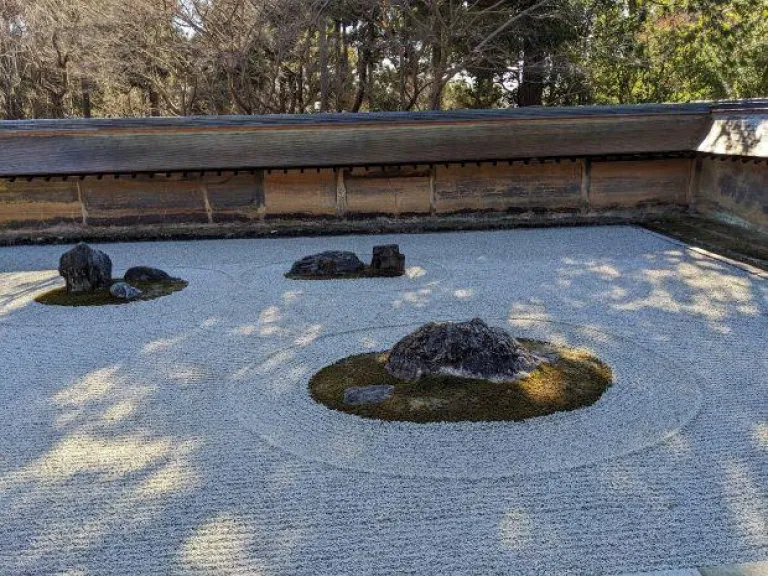 Image credit: 663highland / Wikimedia Commons / CC BY-SA 4.0
Best known for: Its mysterious 15-rock Zen garden
Location: Northwestern Kyoto
Religion: Rinzai Zen Buddhism
Typical visit: 1 - 1.5 hours
If Kiyomizu-dera is about spectacular views and Kinkaku-ji is about visual beauty, Ryoan-ji is about contemplation.
The temple is home to perhaps Japan's most famous Zen rock garden.
Fifteen stones are arranged across a rectangular bed of white gravel. The arrangement appears deceptively simple, yet there is a fascinating feature: from any normal viewing position, you cannot see all fifteen stones simultaneously.
This has led to countless interpretations of the garden.
Some see islands floating in a sea. Others interpret the stones as mountains, animals or an abstract representation of nature. There is no universally accepted explanation of the garden's intended meaning.
And that uncertainty is part of its appeal.
What makes Ryoan-ji special?
The garden encourages you to sit quietly and interpret it yourself rather than simply photograph it and move on.
The temple is also a UNESCO World Heritage Site as part of the Historic Monuments of Ancient Kyoto.
Don't leave immediately after seeing the rock garden. The wider temple grounds contain ponds, moss gardens and seasonal scenery.
The famous stone basin
Another interesting feature is the tsukubai, a traditional stone water basin.
Its inscription is connected to a Zen teaching commonly interpreted as "I know only contentment" or "one knows that one has enough."
It is an excellent example of how Zen philosophy appears in seemingly simple objects.
Opening hours
March 1 - November 30: 8:00 AM - 5:00 PM
December 1 - February 28: 8:30 AM - 4:30 PM
Entrance fee
Current official information lists:
Adults: ¥600
High-school students: ¥500
Elementary/junior-high students: ¥300
Can you make an offering?
Ryoan-ji is primarily visited for its Zen environment and garden. Visitors should follow the instructions at the temple's worship areas if they wish to pray or make an offering.
The experience here is less about a specific wish or ritual and more about quiet observation and contemplation.
Dress code
No formal dress code is required for ordinary visitors.
However, avoid extremely revealing clothing and dress respectfully. Kyoto's official visitor guidance also recommends avoiding barefoot visits to temples and shrines and asks visitors not to touch cultural properties.
Best time to visit: Immediately after opening. The rock garden becomes significantly busier as the day progresses. Japan's official tourism organization also recommends arriving around opening time or just before closing for a quieter experience.
Kyoto official tourism page: Ryoan-ji Temple — Kyoto Travel
5. Tofuku-ji : Kyoto's Temple of Autumn Colours
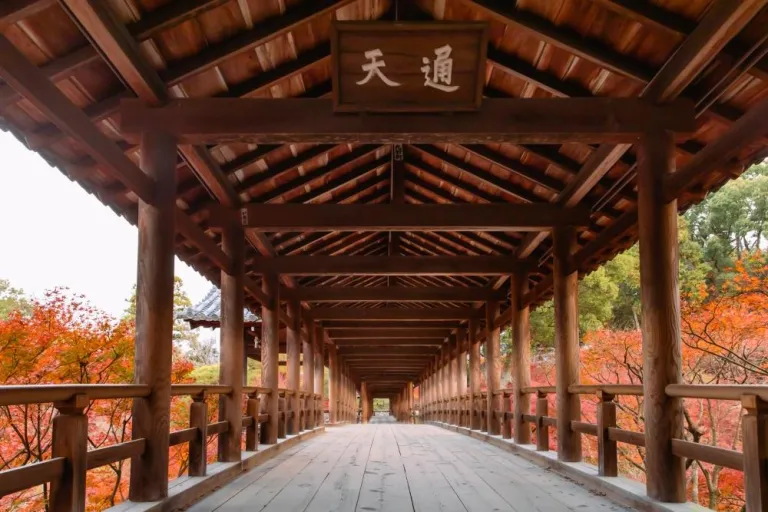 Image credit: Kimon Berlin / Wikimedia Commons / CC BY-SA 2.0
Best known for: Autumn foliage, Tsutenkyo Bridge, Zen architecture and gardens
Location: Southeastern Kyoto
Religion: Rinzai Zen Buddhism
Typical visit: 1.5 - 2 hours
For travellers visiting Kyoto during autumn, Tofuku-ji is one of the temples you should put near the top of your list.
Established during the Kamakura period, Tofuku-ji became one of the great Zen temples of Kyoto and one of the historical Kyoto Gozan, the system of major Zen temples in medieval Kyoto.
The temple complex is enormous and contains impressive architecture, gardens and cultural treasures.
The star attraction: Tsutenkyo Bridge
The Tsutenkyo Bridge crosses the valley running through the temple grounds.
During autumn, the valley below becomes a sea of colourful maple trees, making the bridge one of Kyoto's most famous autumn viewpoints.
The area is equally beautiful during spring when fresh green foliage fills the valley.
Another highlight: Hojo Gardens
Tofuku-ji's Hojo garden complex, known as the Hassho-no-Niwa, was created by the modern garden designer Mirei Shigemori.
The four gardens surrounding the Hojo offer different interpretations of Zen garden design.
Historical significance
Tofuku-ji was established in the 13th century and took around 19 years to complete.
Its name combines characters from two famous Nara temples: Todai-ji and Kofuku-ji.
The temple was also associated with the monk Enni Ben'en, known as Shoichi Kokushi, who became the first Zen monk to receive the title "Kokushi," or "National Teacher," from an emperor.
Opening hours
The opening schedule changes seasonally.
April 1 - October 31: 9:00 AM - 4:00 PM
November 1 - 13: 9:00 AM - 4:00 PM
November 14 - December 6:
Tsutenkyo Bridge: 8:30 AM - 4:00 PM
Hojo Garden: 9:00 AM - 4:00 PM
Reception closes at 4:00 PM
December 7 - March 31: 9:00 AM - 3:30 PM
Entrance fee
For 2026, the temple has different rates depending on the season and area.
The standard admission includes:
Hojo Garden
Adults: ¥500 until October 31, increasing to ¥600 from November 1
Children: ¥300
Tsutenkyo Bridge & Kaizando
Adults: ¥600
Children: ¥300
During the autumn special viewing period from November 14 - December 6, Tsutenkyo/Kaizando admission rises to ¥1,000 for adults and ¥500 for children.
Can you make an offering?
Tofuku-ji is an active Buddhist temple with regular religious ceremonies and events. Visitors should use designated worship areas and follow instructions from temple staff.
Rather than treating the temple as a photo attraction, take a moment to observe the architecture, gardens and quiet atmosphere.
Dress code
There is no strict dress code for tourists, but modest clothing is recommended.
Comfortable shoes are particularly important because visiting the large temple grounds involves considerable walking.
A special reason to visit
If you are travelling in mid-November to early December, Tofuku-ji becomes particularly spectacular. The temple itself identifies November - December as its special autumn viewing period.
Best time to visit: Early morning during autumn, before the biggest crowds arrive.
Official temple website: Tofuku-ji Official Website
Quick Comparison: Which Kyoto Temple Should You Visit?
Temple | Famous For | Opening Hours | Adult Admission* | Best For |
Kiyomizu-dera | Wooden stage, Kannon, Otowa Waterfall | From 6:00 AM | Around ¥500 for many paid viewings | First-time visitors & spirituality |
Kinkaku-ji | Golden Pavilion | 9:00 AM - 5:00 PM | ¥500 | Iconic Kyoto views |
Ginkaku-ji | Zen gardens & simplicity | 8:30 AM - 5:00 PM summer | ¥1,000 | Art, gardens & aesthetics |
Ryoan-ji | 15-rock Zen garden | 8:00 AM - 5:00 PM | ¥600 | Meditation & philosophy |
Tofuku-ji | Autumn foliage & Zen gardens | 9:00 AM - 4:00 PM normally | ¥500 - ¥600 depending on area/season | Autumn scenery |
*Admission prices and opening hours can change for special events, seasons and exhibitions. Check the official temple website before visiting.
Temple Etiquette: What Should You Wear and How Should You Behave?
Visiting a Kyoto temple is not quite the same as visiting a museum. These are living religious spaces, and showing a little respect goes a long way.
Dress respectfully
There is generally no strict dress code for tourists at these temples. However:
Avoid very revealing clothing.
Avoid entering religious areas barefoot.
Wear comfortable shoes.
Carry a light layer during cooler months.
Be prepared to remove shoes where specifically requested.
Kyoto's official visitor guidance asks visitors to dress appropriately, avoid barefoot visits and refrain from touching cultural properties.
Keep your voice down
Especially at Zen temples such as Ryoan-ji and Tofuku-ji, the atmosphere is deliberately peaceful.
Avoid loud conversations, music or disruptive behaviour.
Photography
Photography rules differ from temple to temple.
Some areas permit photography while others prohibit it. Always follow signs and staff instructions.
At Kiyomizu-dera, for example, commercial photography, certain equipment and some types of photo shoots are restricted.
How to pray at a Buddhist temple
The exact practice can vary between temples, but a simple approach is:
Enter respectfully.
If there is a purification basin, rinse your hands.
Approach the designated worship area.
Make a monetary offering if you wish.
Put your hands together and pray quietly.
Avoid treating the ritual as a photo opportunity.
At Kiyomizu-dera, the temple provides explicit guidance for purification, incense and prayer before Kannon.
Should you bring an offering?
You don't need to bring anything special from home.
A small monetary offering is generally the easiest option. Some temples also provide incense, candles or other forms of devotional offerings where appropriate.
You may also encounter goshuin, a traditional temple seal/stamp collected in a goshuincho. These are generally obtained at designated counters for a small fee.
Which One Should You Choose?
If you are short on time, best choice of temple based on what you want to experience:
For the classic Kyoto experience: Kiyomizu-dera
For the most iconic photograph: Kinkaku-ji
For Japanese aesthetics and beautiful gardens: Ginkaku-ji
For Zen philosophy and quiet contemplation: Ryoan-ji
For autumn foliage: Tofuku-ji
And if you have enough time, don't think of these temples as interchangeable. Each represents a different side of Kyoto: Kiyomizu-dera is spiritual and dramatic, Kinkaku-ji is spectacular, Ginkaku-ji is understated, Ryoan-ji is contemplative, and Tofuku-ji is architectural and seasonal.
Together, they provide a remarkably complete introduction to Kyoto's temple culture.
Published at

Subscribe our Newsletter
Get our weekly tips and travel news!
Related Posts
Ultimate Guide to Enjoying Long Weekends in Bengaluru
The city comes alive with vibrant Holi events that promise fun, music, and a kaleidoscope of colors. These events range from traditional celebrations to modern parties with DJs, rain dances, and organic color play
Best Spiti Valley Itinerary for 7 days
The ultimate 7-day adventure with the best Spiti Valley itinerary, exploring ancient monasteries, high-altitude villages, and breathtaking landscapes.
Best Chikmagalur Itinerary for 3 Days For Long Weekends
Craving a coffee escape? Chikmagalur, with its lush plantations and misty hills, is your perfect weekend getaway.
Best 2-Day Itinerary for Mahabaleshwar and Panchgani
Discover the beauty of Mahabaleshwar and Panchgani in just 2 days! Explore nature, waterfalls, and stunning viewpoints.
A Guide for Indian tourists to Cherry Blossom Season in Japan: A Breathtaking Experience
Cherry blossom season is a magical time in Japan and holds great cultural significance. This is a unique experience for tourists from India. This guide will help Indian visitors plan their cherry blossom trip...
Latest Posts
Austria Visa for Indians: Documents to Keep Ready
Planning a trip to Austria from India? This complete guide covers Austria visa types for Indians, required documents, eligibility, fees, processing time and the step-by-step application process. Find out which Austria visa you need and what to prepare bef
Best International Destinations for Indians in 2026: Visa-Free & Easy Visa Countries
Planning an international trip from India in 2026? Explore the best visa-free and easy-visa destinations for Indian travellers, from Thailand and Malaysia to Sri Lanka and Vietnam.
IndiGo Fuel Surcharge Hike: Flight Tickets Get Costlier From October 6, 2026
IndiGo will increase fuel charges on domestic and international flights from October 6, 2026, as rising ATF prices push up airline operating costs.
Best Places to Visit in India in Winter: 6 Snowy Destinations for 2026
From snowy mountains to peaceful valleys, discover the best places to visit in India during winter, including Tawang, Manali, Gulmarg, Auli, Sikkim and Spiti Valley.
Maya Bay Reopens on October 1, 2026: What Travellers Need to Know
Maya Bay reopens on October 1, 2026, after its annual conservation closure. Check visitor rules, swimming restrictions and travel tips.