
Top 10 Weirdest Travel Laws Around the World Tourists Should Know
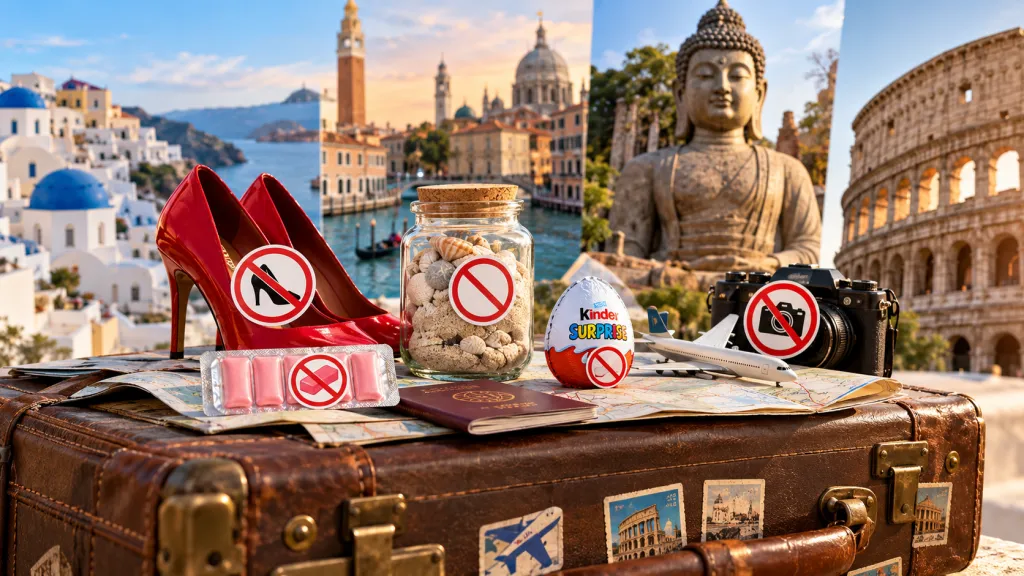
From chewing-gum restrictions in Singapore to beach-sand bans in Italy, these unusual travel laws could turn an ordinary holiday into an unexpected legal headache.
Planning an international holiday usually means booking flights, finding the best hotels, making a sightseeing list and deciding what to pack. But there is one essential part of travel preparation that often gets overlooked: understanding the local laws.
Something as harmless as posing for a photograph, packing your favourite snack or wearing a particular pair of shoes could land you in an awkward situation in another country. Rules that seem unusual to visitors often exist to protect historic monuments, preserve the environment, maintain public order or respect local religious traditions.
So, before you zip up your suitcase, here are 10 of the world's strangest travel rules and restrictions worth knowing before you go abroad.
1. Chewing Gum Can Get You Into Trouble in Singapore
Imagine landing in Singapore with a packet of chewing gum in your handbag, only to discover that this everyday item is subject to strict import restrictions.
Singapore introduced tight controls on chewing gum in 1992, largely because discarded gum was causing problems on public transport and public infrastructure. The rules restrict the import and sale of ordinary chewing gum, although certain therapeutic gums are permitted under specific conditions.
For travellers, the safest approach is simple: leave ordinary chewing gum at home rather than assuming you can bring it through customs.
Travel tip: Singapore also enforces strict rules against littering, spitting and jaywalking. Keep public spaces clean and use designated pedestrian crossings.
2. Leave Your High Heels Behind at Ancient Greek Monuments
Love exploring ancient ruins in glamorous outfits? You may want to rethink your footwear before visiting archaeological sites such as the Acropolis of Athens.
High heels are prohibited at certain ancient monuments because their narrow heels can damage fragile historic surfaces. The restriction was introduced to help protect archaeological heritage from unnecessary wear and tear.
Fortunately, you do not have to sacrifice style entirely. Comfortable flats, supportive sandals and walking shoes are much better choices for exploring Greece's historic attractions.
Travel tip: Check the footwear rules for individual archaeological sites before your visit, especially if you are planning a formal photoshoot.
3. Taking Beach Sand Home Can Cost You in Sardinia
Collecting a little sand as a souvenir might seem harmless, especially when a beach is exceptionally beautiful. In Sardinia, however, taking sand, shells or pebbles from protected beaches can lead to substantial penalties.
Italian authorities have repeatedly taken action against visitors attempting to remove beach materials. One widely reported case involved French tourists caught transporting approximately 40 kilograms of sand in 2019.
The restrictions help protect Sardinia's delicate coastal ecosystems and preserve its distinctive beaches for future generations.
Travel tip: Take photographs instead of natural souvenirs. If you want a keepsake, buy something from a local artisan or shop.
4. Turning Your Back on a Buddha Statue Can Be Disrespectful in Sri Lanka
A holiday selfie might be second nature, but photographing yourself with your back turned towards a Buddha statue can cause serious offence in Sri Lanka.
Buddhist imagery holds deep religious significance, and disrespectful posing or touching sacred statues can result in trouble with local authorities. Foreign visitors have faced detention and deportation in cases involving conduct considered deeply offensive towards Buddhist religious symbols.
The issue is not simply about photography; it is about showing respect for a country's religious traditions.
Travel tip: Avoid climbing on religious structures, touching sacred images or posing in ways that turn religious statues into casual photo props. Follow posted instructions and ask permission before photographing people at religious sites.
5. Feeding Pigeons in Venice Is a No-Go
Venice is famous for its romantic canals, historic architecture and the pigeons that gather around St Mark's Square. But feeding those birds is prohibited.
The city introduced the ban in 2008 to reduce the damage caused by bird droppings to historic buildings and monuments. Feeding pigeons can also encourage overcrowding and create additional cleaning problems in heavily visited public spaces.
So, while feeding birds might feel like a charming holiday activity, it is not a good idea in Venice.
Travel tip: Enjoy watching the birds and photographing the architecture, but never feed wildlife in places where local regulations prohibit it.
6. Wearing Camouflage Clothing Could Be a Problem in the Caribbean
Camouflage trousers may be a popular travel outfit, but they are not always welcome in the Caribbean.
Several Caribbean countries restrict civilians from wearing camouflage clothing, a pattern associated with military personnel. The rules vary by destination and may apply to particular garments or accessories.
Visitors who pack camouflage shorts, jackets or bags without checking the local regulations could face confiscation or other penalties.
Travel tip: Choose ordinary printed clothing for your holiday and check the destination's customs guidance before packing military-style outfits or accessories.
7. Running Out of Fuel on Germany's Autobahn Can Land You in Trouble
Germany's Autobahn is famous for stretches of motorway without a general speed limit. But there is an important catch: drivers are expected to avoid preventable stops on these high-speed roads.
Running out of fuel is generally treated as an avoidable reason to stop. Because an unexpected stop can create a serious traffic hazard, drivers may face penalties.
The lesson is particularly important for international visitors planning a self-drive holiday across Germany.
Travel tip: Refuel before the tank gets too low, identify petrol stations along your route and keep an eye on fuel levels before entering long motorway stretches.
8. Carrying Certain GPS Devices into China May Require Extra Care
Planning to explore China using your own navigation equipment? Check the rules before packing specialised GPS or mapping devices.
China has regulations governing surveying, geographic data collection and mapping activities. Equipment or activities that fall within these regulated areas may require approvals, and some mapping products or data may be subject to restrictions.
This does not mean that every ordinary smartphone GPS function is prohibited. The important distinction is between everyday navigation and specialised equipment or activities involving regulated geographic information.
Travel tip: Use reputable navigation apps available for your destination, download offline maps where possible and check the current customs rules before bringing specialised surveying or mapping equipment into the country.
9. Your Favourite Chocolate Egg May Not Be Allowed in the United States
A chocolate treat containing a surprise toy sounds like a fun holiday snack, but the original Kinder Surprise egg has long faced restrictions in the United States.
US federal law generally prohibits confectionery containing a non-nutritive object embedded inside it when the object presents a choking or injury hazard. The original Kinder Surprise design falls under this restriction.
That is why the familiar European version differs from Kinder Joy, which separates the toy from the edible portion.
Travel tip: Check food-import rules before packing sweets, snacks or speciality food products. Rules for bringing food into a country can differ from the rules governing what shops may sell there.
10. Flushing the Toilet Late at Night May Be Discouraged in Some Swiss Apartments
This one sounds almost unbelievable: can flushing a toilet at night really get you into trouble?
Stories about Switzerland banning toilet flushing after 10 p.m. are often exaggerated. There is no blanket nationwide law prohibiting everyone from flushing a toilet after that hour. However, some apartment buildings have strict quiet-hour rules, and excessive noise at night can cause disputes with neighbours or landlords.
If you are staying in a residential apartment, the building's house rules may matter more than the country's general laws.
Travel tip: Read your accommodation's instructions, respect quiet hours and avoid unnecessary noise late at night. You do not need to avoid using the bathroom when you need it.
Before You Travel: Five Rules to Remember
Unusual travel restrictions are a reminder that responsible tourism goes beyond booking the right hotel or finding the best attractions.
Research your destination: Read official government travel advice and local authority guidance before departure.
Check what you can pack: Food, medicines, electronics, clothing and other everyday items may be subject to import restrictions.
Respect religious and cultural sites: Dress appropriately, follow signs and ask before taking photographs.
Protect the environment: Do not remove sand, shells, plants or other natural materials from protected areas.
Follow local instructions: If a rule is unclear, ask your accommodation provider or a local authority rather than relying on travel rumours.
The Bottom Line
Travelling abroad is about discovering new cultures, tasting unfamiliar food and experiencing places beyond your everyday surroundings. But every destination has its own rules, and what seems perfectly normal at home may be inappropriate or restricted elsewhere.
From leaving chewing gum behind in Singapore to choosing flat shoes at ancient Greek monuments, a little research can save you money, embarrassment and unnecessary trouble.
Published at
About Author

Atihsin
Subscribe our Newsletter
Get our weekly tips and travel news!
Related Posts
Latest Posts
Dev Deepawali in Varanasi 2026 – Dates, Ganga Aarti and Travel Guide
Dev Deepawali takes place in Varanasi on 24 November 2026. Discover the illuminated ghats, grand Ganga Aarti, Ganga Mahotsav dates and essential tips for planning your trip.
One World, A Thousand Lights: How Different Cultures Celebrate the Festival of Lights
From Diwali's glowing diyas to China's spectacular lantern displays and Sweden's candlelit processions, discover the beautiful traditions behind festivals of light around the world.
Cyclone Arnab: Indian Railways Issues Travel Advisory for Passengers
Cyclone Arnab is approaching India's east coast, prompting railway safety measures and train service changes. Here's what passengers should know about weather warnings, travel disruptions and official updates.
IndiGo International Flights from Navi Mumbai Airport: Routes & 2027 Updates
Mumbai’s aviation network is getting a major upgrade as IndiGo prepares to shift international flights to Navi Mumbai Airport in 2027. Discover the 12 planned destinations, the transition timeline and what passengers should know before booking their next
Kochi to Bangkok Direct Flight 2026 – Air India Express Timings and Schedule
Air India Express now operates direct flights from Kochi to Bangkok. Find the published schedule, departure and arrival timings, operating days and essential travel tips.