
Delhi Metro to Increase Train Services Under GRAP-I: 20 Additional Trips
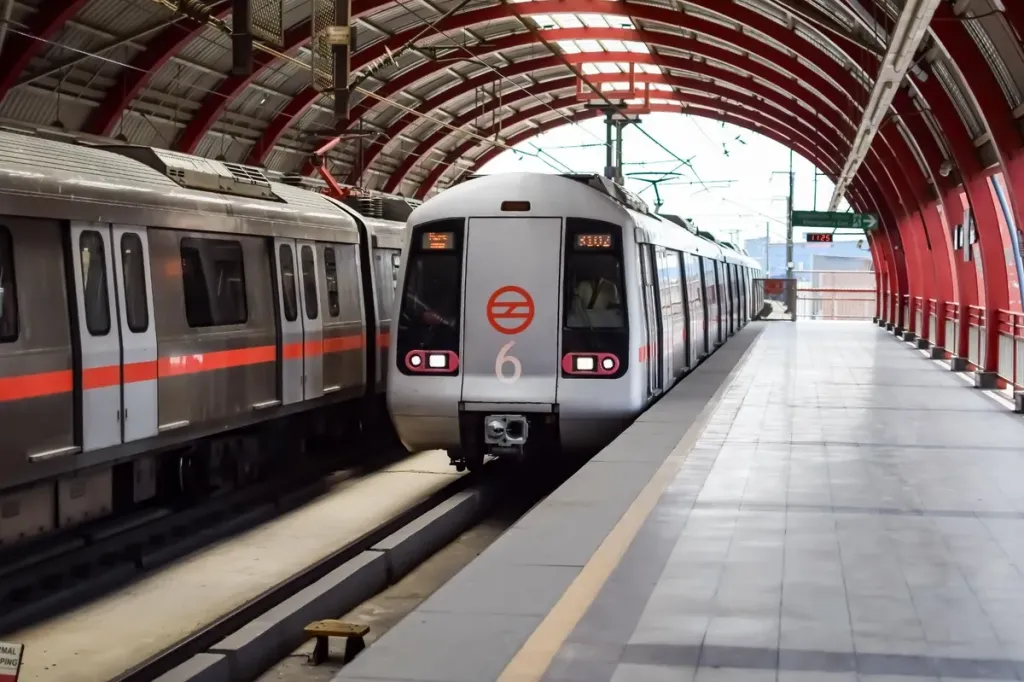
Delhi Metro is increasing its train services across the national capital as Delhi-NCR steps up efforts to tackle deteriorating air quality. The Delhi Metro Rail Corporation (DMRC) will operate 20 additional train trips on weekdays from October 22, 2026, following the implementation of Stage I of the Graded Response Action Plan (GRAP-I).
The move aims to encourage commuters to use public transportation instead of private vehicles, helping reduce traffic-related emissions during the period of rising air pollution. Alongside the additional metro services, DMRC is intensifying dust-control measures at construction sites and on roads under its temporary jurisdiction.
The announcement comes as Delhi's air quality has slipped into the 'poor' category, prompting authorities to activate the first stage of the region's pollution-control action plan. The measures are intended to prevent air quality from deteriorating further as the winter pollution season approaches.
Delhi Metro Adds 20 Extra Train Trips from October 22
Under the revised operating plan, Delhi Metro will run 20 additional train trips from Thursday, October 22, 2026, on weekdays from Monday to Friday.
The additional services are intended to make public transportation a more convenient option for office-goers, students, daily commuters and other passengers travelling across Delhi and neighbouring urban areas.
Private vehicles are a significant source of urban emissions, particularly on congested roads where vehicles spend extended periods in traffic. By encouraging more people to travel by metro, DMRC hopes to help limit pollution associated with daily commuting.
The announcement does not indicate a separate increase in fares or a change to the metro's existing route network. Commuters should check official DMRC updates for route-specific timings and service information.
Why Has Delhi Metro Increased Its Services?
The additional metro trips follow the implementation of Stage I of the Graded Response Action Plan across Delhi-NCR by the Commission for Air Quality Management (CAQM).
According to the official announcement released on October 21, Delhi's daily average Air Quality Index (AQI) reached 244 at 2 pm, placing it in the 'poor' category. The AQI had been recorded at 179 on October 20, indicating a sharp deterioration in air quality within a day.
The CAQM subsequently invoked Stage I of GRAP with immediate effect across the National Capital Region.
Increasing the frequency of public transport is one of the measures included in the GRAP framework. Additional metro and bus services can help commuters reduce their dependence on private vehicles, particularly during peak travel hours.
However, the extra services are one part of a wider pollution-control effort. Their overall impact will depend on commuter uptake, traffic conditions, weather and the effectiveness of other measures implemented across the region.
What Is GRAP-I and How Does It Work?
The Graded Response Action Plan is a framework used by authorities to introduce pollution-control measures according to the severity of air pollution in Delhi-NCR. It provides a coordinated response involving government departments, municipal authorities, transport agencies and other implementing bodies.
Under the current GRAP framework, Stage I is associated with 'poor' air quality, when the AQI ranges from 201 to 300.
The four stages are broadly classified as follows:
Stage I - Poor: AQI between 201 and 300.
Stage II - Very Poor: AQI between 301 and 400.
Stage III - Severe: AQI between 401 and 450.
Stage IV - Severe Plus: AQI above 450.
Each stage introduces measures intended to address pollution sources and prevent further deterioration. These may include dust-control requirements, restrictions on certain polluting activities, tighter monitoring and efforts to improve public transport availability.
The implementation of Stage I does not automatically mean that all private vehicles are banned or that schools and offices must close. Specific restrictions depend on the applicable GRAP schedule and any additional directions issued by the competent authorities.
The CAQM will continue reviewing air-quality conditions and forecasts to determine whether further measures are necessary.
DMRC Intensifies Dust-Control Measures at Construction Sites
In addition to increasing train services, DMRC is stepping up its anti-pollution activities at metro construction sites and surrounding areas.
Construction and road dust can contribute to particulate pollution, especially when exposed soil, uncovered materials and debris are disturbed by vehicles or wind. DMRC has outlined several measures to limit dust emissions from areas under its responsibility.
1. Inspections of construction sites
DMRC engineers will inspect construction locations and adjoining roads to check whether environmental safeguards are being followed. These inspections will include verifying that construction materials are properly covered and that dust-control arrangements are maintained.
2. Functional wheel-wash facilities
Wheel-wash facilities help remove accumulated mud and dust from vehicles leaving construction sites. Ensuring that these facilities remain operational can reduce the amount of construction-related material carried onto public roads.
3. Removal of road dust
The corporation will intensify efforts to remove dust from surrounding roads, particularly stretches affected by metro construction. Road dust can become airborne when disturbed by moving traffic, making regular cleaning an important part of local pollution management.
4. Clearing garbage from footpaths and road medians
DMRC will also focus on removing garbage from footpaths and road medians around construction areas. This is intended to improve site cleanliness and support broader efforts to prevent improper waste accumulation and burning.
These activities will supplement the pollution-control measures already being undertaken by the corporation.
More Than 250 Anti-Smog and Mist Guns Installed
DMRC has reported installing more than 250 anti-smog guns and mist guns at construction sites, metro stations and office buildings.
These devices disperse fine water droplets that can help suppress airborne dust in suitable conditions. Their effectiveness depends on factors such as the size of dust particles, local weather, equipment operation and maintenance.
The corporation's Environment Department also conducts daily inspections to monitor compliance with applicable environmental requirements.
DMRC has further stated that approximately 31 kilometres of city roads are currently under its temporary jurisdiction to facilitate metro construction work. Most of these road stretches have already been repaired, according to the corporation, to help prevent damaged surfaces from contributing to additional dust pollution.
The combination of site inspections, road repairs, dust suppression and waste removal is intended to address pollution generated around construction activities rather than relying solely on changes in commuter behaviour.
How Will the Additional Metro Services Benefit Commuters?
The additional weekday trips could make metro travel more attractive at a time when authorities are encouraging residents to reduce their use of private vehicles.
Potential benefits include:
More public transport capacity: Additional trips provide more opportunities to travel by metro.
Reduced dependence on private vehicles: Commuters may choose the metro instead of cars or two-wheelers for suitable journeys.
Support for lower-emission commuting: Greater use of mass transit can help reduce transport emissions per passenger compared with many individual vehicle journeys.
Convenient daily travel: Metro users can continue relying on the existing network while DMRC adds services to its weekday operations.
Support for pollution-control efforts: Higher public transport usage complements dust suppression and other measures introduced under GRAP-I.
The actual improvement in convenience will depend on where and when the extra trips are operated. DMRC has announced the total number of additional trips, but commuters should consult official service updates rather than assume that every route will receive the same increase in frequency.
What Should Delhi-NCR Residents Do During GRAP-I?
Authorities are encouraging residents to contribute to pollution-control efforts through practical changes in their daily routines.
Residents can help by choosing the metro, buses or shared transport where practical; keeping vehicle Pollution Under Control (PUC) certificates valid; avoiding unnecessary engine idling; and ensuring that vehicles are properly maintained.
People should also avoid open waste burning, dispose of garbage at designated collection points and report visible pollution violations through the appropriate government reporting channels.
Construction and demolition activities must follow the dust-mitigation requirements applicable to them. Residents can check the official CAQM website for the current GRAP schedule and use the CPCB's SAMEER app to follow air-quality information.
Although individual actions cannot resolve Delhi's air-pollution problem on their own, coordinated efforts by commuters, businesses and public authorities can contribute to reducing avoidable emissions.
Will Delhi Metro Services Change Further if Pollution Worsens?
The current increase is linked to Stage I of GRAP. If air quality deteriorates further, the CAQM may consider implementing additional measures under higher stages, depending on the prevailing AQI, forecasts and the applicable action plan.
Stage II, for example, corresponds to the 'very poor' AQI category, while Stages III and IV apply at more severe pollution levels. The measures introduced at each stage differ and should not be treated as automatic extensions of the current metro announcement.
Commuters should therefore monitor official DMRC service announcements and CAQM directions for updates on transport arrangements and pollution-control measures.
The activation of GRAP-I does not, by itself, confirm that the number of additional metro trips will increase beyond the 20 already announced. Any further change would need to be confirmed through an official update.
Conclusion
Delhi Metro's decision to operate 20 additional weekday train trips from October 22, 2026, is part of a broader effort to respond to worsening air quality across Delhi-NCR. Along with encouraging public transport use, DMRC is intensifying construction-site inspections, road-dust removal, waste clearance and other pollution-control activities.
The announcement highlights the role of public transportation in a wider strategy to reduce urban emissions. While additional metro services can offer commuters another option for avoiding private vehicles, meaningful improvements in air quality will require sustained action on traffic emissions, construction dust, waste management and other pollution sources.
For commuters, the practical takeaway is straightforward: consider using public transport for suitable journeys, check official metro updates before travelling and follow the latest GRAP advisories as Delhi-NCR moves through the pollution season.
Published at
About Author

Atihsin
Subscribe our Newsletter
Get our weekly tips and travel news!
Related Posts
IMD Issues Heavy Rain Alerts Across India: Plan Your Trips Carefully
IMD issues heavy rain alerts across India for July 22-28. Metro cities & travel spots like Mumbai, Himachal, Amarnath face disruptions. Plan trips carefully: check alerts, pack smart, prioritize safety.
Watch: Massive Flash Flood Washes Away Uttarkashi’s Dharali Village After Cloudburst
Several people feared trapped
Forget Everything Else: Indian Travellers Swear by These Packing Essentials
Indian travellers may forget their chargers, clothes, and even pets, but there's one quirky item they always carry. Find out what tops the list!
Why Your Commute Takes Forever: 2025’s Worst Indian Cities for Traffic
India’s top 10 cities are slowing down, literally. Here’s a deep dive into traffic-clogged metros and what every traveler should expect in 2025.
Gulmarg's Nedous Hotel Sealed: End of a 137-Year Legacy
A 137-year-old legacy ends. Gulmarg's Nedous Hotel sealed after a Supreme Court verdict, signaling a new era of governance in Kashmir.
Latest Posts
Best Time to Visit Mexico: Festivals, Hidden Gems & Travel Tips
Discover the best time to visit Mexico, from sunny Caribbean beaches and hidden colonial towns to vibrant festivals like Día de los Muertos and Oaxaca’s Guelaguetza. Explore seasonal travel tips, offbeat destinations, local food experiences and the best m
Best Places to Visit in India During Diwali Holidays 2026
Planning a Diwali holiday in 2026? Explore eight destinations across India, including Ayodhya, Jaipur, Amritsar, Goa and Varanasi, for a memorable festive getaway.
Scenic Group 2027 India & Sri Lanka Cruises: Hooghly River
Scenic Group unveils five luxury India and Sri Lanka journeys for 2027-28, featuring the Scenic Aura’s debut on the Hooghly River. Discover historic Bengal, royal Rajasthan, South India's cultural treasures and Sri Lanka's ancient landmarks through immers
Top 5 Best Hotels to Stay in Africa for a Luxury and Unforgettable Holiday
From extraordinary wildlife encounters in South Africa to tropical island retreats and Moroccan palace hotels, discover five of Africa's most remarkable places to stay.
Festive-Season Flight Tickets Are Getting Expensive in India: Tips to Book Early and Save
Flight fares in India often rise during Diwali, Christmas and New Year as holiday demand increases. Find out why tickets get expensive and how advance planning can help you save.