
7 Indian Destinations Gen Z Loves But Millennials Find Overrated in 2026
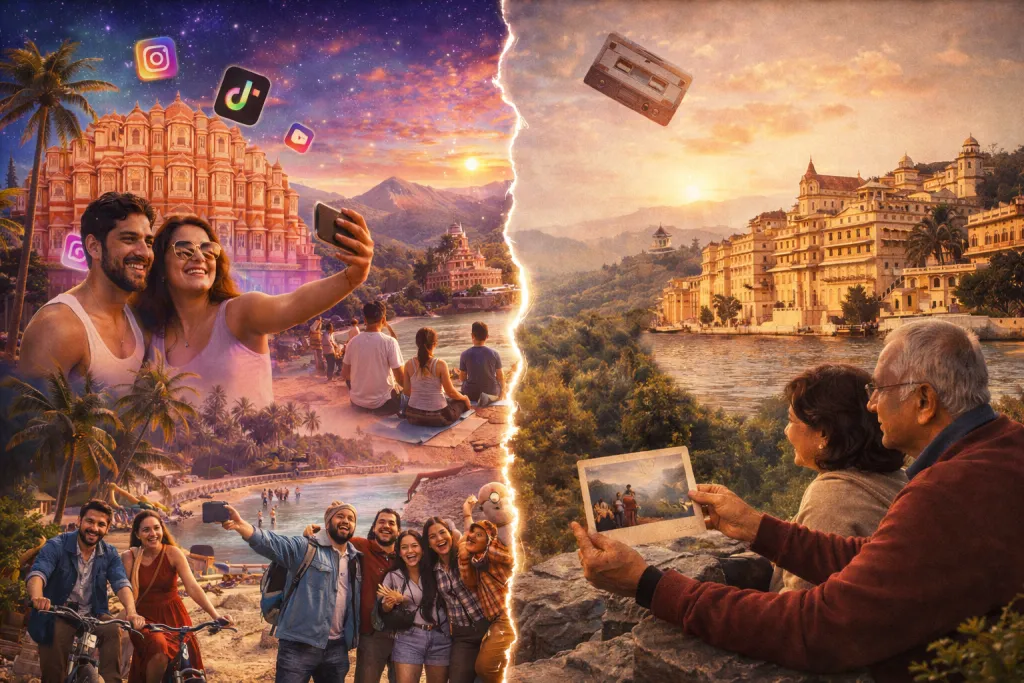
Travel used to be about escape.
Switch off. Log out. Return with stories instead of screenshots.
Now it is also about angles, the right frame, the right café corner, the right moment captured at golden hour. Travel is no longer just where you go, but how you present it.
Millennials pack for peace. They chase quiet beaches, slow mornings, and destinations that promise relief from noise. For them, travel is restoration.
Gen Z packs for personality. They travel to express, curate, experiment. A trip is not just a break; it is an extension of identity.
And in India, this shift is impossible to ignore. The same hill station, the same coastal town, the same royal city can feel magical to one generation and overrated to another.
Some call it evolution.
Others call it overhype.
Here are seven places Gen Z is passionately defending in 2026, while Millennials stand nearby, arms folded, quietly insisting, “It was better before.”
Gen Z Travel Trends in India 2026
1. Goa: The Rebrand Nobody Saw Coming
There was a time when Goa meant impulsive road trips and questionable financial decisions.
In 2026, Goa means curated chaos.
Why Gen Z is thriving here:
They have turned Goa into a lifestyle mood board. Morning Pilates by the sea. Vegan brunches in aesthetic shacks. Flea market fashion that looks suspiciously like a European summer. Nightlife that feels like a networking event with better lighting.
Every sunset is cinematic. Every shack has a brand identity. Every trip has a theme.
Why Millennials feel it is overrated:
They remember when Goa was messy in a good way. Cheap drinks, random strangers becoming lifelong friends, plans made five minutes before they happened.
Now it feels scheduled. Premium menus. Waitlists. Carefully planned “spontaneous” moments.
Millennials miss the unpredictability.
Gen Z loves the polish.
2. Rishikesh: Spiritual, But Make It Aesthetic
Rishikesh once whispered peace.
Now it speaks fluent branding.
Why Gen Z keeps booking tickets:
Sound healing sessions that double as therapy. Astrology readings with oat milk lattes. Co-working cafés overlooking the Ganga. Rafting in the morning, journaling by sunset.
It offers balance, adrenaline and introspection in one itinerary. You can detox while still posting about your detox.
Why Millennials are skeptical:
They came here to escape the noise. Now the silence has pricing tiers. Retreat packages. Influencer collaborations.
For Millennials, spirituality was personal.
For Gen Z, spirituality is expressive.
Neither is wrong. One is quieter.
3. Udaipur: Royalty With Ring Lights
Udaipur has always been beautiful. In 2026, it knows it.
Why Gen Z is enchanted:
Lake Pichola at golden hour feels like a film set. Rooftop cafés glow in perfect symmetry. Birthday trips look like destination weddings. Solo travelers move through palaces like protagonists.
It offers drama without effort. Royal energy without royal budgets, at least if you split the stay with five friends.
Why Millennials call it inflated:
Every second property claims to be heritage. Prices climb with the view. The charm sometimes feels staged.
Millennials went to Udaipur for history.
Gen Z goes for atmosphere.
And perhaps that subtle shift changes everything.
4. Manali: Snow as a Service
Manali remains undefeated in one category: instant drama.
Why Gen Z keeps returning:
Snow transitions. Oversized jackets against mountain backdrops. Neon-lit hostels that feel like reality show sets. Cafés serving hot chocolate thick enough to justify the trip.
It is accessible. It is photogenic. It delivers content on arrival.
Why Millennials are tired:
Traffic before you even see the mountains. Viewpoints filled beyond capacity. The “secret waterfall” that now has signage.
Millennials once escaped to Manali for quiet reflection.
Now they reflect on how crowded it has become.
5. Pondicherry: The Weekend Personality
Pondicherry is calm, composed, and very aware of its angles.
Why Gen Z adores it:
White Town feels like a European postcard. Bicycles glide past mustard-yellow walls. Brunch conversations stretch for hours. Even a simple promenade walk feels curated.
It is slow travel without leaving India.
Why Millennials feel it runs out quickly:
You can cover most highlights in a day. Beaches are scenic but not always swimmable. Beyond the pastel streets, options thin out.
Gen Z embraces the minimalism.
Millennials want more layers.
6. Kasol: The Boho Revival
Kasol has reinvented itself more times than most fashion trends.
Why Gen Z is intrigued:
It feels alternative without being inaccessible. Riverbank journaling. Indie cafés. Backpacker hostels buzzing with strangers who might become friends by nightfall.
There is an illusion of rawness, enough to feel offbeat, but structured enough to feel safe.
Why Millennials say it peaked years ago:
They saw it before the polish. Before curated cafés. Before inflated prices.
What was once rebellion now feels repackaged.
7. Jaipur: Saturated, Stylised, Spectacular
Jaipur has always been dramatic. In 2026, it is fully aware of it.
Why Gen Z keeps choosing it:
Color-saturated bazaars. Palace backdrops. Affordable luxury stays. Cafés that combine heritage architecture with modern plating.
You can shop, explore, eat, and shoot an entire weekend’s worth of content within walking distance.
Why Millennials feel overwhelmed:
Crowds at every landmark. Experiences designed for cameras. Authenticity competing with performance.
Jaipur offers intensity.
Not everyone wants intensity.
So Who Is Right in 2026?
The destinations did not dramatically change overnight.
The intent did.
The beaches are still sandy.
The mountains are still quiet at sunrise.
The palaces still glow at golden hour.
What shifted was the reason we go.
Millennials travelled to disappear for a while. To log out. To breathe without being watched. Travel was a pause button, a temporary escape from expectations.
Gen Z travels to be seen, not only by others, but by themselves. Trips are self-expression. A way to experiment with identity, document growth, curate experience. Travel is not escape; it is amplification.
One generation seeks quiet corners and unplugged cafés.
The other finds magic in shared energy and buzzing hostels.
Neither is wrong. They are simply travelling with different goals.
Perhaps the debate is less about overrated places and more about evolving expectations. When you seek silence, a lively beach feels chaotic. When you seek connection, that same beach feels electric.
The same mountain can feel peaceful or performative.
The same café can feel authentic or aesthetic.
The same city can feel overwhelming or alive.
In 2026, the map has not changed.
But the mindset has.
And maybe that is the real divide not between destinations, but between what we hope to find when we arrive.
Published at
About Author

Prerna Dixit
Subscribe our Newsletter
Get our weekly tips and travel news!
Related Posts
Latest Posts
Tanzania Introduces Mandatory Travel Insurance for Foreign Visitors in 2026
Planning a trip to Tanzania? A new mandatory travel insurance requirement took effect on 1 October 2026. Here is what international visitors need to know before travelling.
10 Underrated Places to Travel in 2026: Beautiful Destinations Away from the Crowds
Escape the usual tourist hotspots and discover 10 underrated places to travel in 2026, featuring scenic mountain valleys, historic towns, remote islands and peaceful coastal escapes.
Best Emerging Travel Destinations for Indians in 2027: 7 Places to Visit Before They Get Popular
Looking for somewhere new to travel in 2027? Explore seven emerging destinations, including Bishkek, Okinawa, Malvan, Pokhara and Phu Quoc, for your next adventure.
October Getaways: 15 Best Places to Visit in India Before the Winter Rush
October is one of the best months to travel across India, with the monsoon retreating, cooler weather arriving and the country's festive season coming alive.
Austria Visa for Indians: Types and Requirements 2026
Planning a trip to Austria from India? This complete guide covers Austria visa types for Indians, including tourist, visitor, business, student, work and medical visas.