
10 Top Places in India for Bioluminescent Beach Experiences
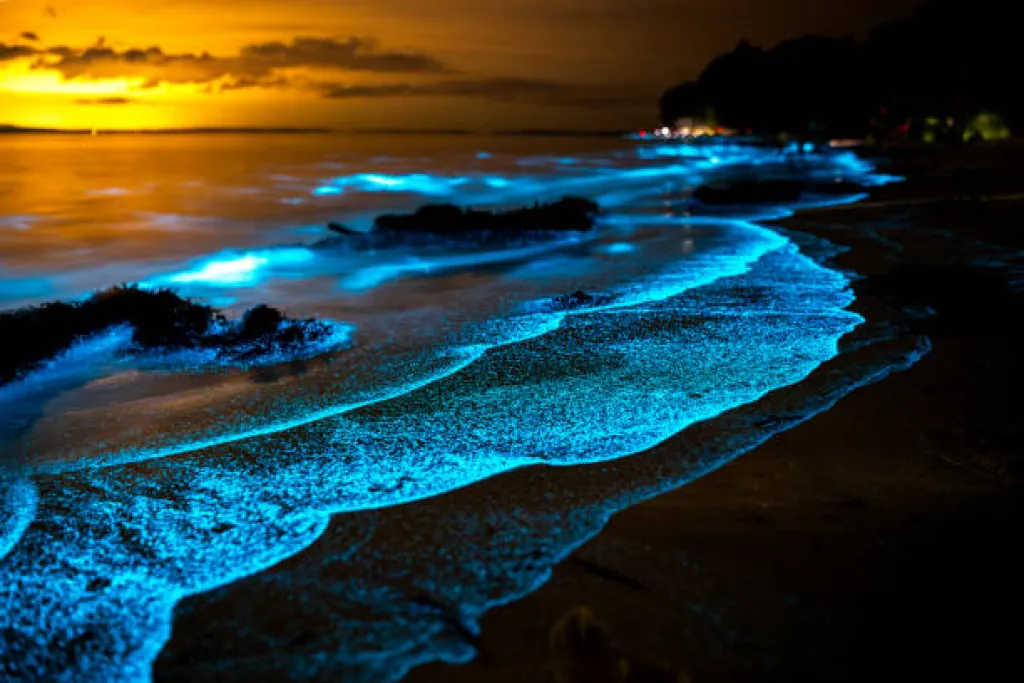
When the Ocean Decides to Become a Starry Sky
Imagine walking along a beach after sunset. The waves roll in quietly, the night is dark, and suddenly the shoreline begins to glow electric blue. Every step you take leaves behind a shimmering trail of light. The sea sparkles like someone spilled a galaxy into the water.
Sounds like a scene from a fantasy film, doesn't it?
Yet this magical phenomenon is very real. Known as bioluminescence, it occurs when tiny marine organisms emit light due to chemical reactions within their bodies. While bioluminescent beaches are often associated with exotic destinations like the Maldives, India has its own hidden spots where nature occasionally puts on this breathtaking nighttime show.
Before you start packing, here's an important reality check: bioluminescence is a natural phenomenon, not a guaranteed attraction. Its appearance depends on weather conditions, water quality, plankton blooms, moonlight, and tides. Think of it as nature's surprise party, you never know exactly when it will happen, which makes witnessing it even more special.
Ready to chase glowing waves? Let's dive into India's most fascinating destinations for bioluminescent beach experiences.
Where to See Glowing Beaches in India: 10 Magical Bioluminescent Destinations
1. Bangaram Island, Lakshadweep: India's Closest Thing to a Glowing Paradise
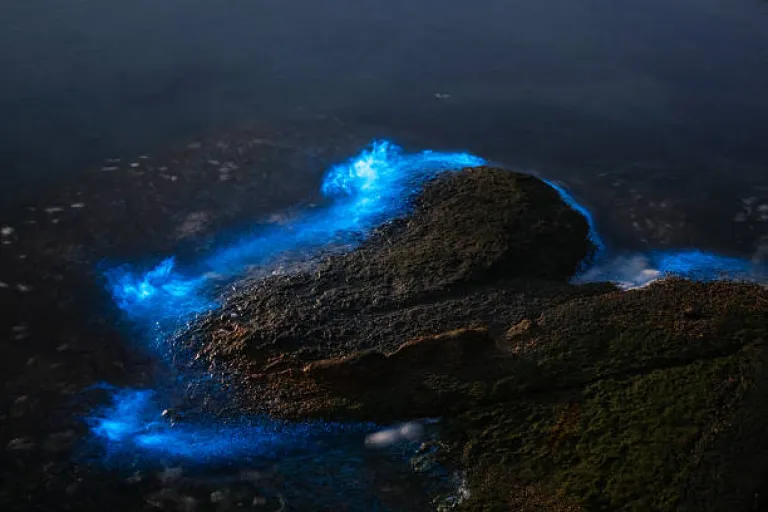
If bioluminescence had a favourite Indian address, Bangaram Island would probably be it.
Surrounded by crystal-clear waters and far away from city lights, this remote island offers ideal conditions for marine plankton to thrive. On lucky nights, the shoreline sparkles with dazzling blue light, creating an unforgettable spectacle.
Why Visit?
Minimal light pollution
Pristine marine ecosystem
Exceptional stargazing opportunities
One of India's most secluded beach destinations
Best Time to Visit: October to March
2. Havelock Island, Andaman & Nicobar Islands: Where the Sea Glows Blue
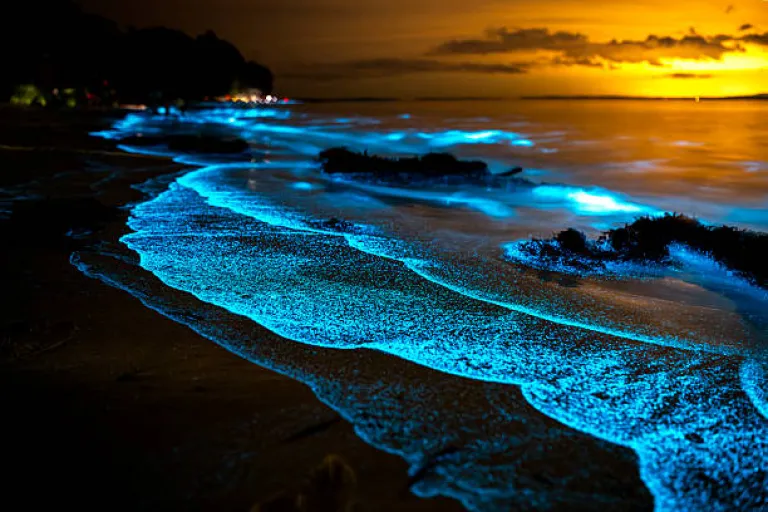
Ever wanted to paddle through a glowing ocean?
Havelock Island, now officially known as Swaraj Dweep, is one of India's most famous locations for witnessing bioluminescence. Night kayaking tours often provide the best chance of spotting glowing plankton beneath your paddle.
Every splash creates a burst of blue light, making it feel as though you're rowing through liquid stars.
Travel Challenge
Would you rather:
Watch glowing waves from the shore?
Kayak directly through them?
Most travellers quickly discover the correct answer is both.
Best Time to Visit: November to February
3. Neil Island, Andaman & Nicobar Islands: The Quiet Stargazer's Beach
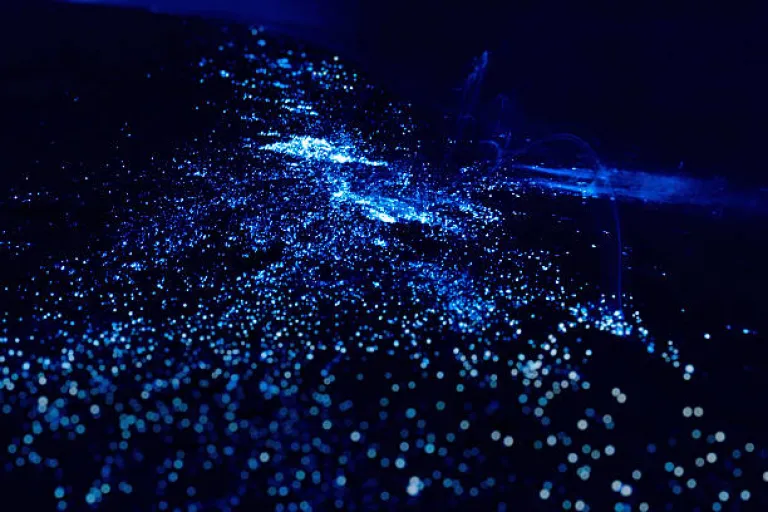
While Havelock attracts most of the attention, nearby Shaheed Dweep quietly offers equally enchanting possibilities.
Fewer crowds and darker beaches often mean a more intimate experience. On the right night, the glowing waves seem almost too magical to be real.
Don't Forget
Turn off your phone flashlight.
Your eyes need time to adjust to the darkness, and that's when nature's light show truly begins.
Best Time to Visit: November to February
4. Betalbatim Beach, Goa: Goa's Secret After-Hours Attraction
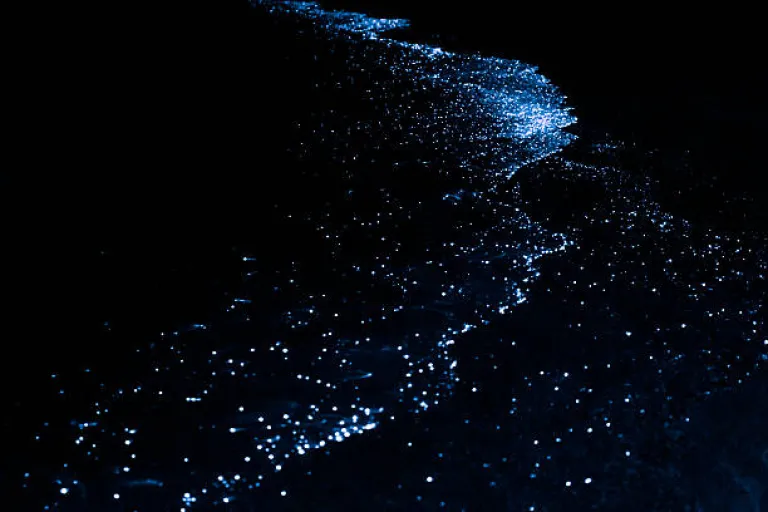
Goa is famous for beach parties, sunsets, and seafood.
But occasionally, it offers something even more remarkable.
During certain seasons, visitors have reported sightings of glowing blue waves along parts of South Goa, particularly around Betalbatim Beach. The phenomenon isn't frequent, but when conditions align, it transforms an ordinary beach walk into something extraordinary.
Fun Fact
This might be the only beach experience where people are actually happy to visit after dark and do absolutely nothing.
Best Time to Visit: Monsoon and post-monsoon months
5. Mattu Beach, Karnataka: The Internet's Favourite Glowing Beach
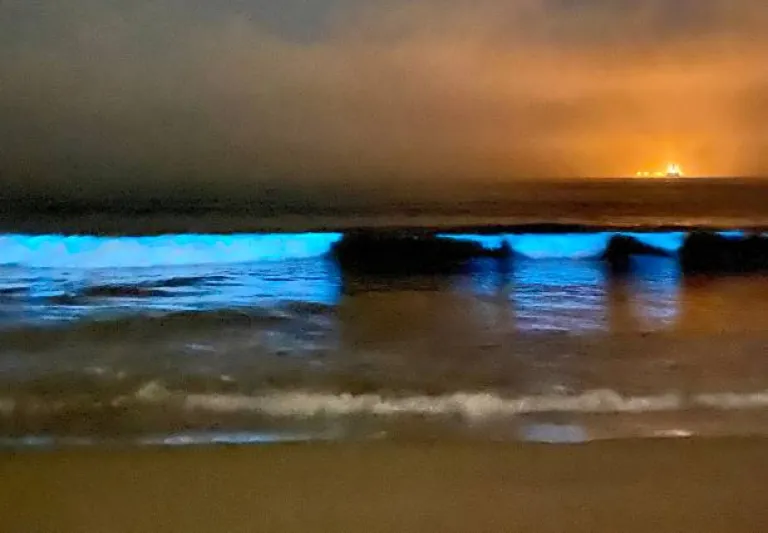
A few years ago, photographs of Mattu Beach's glowing shoreline spread across social media and instantly turned this quiet coastal destination into a sensation.
Located near Udupi, Mattu Beach remains one of India's most talked-about locations for bioluminescent sightings.
Spotting Tip
Choose a moonless night for the best chance of seeing the glow.
The darker the surroundings, the brighter the bioluminescence appears.
Best Time to Visit: September to December
6. Padukere Beach, Karnataka: The Lesser-Known Coastal Wonder
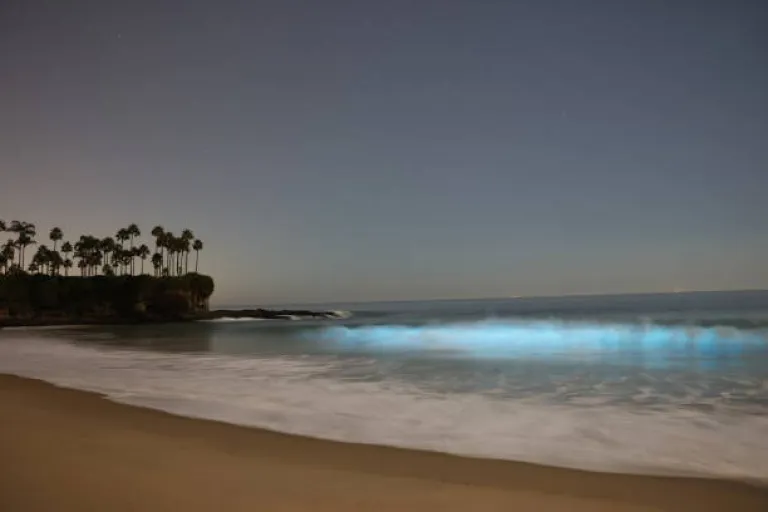
Located close to Mattu Beach, Padukere Beach occasionally experiences similar bioluminescent activity.
The relative lack of crowds adds to the experience. Instead of hundreds of cameras flashing, you often get uninterrupted views of the glowing waves.
Quick Question
Would you rather discover a famous glowing beach or stumble upon one that feels like your own secret?
Padukere offers the second option.
Best Time to Visit: September to December
7. Kavaratti Island, Lakshadweep: Blue Magic in the Arabian Sea
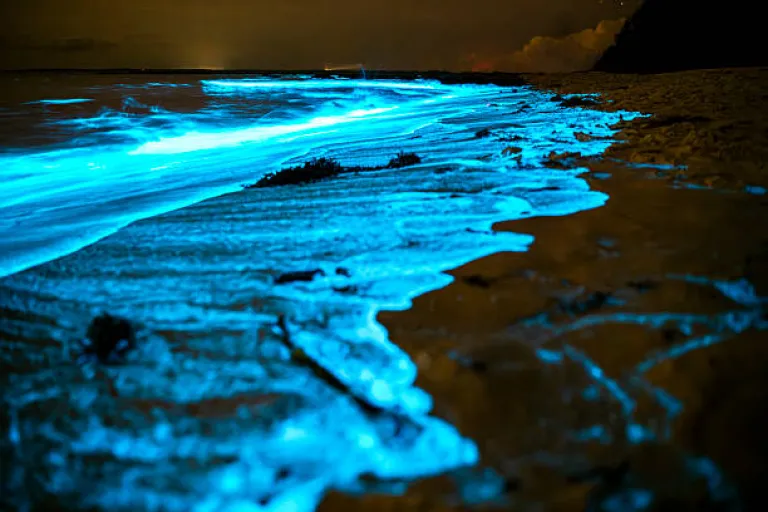
The waters surrounding Kavaratti Island are known for their incredible marine biodiversity.
When plankton blooms occur under the right conditions, the sea can light up in brilliant shades of blue, creating one of India's most surreal coastal experiences.
Why It's Special
You aren't just watching a natural phenomenon.
You're witnessing thousands of microscopic organisms creating one of Earth's most beautiful displays.
Best Time to Visit: October to March
8. Agatti Island, Lakshadweep: A Hidden Glow Beyond the Crowds
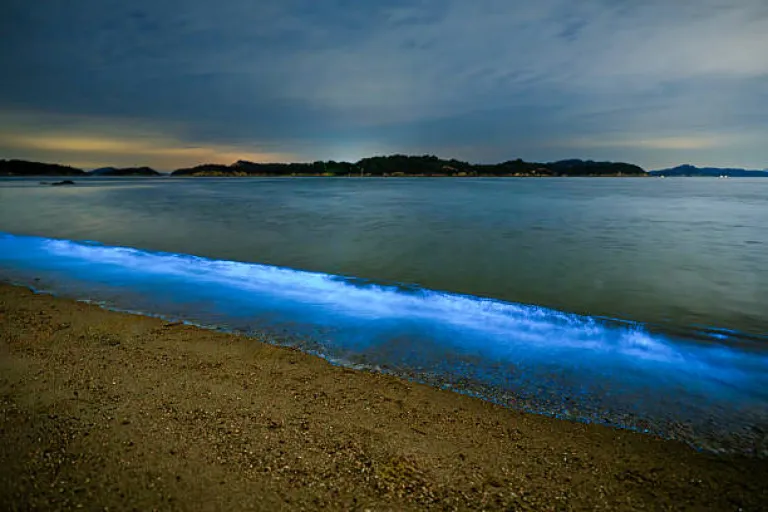
Agatti is often celebrated for its turquoise lagoons and spectacular coral reefs.
However, patient travellers occasionally receive a bonus attraction after sunset: glowing shorelines that seem straight out of a science-fiction movie.
Travel Challenge
Try describing bioluminescence to someone who has never seen it.
You'll quickly discover that photographs rarely do it justice.
Best Time to Visit: October to March
9. Thiruvanmiyur Beach, Chennai: The Unexpected Urban Glow
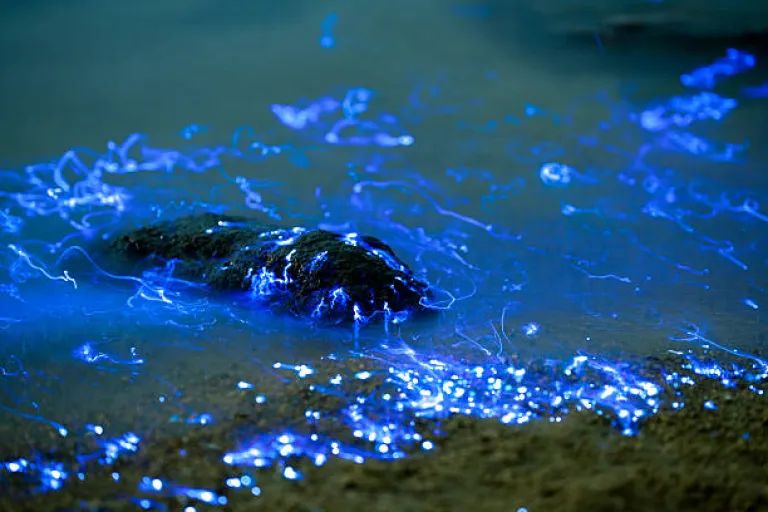
Bioluminescence isn't limited to remote islands.
Over the years, residents have occasionally reported glowing waves along Chennai's coastline, particularly around Thiruvanmiyur Beach.
The contrast is remarkable: a bustling metropolitan city on one side and a glowing ocean on the other.
Interesting Thought
How often do you get to witness one of nature's rarest spectacles without leaving a major city?
Best Time to Visit: Varies depending on plankton blooms
10. Marina Beach, Chennai: A Rare Urban Phenomenon
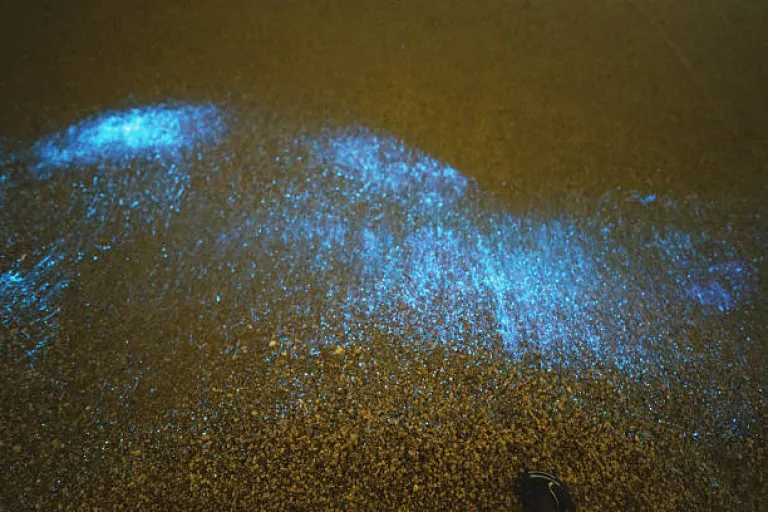
One of the world's longest urban beaches has occasionally made headlines for glowing blue waves.
Although sightings are rare and unpredictable, witnessing bioluminescence at Marina Beach is a reminder that nature can surprise us even in the middle of a busy city.
Bucket List Moment
Imagine telling your friends that the ocean literally glowed during your evening walk.
That's a travel story worth keeping.
How to Improve Your Chances of Seeing Bioluminescence
Think of yourself as a glow hunter.
Here's your mission checklist:
✔ Visit during moonless or low-moon nights
✔ Avoid brightly lit beaches
✔ Check recent local reports before travelling
✔ Visit after plankton blooms or calm weather conditions
✔ Be patient, nature doesn't work on schedules
The Real Magic Isn't Just the Glow
Bioluminescence is beautiful, but perhaps what makes it truly unforgettable is its unpredictability.
Unlike monuments, theme parks, or famous attractions, there is no ticket counter and no guarantee. You cannot book a glowing ocean for 7:00 PM on a Saturday.
And maybe that's exactly why people travel thousands of kilometres hoping to see it.
Because every once in a while, nature reminds us that the most extraordinary experiences are the ones we cannot plan.
So the next time someone asks whether India has bioluminescent beaches, you can confidently say yes. Then tell them to keep their flashlight off, look closely at the waves, and prepare to witness a little bit of ocean magic.
Published at
About Author

Prerna Dixit
Subscribe our Newsletter
Get our weekly tips and travel news!
Related Posts
8 Impressive World Heritage Sites in India to Visit
Truth is, India is more than just authentic mouth-watering curries, intricate traditional saris, colourful Bollywood films and nail-biting cricket matches. In fact, India is also the birthplace of...
Top 10 Enchanting Honeymoon Destinations for Romantic Getaways!
India is a land of diversity, culture, and romance. It offers a variety of honeymoon destinations that suit every taste, budget, and preference. Whether you want to enjoy the snow-capped mountains,...
8 Lesser-Known Traditional Markets to Visit in Korea
South Korea is undoubtedly a favourite destination for many travellers! However, instead of the usual shopping and eating, why not do something different for a change on your next trip?Take...
5 Koreatowns in Southeast Asia You Need to Visit in Your Lifetime!
Picture this: You’re watching a Korean drama where the main characters are walking along Seoul’s vibrant streets. It’s a cold winter night. They enter a pocha (a local bar with food) where...
10 Reasons to visit Türkiye (formerly Turkey)
Turkey is an increasingly popular destination for travellers all across the globe, and it’s not difficult to see why. Presenting the perfect marriage between natural phenomena and man-made wonders,...
Latest Posts
Planning a trip? Discover the different types of travel insurance, what they cover, common exclusions and how to decide whether travel insurance is worth it.
Greece's Best-Kept Secrets: 7 Beautiful Places to Visit Beyond Santorini
Beyond Santorini and Mykonos lies a quieter side of Greece. Discover seven beautiful islands filled with hidden coves, whitewashed villages, volcanic landscapes and authentic Greek experiences.
Bangalore’s Top 10 Best Garba Night Venues in 2026
Planning a festive night out? Explore 10 Garba and Dandiya events in Bangalore for Navratri 2026, with venues, dates and helpful booking tips.
Sri Lanka Trip Cost from India in 2026: Budget and 5-Day Itinerary
Planning a Sri Lanka holiday? Explore the estimated 2026 trip cost from India, visa rules, top destinations and a 5-day itinerary.
Best Places to Visit in Goa in December 2026 for Christmas and New Year
Planning a festive getaway? Explore the best places to visit in Goa in December 2026, including Baga Beach, Old Goa, Fontainhas and Palolem for Christmas and New Year.