
Caribbean Chaos: How This Week's Aviation Crisis Signals a Wake-Up Call for Indian Travelers

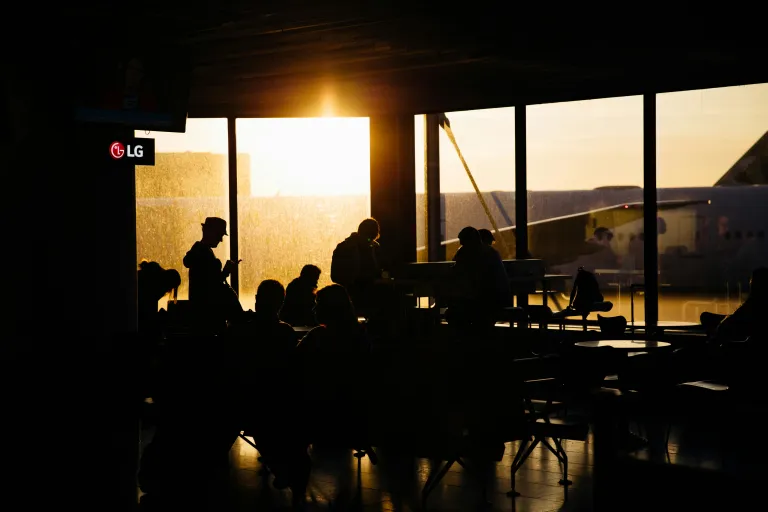
Just days into the new year, the travel world witnessed a crisis that should have every Indian globetrotter paying attention. Over the weekend, US military strikes in Venezuela triggered a cascading aviation shutdown across the Caribbean, stranding tens of thousands of travelers and canceling over 400 flights from Puerto Rico alone. By Sunday morning, airport floors transformed into makeshift dormitories as desperate passengers scrambled for seats on flights that wouldn't depart for days.
This wasn't just another travel inconvenience. This was a glimpse into how quickly geopolitical tensions can upend even the most meticulously planned holidays and it's happening at a moment when Indian travelers are venturing abroad in record numbers.
When Paradise Becomes a Prison
Picture this: You're wrapping up a perfect Caribbean holiday, bags packed, ready to return home. Then, without warning, the Federal Aviation Administration closes the airspace. Not just for hours, but for an entire day. Your flight? Cancelled. Alternative options? Fully booked until the end of the week. Hotel room? Already checked out. Budget? Stretched to breaking point with unplanned accommodation costs.
This nightmare scenario played out for countless travelers over the January 4-5 weekend. The FAA's airspace restrictions, triggered by US military operations in Venezuela and the reported capture of President Nicolas Maduro, created a domino effect across the Eastern Caribbean. Airlines scrambled to add dozens of extra flights, but the damage was done, seats were scarce, and previously scheduled flights were already packed with holiday travelers and students returning from school breaks.
Transportation Secretary Sean Duffy announced late Saturday that restrictions would expire at midnight, clearing the way for Sunday operations. But by then, social media was flooded with complaints from stranded passengers who couldn't find available seats until week's end, with some unable to afford additional nights at Caribbean hotels during peak season rates.
The Indian Connection: Why This Matters to Us
For Indian travelers, this crisis carries particular resonance. We're living through what experts call India's "aviation golden age", a period of unprecedented international connectivity. Delhi's Indira Gandhi International Airport is expanding to 159 destinations by 2026, adding new routes to Manila, Athens, Manchester, and Tokyo Narita. The airport now sees transfer passengers accounting for 29% of total throughput, up from 22% two years ago, a 34% year-on-year rise that reflects India's growing role in global transit operations.
But here's the uncomfortable truth: as we spread our wings globally, we're also exposing ourselves to international volatility in ways we never did when most of us stuck to domestic destinations.
The Caribbean incident demonstrates how military actions thousands of miles from India can instantly disrupt Indian travelers' journeys. If you're transiting through Miami to the Caribbean, or connecting through New York to Puerto Rico, geopolitical events you might scroll past on your news feed can suddenly become your immediate reality.
Closer to Home: India's Own Aviation Turbulence
While international headlines focused on the Caribbean, Indian aviation was wrestling with its own set of challenges. IndiGo, which controls two-thirds of India's market, suffered an unprecedented operational meltdown in early December when pilot shortages and software glitches triggered thousands of flight cancellations, stranding half a million passengers. The crisis stretched the airline's tightly-run schedules to breaking point and forced government intervention, with a regulatory report on the lapses expected soon.
Then there's the weather factor. Just days ago, on January 2, dense fog at Delhi Airport led to 66 flight cancellations, 32 inbound and 34 outbound, wreaking havoc on domestic and international travel plans. For tourists and business travelers alike, the annual "fog window" declared by the DGCA from December to February has become a predictable yet unpreventable source of disruption.
Add to this the recent announcement that Air India's nonstop flights from San Francisco to Mumbai, Delhi, and Bengaluru will cease being nonstop starting March 2026 due to airspace restrictions and rising operational costs. The US-India travel corridor is witnessing significant restructuring, with fewer direct connections than in previous years.
The New Rules of Resilient Travel
So what's an Indian traveler to do? Cancel that dream international trip? Hardly. But the Caribbean crisis and recent domestic disruptions offer valuable lessons for navigating the new normal of global travel:
Expect the Unexpected: The days of predictable, incident-free journeys are behind us. Whether it's geopolitical tensions, airline operational failures, or seasonal weather patterns, disruptions are becoming the norm rather than the exception. Build buffer days into your itinerary, especially for critical commitments.
Insurance Isn't Optional Anymore: That travel insurance you've been skipping? It's no longer a luxury, it's essential. Look for policies that cover not just medical emergencies but also trip cancellations due to airspace closures, airline failures, and extended accommodation costs.
Choose Airlines and Routes Strategically: When booking international trips, consider airlines with stronger operational track records and routes with multiple daily frequencies. If your flight gets cancelled, you want alternatives available on the same day, not three days later.
Leverage Technology Wisely: According to recent data, 50% of travelers now use AI to plan or research holidays, up from 41% in 2024. These tools can help identify alternative routes, predict potential disruption periods, and suggest backup options you might not have considered.
Consider the Premium Investment: While not feasible for everyone, if you're taking a critical international trip, a wedding, important business meeting, or once-in-a-lifetime holiday, the premium cabin investment might be worth it. The priority rebooking, lounge access during delays, and better customer service can be trip-savers during crises.
India's Infrastructure Advantage
Amidst all this turbulence, there's a silver lining for Indian travelers: our domestic infrastructure is rapidly improving. Navi Mumbai International Airport became operational in December 2025, with Air India Express already running 20 daily flights to 15 cities and plans to scale up to 55 departures (including five international routes) by mid-2026. The airport features India's first fully digital infrastructure with facial recognition, biometric gates, and smart baggage systems.
Noida's Jewar International Airport is preparing for inauguration, and Bhogapuram International Airport near Visakhapatnam expects to open by June 2026. These aren't just concrete and terminals, they represent India's commitment to becoming a genuine global aviation hub, reducing dependence on congested legacy airports and offering more options when disruptions occur.
Delhi Airport's Terminal 3 is undergoing a massive expansion that will boost international capacity by nearly 50% when Pier C redevelopment completes in mid-January 2026. The airport is also participating in a Domestic to International pilot project, starting with the Varanasi-Delhi-London route model, making connections smoother for travelers.
The Bigger Picture: Resilience Over Romance
The Caribbean crisis of January 2026 won't be remembered as a defining moment in aviation history. But it should be remembered as a defining moment in how we think about travel.
The romantic notion of carefree wandering, of showing up at the airport with just a passport and a sense of adventure, belongs to a different era. Today's traveler needs to be part adventurer, part risk manager, part geopolitical analyst.
This doesn't mean travel becomes less joyful, quite the opposite. When you're prepared for disruptions, when you've built resilience into your plans, when you understand that your Caribbean beach holiday exists within a complex web of international relations and operational logistics, you travel with eyes wide open. You appreciate the moments when everything goes smoothly because you understand how many moving parts must align perfectly.
For Indian travelers specifically, this moment represents a coming of age. We're no longer just tourists venturing timidly into the world. We're sophisticated global travelers who need to understand both the opportunities and risks of international mobility. We're learning to navigate not just foreign airports and currencies, but foreign policies and their unpredictable impacts.
The next time you're planning an international trip, remember those travelers sleeping on Puerto Rican airport floors this weekend. Build in buffer days. Buy proper insurance. Choose your airlines and routes carefully. Monitor not just weather forecasts but geopolitical developments in your transit regions.
Travel in 2026 isn't about avoiding risks, it's about managing them intelligently while still pursuing the transformative experiences that make travel worthwhile. The world remains worth exploring. We just need to be smarter about how we do it.
Published at

Subscribe our Newsletter
Get our weekly tips and travel news!
Related Posts
West Bengal: Tagore's Residence Santiniketan Achieves UNESCO World Heritage Status
Santiniketan, a town in West Bengal's Birbhum region where Nobel laureate Rabindranath Tagore spent much of his life, has been added to the UNESCO World Heritage List.
UK Visitor Visa Fee Hiked: What's the New fee?
Planning to visit the United Kingdoms? Watchout for this Hike in Visa Charges. A UK tourist visa for less than six months will cost an additional £1,543 (£ 15), while UK student visas will cost an additional £13,070 (£127) for visitors from all over the w
India Issues Caution for Travel to Canada - Visa suspended
The advisory, issued by the Ministry of External Affairs (MEA), comes amid a diplomatic row between the two countries over allegations that the Indian government may be linked to the extra-judicial killing of a Sikh separatist in Canada.
First snowfall of the season in Gulmarg
As the chilly winds of winter start to sweep across the northern regions of India, Gulmarg, the crown jewel of Jammu and Kashmir, has once again transformed into a breathtaking winter wonderland. Nature's magic was on full display as Gulmarg recently...
Biswanath Ghat: Best tourism village of India 2023
In an exciting announcement, Biswanath Ghat in Assam has been crowned as India's "Best Tourism Village of 2023" by the Ministry of Tourism. This well-deserved recognition is a testament to the village's unique blend of cultural heritage, natural beau...
Latest Posts
Planning a trip? Discover the different types of travel insurance, what they cover, common exclusions and how to decide whether travel insurance is worth it.
Greece's Best-Kept Secrets: 7 Beautiful Places to Visit Beyond Santorini
Beyond Santorini and Mykonos lies a quieter side of Greece. Discover seven beautiful islands filled with hidden coves, whitewashed villages, volcanic landscapes and authentic Greek experiences.
Bangalore’s Top 10 Best Garba Night Venues in 2026
Planning a festive night out? Explore 10 Garba and Dandiya events in Bangalore for Navratri 2026, with venues, dates and helpful booking tips.
Sri Lanka Trip Cost from India in 2026: Budget and 5-Day Itinerary
Planning a Sri Lanka holiday? Explore the estimated 2026 trip cost from India, visa rules, top destinations and a 5-day itinerary.
Best Places to Visit in Goa in December 2026 for Christmas and New Year
Planning a festive getaway? Explore the best places to visit in Goa in December 2026, including Baga Beach, Old Goa, Fontainhas and Palolem for Christmas and New Year.