
5 Things Older Indian Travelers Do That Younger Generations Hate in 2026
Indian vacations are rarely quiet. They are strategic. Emotional. Snack-heavy. And always accompanied by at least one person asking, “How much did this cost?”
They involve spreadsheets disguised as “rough plans,” plastic containers that could feed a small village, and an ongoing debate about whether the hotel breakfast was truly worth it.
By 2026, travel has become smoother, smarter, app-based and algorithm-approved. Flights are booked in seconds. Reviews are filtered. Cabs arrive with tracking links. Even sunsets come recommended by reels.
But older Indian travelers continue to operate on a different frequency, one built on caution, calculation and lived experience. They trust printouts over push notifications. They believe in buffer time. They believe in backup snacks. They believe in asking three people before agreeing to a price.
Younger generations, meanwhile, are chasing vibes, flexibility and unfiltered experiences. They book last-minute stays. They explore cafés without reading reviews. They would rather discover than double-check.
When these two styles collide on the same trip, it becomes less “family getaway” and more “live case study in generational anthropology.”
One side wants efficiency.
The other wants energy.
One wants value for money.
The other wants value for experience.
And somewhere between the packed theplas and the pre-booked rooftop dinner, tension quietly simmers.
Here are five classic habits older Indian travelers refuse to give up and why younger generations internally scream about them while still, somehow, loving them anyway.
Older Indian Travelers vs Gen Z in 2026
1. Planning the Trip Like a Government Project

For older Indian travelers, a trip without structure is not exciting. It is alarming.
There is a printed itinerary.
There is a laminated backup of that itinerary.
There is a separate WhatsApp message summarising the itinerary.
And of course, there is a timetable for breakfast.
Wake up at 6:30 am.
Tea by 6:45 am.
Be ready by 7:00 am sharp.
Finish monument one by 9:15 am.
Monument two by 11:00 am.
Lunch must happen before hunger becomes visible and tempers become unpredictable.
Sightseeing is not optional. It is mandatory. If a landmark exists within a 30-kilometre radius, it will be visited. Even if it requires a detour. Even if nobody is emotionally prepared.
The day is packed so tightly that free time feels suspicious.
Meanwhile, the younger generation wants fluidity. They want to wake up naturally, scroll through café recommendations over coffee, and wander into side streets without consulting a spreadsheet. They believe in discovering moments, not scheduling them.
But for older travelers, efficiency equals respect for money spent. Flights were booked. Hotels were paid for. Leaves were approved. Therefore, value must be extracted. Every hour must justify its cost.
To them, an empty afternoon is wasteful.
To younger travelers, it is the best part of the trip.
Younger travelers call it over-scheduling.
Older travelers call it discipline.
And somewhere between the 7:00 am departure and the unplanned sunset café, the generational debate quietly unfolds.
2. Carrying Enough Food to Survive a Natural Disaster
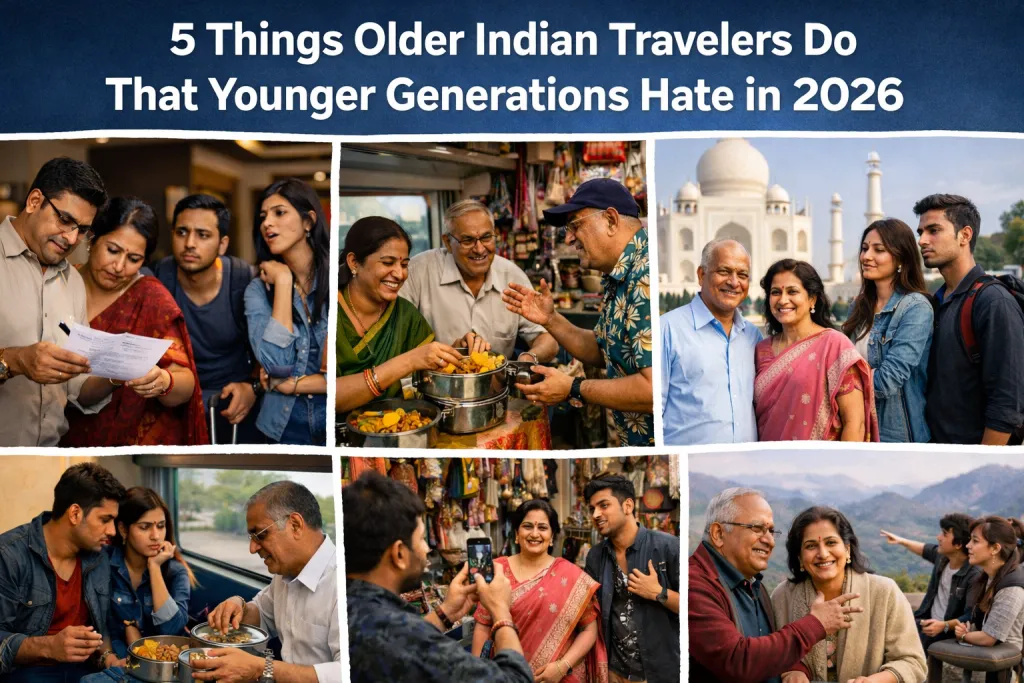
Younger generations travel to explore cuisine. They shortlist cafés before they shortlist hotels. They save street food reels. They know exactly where the best ramen, sushi, filter coffee, or fusion dessert is located before their flight even takes off.
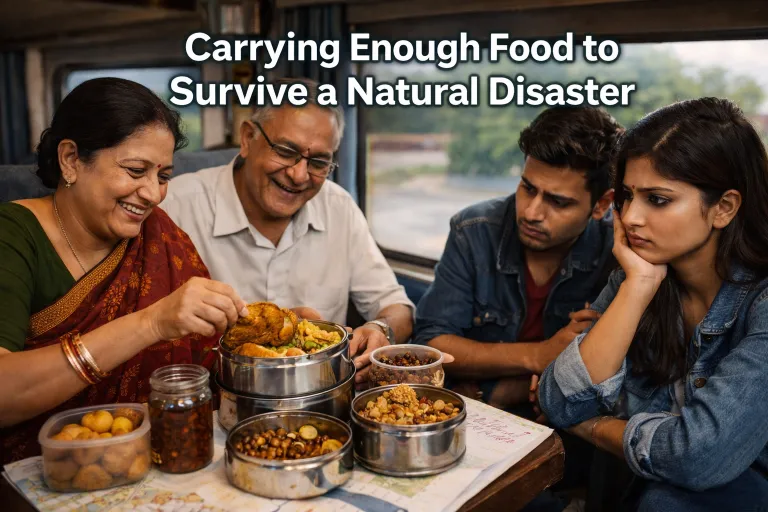
Older Indian travelers pack theplas.
And laddoos.
And khakra.
And roasted chana.
And homemade pickle in a container heavy enough to require its own baggage allowance.
There is always a steel tiffin box. Sometimes two. Occasionally three.
It does not matter if the destination is famous for seafood, regional delicacies, or Michelin-recommended cafés. The tiffin appears like clockwork at railway stations, scenic viewpoints, and even hotel rooms with complimentary breakfast included.
This is not stubbornness. It is strategy.
It comes from a time when highway food was unpredictable, train pantry meals were risky, and hygiene was always questionable. Packing food meant control. It meant safety. It meant not depending on uncertain menus.
To older travelers, homemade food equals comfort and caution.
To younger travelers, it feels like a missed opportunity.
The tension peaks at lunchtime.
A group discovers a highly rated local restaurant. The menu looks promising. The reviews are glowing.
And then someone calmly says,
“Why waste money outside? We have food.”
Suddenly, the gourmet exploration turns into a picnic on a plastic sheet near the parking lot.
Younger travelers want to taste the place.
Older travelers want to trust the food.
One sees cuisine as adventure.
The other sees it as risk management.
And somehow, by the end of the trip, even the younger ones admit that the theplas did save the day at least once.
3. Treating Photos Like Official Documents

Younger generations take moving shots. Wind in the hair. Laughter mid-step. Slightly blurred but artistic frames that look accidental but took twelve attempts.
Older Indian travelers believe in clarity.
Stand straight.
Look at camera.
Smile properly.
Chin up.
Take one more.
Now one without sunglasses.
Now one zoomed in.
Now horizontal.
Now vertical.
Now one where everyone’s eyes are open.
Photography, for them, is documentation. Not expression.
Every landmark becomes a formal backdrop. The Taj Mahal does not exist for atmosphere. It exists for proof. Proof that you went. Proof that you stood exactly there. Proof that you were present and properly posed.
Meanwhile, the younger traveler is crouching for angles, adjusting exposure, saying things like “Wait, the lighting isn’t right,” while everyone else wonders why sunlight suddenly needs approval.
To older travelers, a good photo is one where faces are visible and centered.
To younger travelers, a good photo is one where the mood is felt.
One wants symmetry.
The other wants storytelling.
And the real chaos begins when reviewing the photos.
Older travelers zoom in to check sharpness.
Younger travelers zoom out to check aesthetics.
Both are convinced their version is superior.
Both will argue passionately.
And somehow, in the end, both versions get saved.
4. Negotiating Like It Is a National Duty
In 2026, most bookings happen on apps. Prices are listed. Reviews are verified. Payments are digital. Surge pricing is explained by algorithms.
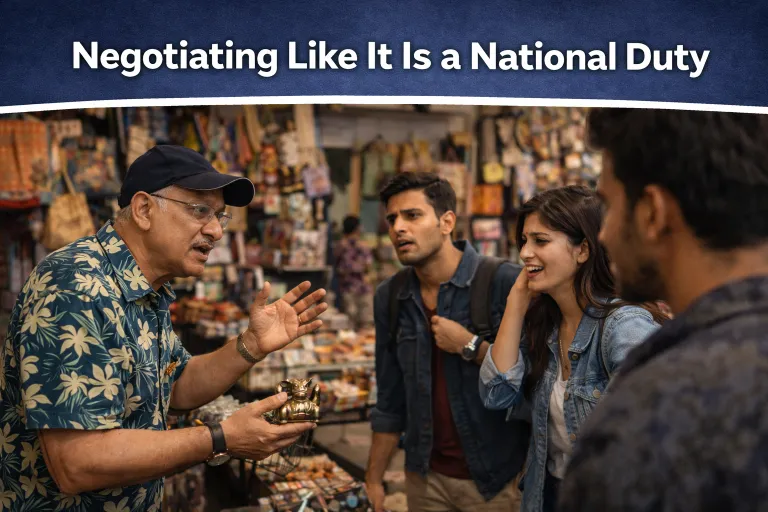
And yet, older Indian travelers will still negotiate.
With the taxi driver.
With the hotel receptionist.
With the handicraft seller.
With the boat operator.
Possibly with the weather if it looks slightly overpriced.
To them, bargaining is not about saving small amounts. It is about principle. It is about not being taken advantage of. It is about making sure the “tourist rate” does not quietly slip into the bill.
The conversation follows a familiar script:
“How much?”
“That’s too much.”
“Last price?”
“We are taking two.”
“We came from far.”
Younger travelers, meanwhile, are standing slightly behind, pretending to check their phone. They would rather pay slightly more than extend the negotiation into a ten-minute public debate.
They worry about awkwardness.
Older travelers worry about fairness.
For the older generation, walking away after shaving off even a small amount feels like a strategic win. It proves awareness. It proves experience. It proves you are not an easy target.
For younger travelers, the extra time spent bargaining could have been used to find a café, take photos, or simply move on.
One values the deal.
The other values the speed.
And yet, when the final price drops, even the younger generation feels a tiny, reluctant satisfaction.
5. Comparing Everything to “How It Was Before”
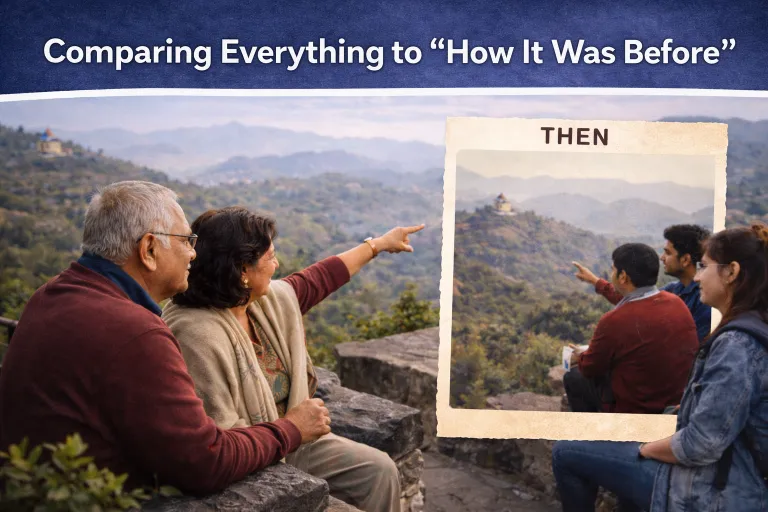
“This place was quieter in 1995.”
“It used to be cheaper.”
“Earlier there were fewer crowds.”
No destination is safe from this commentary.
Older Indian travelers carry memory like luggage, always unpacked, always referenced. Every hill station has a backstory. Every beach has a “before” version. Every market has a price from two decades ago that refuses to retire.
The present is constantly measured against the past.
A café opens where there was once an empty field.
A boutique hotel stands where there used to be a modest guesthouse.
A viewpoint that once felt secret now has railings and ticket counters.
For older travelers, comparison gives context. It proves they have seen evolution. It reminds everyone that they experienced the place in its raw form, before hashtags and parking lots.
But for younger generations, it can feel like a running critique track over the entire trip.
They want to enjoy the present version, even if it is louder, busier, more commercialised. They are not chasing nostalgia. They are chasing now.
To older travelers, remembering is perspective.
To younger ones, it steals excitement.
The mountain cannot compete with nostalgia.
The sunset cannot win against a memory.
And yet, without those stories of “how it was before,” the trip would lose a layer of depth.
Because sometimes, between the complaints about crowds and rising prices, there is something else hidden pride.
Pride that they saw it first.
Pride that they watched it grow.
Pride that they are still coming back.
Why This Happens in 2026
The difference is not personality. It is history.
Older Indian travelers grew up when travel was rare and expensive. Vacations required saving, planning, and serious logistics. Missing a sight was unacceptable. Overspending was risky.
Younger generations grew up with budget airlines, flash sales, flexible work and constant exposure to travel content. Trips are shorter, more frequent, more expressive.
One generation sees travel as a reward earned.
The other sees it as an extension of lifestyle.
So yes, the planning feels intense.
The tiffin feels unnecessary.
The bargaining feels awkward.
But those same habits also bring structure, safety, and stories.
Because years later, it is often the over-packed snacks, the strict itineraries and the repeated group photos that become family legends.
In 2026, travel styles may clash.
But somehow, the trip still works.
Mostly because no matter the generation, every Indian family holiday ends the same way, with too many photos, too much food, and at least one argument that becomes funny later.
Published at
About Author

Prerna Dixit
Subscribe our Newsletter
Get our weekly tips and travel news!
Related Posts
Latest Posts
Cheap International Flights from India: Affordable Destinations for 2026
Looking for affordable international flights from India? These destinations offer some of the cheapest flight options for Indian travellers in 2026.
China Southern Resumes Delhi–Guangzhou Flights After 6 Years: What Indian Travellers Should Know
China Southern Airlines will resume daily Delhi–Guangzhou flights from September 21 after a six-year suspension. Here's what Indian travellers should know.
South Korea Expands Visa Application Services in India: What Travellers Need to Know
South Korea has expanded its visa application network across India, with services available in New Delhi, Bengaluru, Chennai and Kolkata. Here's what the change means for Indian travellers.
Indian Airlines Cut September Flights by 4.5%: What Travellers Need to Know
India's airline capacity has fallen 4.5% in September 2026, with domestic flights down 5.6%. Here's what the latest OAG data means for air travellers.
Delhi Travel Advisory for BRICS Summit 2026: Airport, Train Travel and Traffic Restrictions
Delhi is expecting major traffic restrictions during the BRICS Summit from September 11–13. Here's what airport, railway and road travellers need to know.