
5 Living Root Bridge Villages in Meghalaya You Can Stay
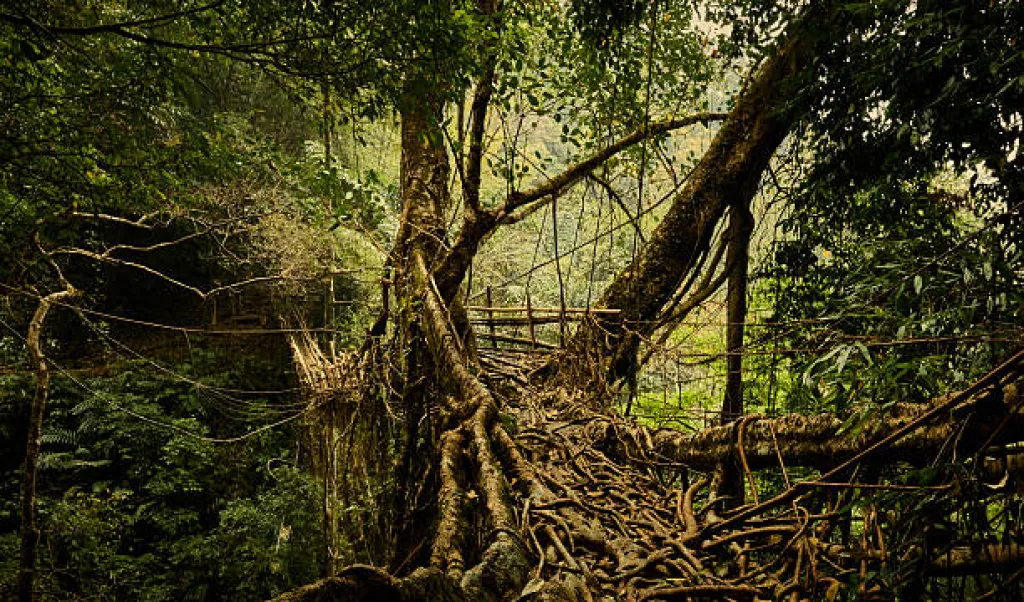
Where bridges grow, rivers sing, and nature becomes your host
There are journeys where you travel to see something.
And then there are journeys where the place slowly grows on you, literally.
Meghalaya’s living root bridges are the result of generations of Khasi wisdom, patience, and relationship with the forest. Instead of cutting trees to build bridges, they guide the aerial roots of ficus trees across streams and wait years, sometimes decades, for them to thicken into pathways strong enough to hold human footsteps.
These bridges connect not just one hill to another, but people to nature, travellers to silence, and stories to time.
To truly feel this connection, you must stay in the villages where these root bridges are not attractions but part of everyday life. Here are the five best villages where staying overnight turns your trip into a slow, soulful, rainforest experience.
Sleep Among the Roots: Meghalaya’s Best Living Root Bridge Villages
1. Nongriat: Home of the Double Decker and the Rainforest Realm
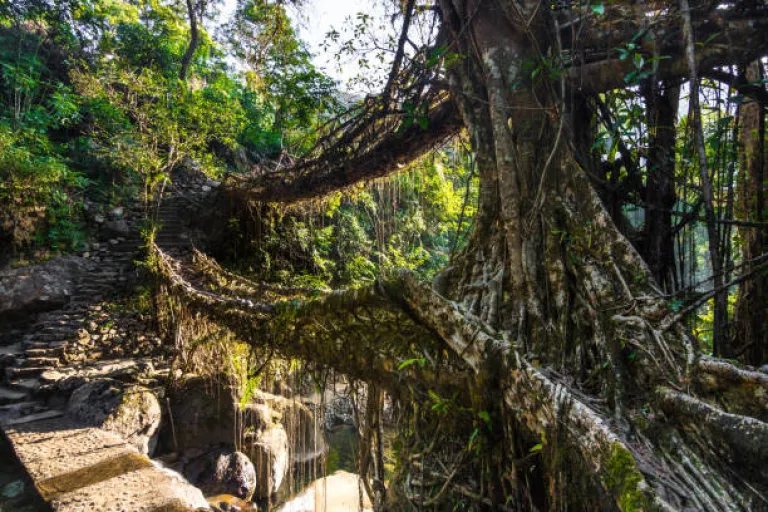 If Meghalaya had a heartbeat, it would echo from Nongriat.
You don’t just reach Nongriat; you earn it.
The descent of nearly 3,500 stone steps from Tyrna takes you through tropical canyons, suspension bridges, and humidity that wraps itself around you like a warm shawl. But the moment you reach, you understand why people from all over the world make the pilgrimage.
The Double Decker Living Root Bridge rises from the forest floor like a piece of living architecture, two layers of roots intertwined across a rushing stream, sturdy enough to outlive human builders. Around it, small homestays run by Khasi families welcome you with smiles, warm rice meals, and the gentle chorus of cicadas.
Why staying here feels magical
• The sound of the waterfall replaces any alarm clock.
• Rainbow Falls is a trek away a pool so blue you’ll think it’s edited.
• Nights are cool, quiet, and filled with the sound of river stones shifting in the current.
• You meet travellers from every corner of the world, all bonded by the shared “I survived the steps” story.
Village atmosphere
Rainforest lushness, stone trails, crystal pools, firefly-filled nights, and homestays that feel like family.
2. Riwai Village: Root Bridges Without the Trekking Marathon
Riwai is the village for people who love root bridges but not staircases.
Just a short walk through a shaded forest trail takes you to the iconic Riwai living root bridge wide, beautiful, and hugged by ferns, moss, and flowing water. It’s the easiest access point to a root bridge in Meghalaya, making it ideal for families, older travellers, and those who want the experience without the descent into deep valleys.
When you stay in Riwai, you’re right beside the bridge before tourists arrive. Early mornings here feel enchanted the bridge empty, the forest cool, and the stream whispering softly under the roots.
Why staying here is delightful
• Wake up early and have the root bridge to yourself.
• Walk to Mawlynnong, Asia’s famously clean village.
• Enjoy simple Khasi meals cooked over wood fires.
• Meet elders who share stories of how the roots were trained decades ago.
Village atmosphere
Open, welcoming, surrounded by forested pathways and bamboo homes. Great for slow, relaxing stays.
3. Padu Village: Meghalaya’s Hidden Living Root Secret
If you want a root bridge without anyone else in your selfie, head to Padu.
Padu is the kind of place where you hear about it only if you’re curious enough to wander beyond the typical Google search results. This quiet Jaintia Hills village shelters a gorgeous root bridge that feels untouched, peaceful, and almost shy, the kind of place the forest reveals only to those who deserve it.
The trails here take you past bamboo groves, tiny streams, and wild banana plants. When you reach the bridge, there’s a sense of stillness, as though time is resting in the trees.
Why stay here
• Perfect for nature lovers who want silence and solitude.
• Get a glimpse into rural Khasi life without crowds.
• Enjoy warm hospitality, local legends, and homemade meals like bamboo shoot curry and red rice.
• Explore hidden forest trails that don’t appear on tourist maps.
Village atmosphere
Slow, quiet, deeply green, dotted with small farms and warm smiles.
4. Kudeng Rim: The Village of Two Living Root Bridges
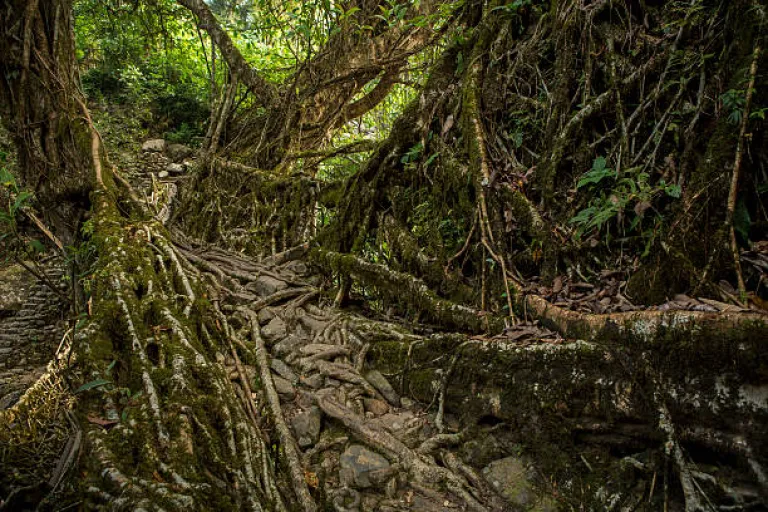 Kudeng Rim isn’t a village; it’s a rainforest adventure disguised as one.
Reaching Kudeng Rim often involves crossing suspension bridges, trekking through terraced hills, and following pathways that sway with the rhythm of the jungle. But the reward is immense two living root bridges, both astonishing in size and beauty.
One bridge arches gracefully over a pool of emerald water. The second stretches longer and sturdier across a flowing stream bordered by giant boulders.
At night, fireflies gather near the water like flickering lanterns. You sit outside your homestay, listening to the river telling stories older than the forest itself.
Why stay here
• Perfect for adventure travellers.
• Two root bridges in one village.
• Warm village families offer homestays with views of terraced hills.
• Night skies filled with stars and fireflies.
Village atmosphere
Wild, thrilling, and spiritually soothing, a blend of nature and Khasi tradition.
5. Nohwet Village: Mist, Viewpoints, and Bridges That Float Above Streams
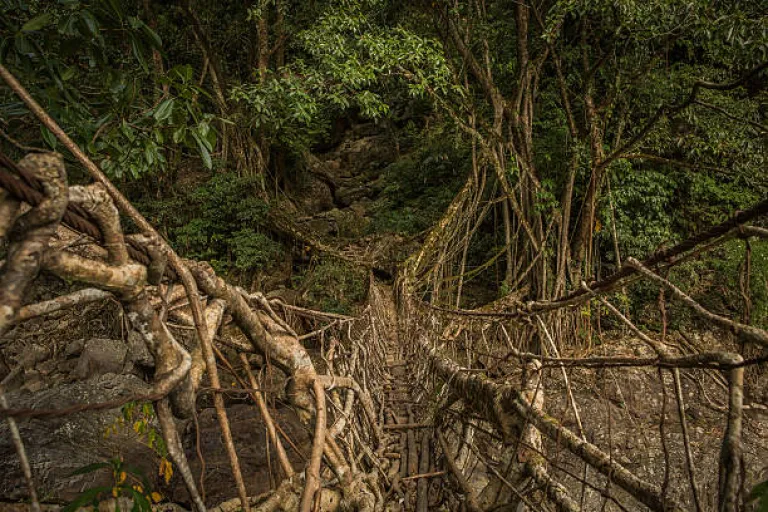 Nohwet is where nature looks like a painting and the bridges look like poetry.
Located near the popular Mawlynnong, Nohwet is quieter and far more scenic. Its living root bridge sits gently above a calm stream, surrounded by dense bamboo forests. The village itself is perched on a ridge, offering skywalks and viewpoints where you can see Bangladesh’s plains stretching endlessly.
Staying here is a mixture of soft sunlight, bamboo homes, mist that slides through the village in early mornings, and trails that feel like pages from a fairytale.
Why stay here
• Beautiful bamboo cottages with sweeping views.
• Easy walks around the village, perfect for slow travellers.
• Clean, aesthetic, photogenic surroundings everywhere.
• Friendly locals who guide you through forest trails.
Village atmosphere
Calm, dreamy, airy, and perfect for those who want beauty without the crowds.
Why Staying Overnight is the Best Way to Experience Root Bridges
• You see the bridges without crowds
• The forest is most alive in the morning
• Local hosts share stories you’ll never find online
• You understand how root bridges are grown, not built
• The air feels cleaner, the pace slower, the experience deeper
These aren’t just stays.
They’re immersions in a world where nature and people grow together.
What to Expect in Root Bridge Village Stays
• Rooms are simple but clean
• Home-cooked Khasi meals (fresh, flavorful, earthy)
• Limited mobile network
• Nights that are absolutely quiet
• Stars you can actually see
• Mornings filled with bird calls and mist
• Footpaths lined with moss, orchids, butterflies
This is slow travel. Meghalaya-style.
Best Time to Visit Root Bridge Villages
October to April
Best weather, clear trails, perfect for trekking
May to June
Warm, lush greenery, fewer crowds
July to September
Monsoon makes the forests magical, but trails get slippery
Ideal only for experienced trekkers
Final Thoughts
Meghalaya’s living root bridge villages are living encyclopedias of patience, craftsmanship, and nature’s creativity.
Staying in them isn’t just about checking off a travel bucket-list attraction.
It’s about waking up with the river, listening to the forest breathe, and learning how humans and nature can coexist beautifully.
Whether you choose the legendary steps of Nongriat, the gentle calm of Nohwet, or the raw mystery of Padu, these villages will give you something few places can a feeling of being part of the forest, not just a visitor passing through.
Published at
About Author

Prerna Dixit
Subscribe our Newsletter
Get our weekly tips and travel news!
Related Posts
The only Backpacking Guide for India that you'll ever need
Embark on a soulful backpacking adventure across India! This guide ensures a memorable journey, creating lifelong memories and a deep appreciation for the extraordinary. Enjoy every moment of exploration. Safe travels!
10 Backpacking Destinations in India that you must check out in 2024
In 2024, explore India's diverse beauty with these 10 must-visit backpacking destinations, offering mountains, beaches, and cultural gems for every traveler.
10 Amazing Backpacking Destinations to Add to Your List in 2024
From spiritual havens to nomadic adventures, explore a tapestry of cultures and landscapes, promising an unforgettable journey.
Back Packing Checklist for India - Things you need for Backpacking in 2024
Gear up for your epic Indian backpacking adventure! This guide outlines essentials like clothes, travel docs, tech, and embrace the "Jugaad". Pack light, stay open-minded, and prepare for chai spills and unforgettable memories!
Bengaluru tops the "Most livable cities in India 2024" List
According to the data released by Ease of Living Index, Bengaluru has earned the prestigious title of the most livable city in India in 2024!
Latest Posts
Best New Year 2027 Destinations in India by Budget
Looking for a New Year getaway? Explore 10 destinations in India for welcoming 2027, with estimated budgets, things to do and tips for planning an affordable holiday.
Things to Do in Burkina Faso: Food, Culture and Unique Travel Experiences
Explore Burkina Faso's rich cultural heritage through traditional dishes, vibrant music, handmade textiles, major festivals and fascinating historic landscapes.
Madame Tussauds Singapore Launches Icons of India Diwali Campaign
Madame Tussauds Singapore and MakeMyTrip celebrate Diwali with the Icons of India campaign, featuring Bollywood wax figures and a special Buy One Get One ticket offer.
Best Time to Visit Mexico: Festivals, Hidden Gems & Travel Tips
Discover the best time to visit Mexico, from sunny Caribbean beaches and hidden colonial towns to vibrant festivals like Día de los Muertos and Oaxaca’s Guelaguetza. Explore seasonal travel tips, offbeat destinations, local food experiences and the best m
Best Places to Visit in India During Diwali Holidays 2026
Planning a Diwali holiday in 2026? Explore eight destinations across India, including Ayodhya, Jaipur, Amritsar, Goa and Varanasi, for a memorable festive getaway.